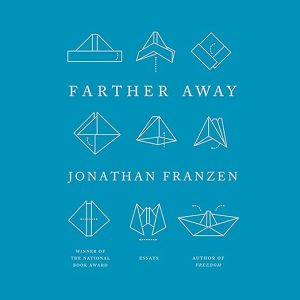
Publisher copy usually oversells the book it is attached to. This one sells a different book entirely: the description opens with Sam Tanenhaus in the New York Times Book Review calling Freedom a masterpiece of American fiction, and Freedom is the novel that came before. What the audiobook actually contains is a gathering of essays and speeches, read by Franzen himself, and its rewards are nothing like a novel's. Sort that out in advance and the time is well spent.
An Impossibly High Standard, Set by Itself
Franzen assembled these pieces from roughly five years of work, and the range is wide. A violent encounter with bird poachers in Cyprus. His mixed feelings about the suicide of his friend and rival David Foster Wallace. A trip to China to see environmental devastation first-hand. A witty account of how technology changed the way people tell each other they are loved. The through line is a mind arguing with itself in public, and the promise the copy makes is that he will conceal nothing.
Front-loading is the collection's shape, and the opening address is the strongest thing in it. What follows swings between reportage any magazine would be glad to run and literary appreciation aimed at a much narrower room. The self-portrait that accumulates across the pieces, of a difficult, watchful, frequently irritated writer who treats his own irritation as evidence worth examining, ends up more compelling than several of the individual essays are on their own terms.
Five stars in June 2015 came with a caveat most enthusiastic responses would bury. The collection is uneven, that reader says, and only because some pieces are so good they set an impossibly high standard for everything around them. The same account rates the opening commencement address as probably the best it has ever encountered, praising it for admitting how rarely anything of interest gets said on such occasions and then going on to say useful things anyway.
The Pause Before a Concession, the Deadpan
An essayist reading his own essays is a different proposition from a novelist reading a novel. No characters need distinguishing, no accents need attempting. What a self-read essay can offer that a hired reading cannot is the pause before a concession, the deadpan that marks a joke, the precise point where an argument gets given away rather than won. Franzen wrote these in the first person and the recording leaves them there, without the interpretive layer another reader would add.
A Grumpy Old Man, and the Genius Shows
Book reviews, a love of birding, the life and death of a friend and brotherly rival, travels to China and Italy: that is what a four-star from February 2013 lists as the collection's actual contents. That account also calls Franzen one of the best authors to arise in the past twenty years and a grumpy old man in the same breath, then argues the genius shows through the grumpiness, particularly on the subject of modern technology.
Certain pieces would justify the purchase on their own. The Wallace material is the rawest writing here, because grief and rivalry are difficult to separate and Franzen does not try very hard to separate them. The Cyprus essay works in the opposite mode, reported and physical, a writer with a specialist obsession walking into real danger for it. Between them they demonstrate a range the literary criticism, useful as it is, cannot show by itself.
Filed as Memoir, Though It's Essays and Criticism
Three stars, filed in June 2013, is where the sharpest objection lives. That reader loved Freedom, bought this on the strength of positive notices, and found a frustrating mix: a few very good pieces, much of it uninteresting, and a good half given over to literary essays that will not repay anyone whose reading list is already full. The complaint runs on to say Franzen tends toward suggestion rather than full-bodied criticism, and does not measure up to Randall Jarrell.
Filed under biographies and memoirs on this record, the book is neither. It collects essays, speeches and criticism, some autobiographical and much of it not, and that shelf will mislead anyone arriving in search of a life story. The second structural warning is navigational. An essay collection gives a listener far less to steer by than a novel does, and abandoning a piece that is not working means scrubbing forward blind rather than turning three pages.
Persona is the last thing to weigh. Franzen is at his best when he catches himself, and the China essay is the clearest case: the description itself concedes that the trip becomes a journey out of his own prejudice and moral condemnation, which is the rare instance of publisher copy admitting an author began somewhere unflattering. When that self-correction goes missing, the writing hardens into lecture, and eight hours of lecture in one voice is a genuine risk.
Erudite, Engaging, Energetic, and for Franzen Readers
March 2017 brought a response filed in the United Kingdom that settles the audience question plainly enough: erudite, engaging, energetic, and aimed at anyone who already counts as a Franzen reader. That last condition carries the weight. If you know the novels and want to hear what the mind behind them does when it is not building characters, this delivers precisely that, and the author reading it makes the connection more direct than a hired voice would.
Newcomers should start elsewhere. Anyone who has never read Franzen meets the arguments here without the fiction they answer to, and the literary essays assume a reader who already cares about the writers under discussion. Anyone allergic to a certain strain of American literary self-examination will find no shortage of provocation, and nothing in this collection will talk you out of the annoyance. Nor is it a sensible introduction to the essay form itself.
Modest is the right word for three point nine across a hundred and twenty-six votes, and I take it as an honest figure rather than a slight. Farther Away repays the specific reader it was written for and hands everyone else a mixed evening. Read aloud by the man who wrote it, the collection gains directness and gives up the polish a professional would bring, which is the trade most essay collections ought to make.