Quick Take
- Narration: Will Stauff reads with calm clarity, well-suited to the text’s instructional, aphoristic style, though the narration does not elevate material that is already doing its own work.
- Themes: Seven Hermetic principles, metaphysical law, inner mastery and cosmic consciousness
- Mood: Formal, esoteric, deliberately timeless
- Verdict: The standard entry point for Western esoteric philosophy, and the audiobook format makes its dense framework more approachable than the print edition for new readers.
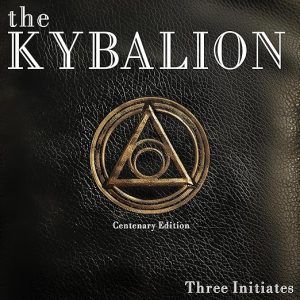
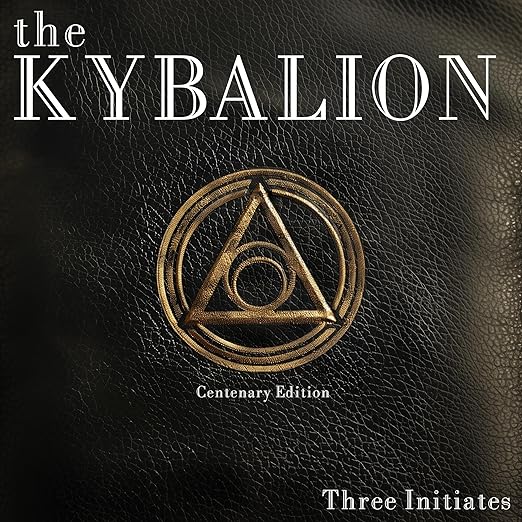
The Kybalion occupies a peculiar position in the literature of esoteric philosophy. Originally published in 1908 under the pseudonymous attribution to The Three Initiates, its actual authorship remains disputed among scholars of occult history, with the most credible evidence pointing to William Walker Atkinson, a prolific New Thought writer of the early twentieth century. That uncertainty is part of the text’s mythology rather than a reason to dismiss it. Whatever its origin, the book has accumulated over a century of serious readership among practitioners of Hermetic philosophy, New Thought, and occult study.
This particular edition was released in 2025 under Quill Publishing and runs three hours and thirty-six minutes, narrated by Will Stauff. At that length, this is a book whose density compensates for its brevity. The seven Hermetic principles it outlines, Mentalism, Correspondence, Vibration, Polarity, Rhythm, Cause and Effect, and Gender, are presented as a complete metaphysical framework for understanding consciousness, reality, and what the text calls inner mastery. The brevity is deceptive. This is not a light read.
Our Take on The Kybalion
What has kept this text alive for over a century is the internal coherence of its framework. The seven principles are not presented as independent concepts but as interlocking descriptions of how a single underlying reality operates at different levels of scale. The Principle of Correspondence, As above, so below, is the most quoted and the most broadly applicable. But the treatment of Polarity and Rhythm, which positions apparent opposites as degrees of the same phenomenon, is where the framework becomes genuinely useful as a thinking tool rather than merely an interesting metaphysical claim. Reviewers who came to this with significant existing knowledge in the genre consistently found the text more resonant than expected given its age and its era of composition.
Why Listen to The Kybalion
Will Stauff’s narration is measured and clear. He does not editorialize or attempt to make the material sound more dramatic than it is, which is correct. The Kybalion is written in a formal, aphoristic style that suits a reading voice that is calm rather than performed. The audiobook format works particularly well for first-time readers because the narration prevents the kind of passive eye-skimming that can happen with dense philosophical text in print, forcing a more attentive engagement with each principle as it is introduced. At under four hours, a second listen is a realistic option for reinforcing the framework.
What to Watch For in The Kybalion
The text’s claim to represent ancient Hermetic wisdom has been challenged by scholars who note that many of its concepts reflect early twentieth-century New Thought as much as any ancient tradition. If you approach this expecting a direct channel to pre-Christian Egyptian mystery teachings, you will be working with an idealized historical narrative rather than established fact. The philosophical value of the framework does not depend on that claim being accurate, but it is worth knowing before you arrive with particular historical expectations. One reviewer noted that an earlier edition’s audio quality was a problem, though this 2025 edition appears to have addressed that concern.
Who Should Listen to The Kybalion
This is essential listening for anyone building a serious understanding of Western esoteric philosophy and Hermetic tradition. It also works well as a companion text for readers exploring New Thought, manifestation frameworks, or the philosophical underpinnings of much contemporary spiritual self-help. Listeners who want historical grounding or scholarly apparatus around these ideas should supplement with academic sources. For practitioners and serious seekers, the audiobook provides one of the cleanest introductions to the Hermetic framework that the genre offers, and at under four hours it is an efficient use of listening time. The 2025 edition’s improved audio quality removes the main barrier to recommending this over older editions. The framework rewards return visits more than most texts of this length. That efficiency, a complete metaphysical system in under four hours, is part of what has kept this text in circulation across generations of seekers.
Frequently Asked Questions
Who actually wrote The Kybalion, and does the authorship question matter for the audiobook listener?
The most widely accepted scholarly theory attributes the text to William Walker Atkinson, a prolific New Thought writer working under various pseudonyms in the early twentieth century. For listeners interested in the text as a philosophical framework rather than a historical document, the authorship question is interesting but does not significantly affect how you engage with the seven principles.
Is the 2025 Quill Publishing edition an annotated or expanded version of the original text?
Based on available metadata, this appears to be a clean reading of the original text rather than a scholarly annotated edition. Listeners looking for historical context or critical apparatus around the Hermetic tradition will need to supplement with additional sources.
How does The Kybalion compare to contemporary spiritual titles in the same genre?
The Kybalion is a primary source text from 1908, which gives it a distinctly formal and aphoristic character compared to contemporary spiritual books. Where modern titles tend to be conversational and practice-oriented, The Kybalion presents its framework in a more systematic, instructional register with less personal narrative.
Does the audiobook work for someone with no prior exposure to Hermetic or esoteric philosophy?
Yes, though some of the terminology will require patience. The book defines its terms as it introduces them, and Will Stauff’s clear narration helps with comprehension. Having even a passing familiarity with concepts like vibration theory or polarity thinking will help, but is not a prerequisite.