Quick Take
- Narration: Joe Knezevich delivers a measured, authoritative read well-suited to Graham’s dense prose; his pacing gives listeners room to absorb complex concepts without feeling rushed.
- Themes: Value investing, long-term thinking, emotional discipline in markets
- Mood: Steady and instructive, with flashes of urgency when Zweig’s commentaries kick in
- Verdict: Serious about personal finance? This audiobook belongs in your rotation before you place another trade.
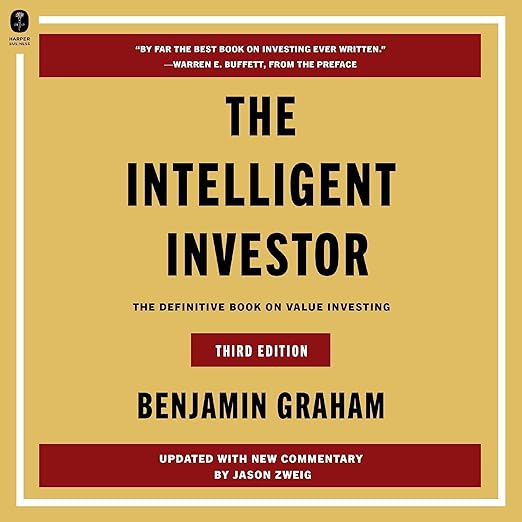
I came to this one during a stretch of particular market turbulence, the kind of week where you check your portfolio once and then decide you probably shouldn’t check it again. A friend had been quoting Benjamin Graham at me for years, in the vague, reverent way people quote someone they haven’t actually read. When I finally pressed play on Joe Knezevich’s narration of the 75th Anniversary Edition, I half expected the musty authority of a textbook. What I got was something else entirely: a book that felt almost conversational in its insistence that the market’s emotional swings are your opportunity, not your enemy.
Benjamin Graham first published this work in 1949, and the fact that it requires revisiting at all, with Warren Buffett’s foreword, his personal introduction, and Jason Zweig’s chapter-by-chapter commentaries woven throughout, says something important. The ideas hold. The application needs translation. This edition gives you both.
What Graham Actually Argues (And What Listeners Often Miss)
The audiobook format suits Graham’s central argument perhaps better than readers realize. His core distinction between the “defensive investor” and the “enterprising investor” is laid out methodically, almost catechistically, and hearing Knezevich walk through those definitions out loud clarifies something the page sometimes obscures: Graham is not telling you to take no risk. He is telling you to take only the risk you have genuinely earned the right to take through knowledge, preparation, and temperament.
Reviewer Dan Macsay noted that after finishing the book he felt like he “know[s] more than the average stock buyer about how to find good value and invest with real principle rather than hang on to the emotions of market uncertainty.” That is exactly right, and it is a harder thing to absorb than it sounds. Graham’s “Mr. Market” parable, where the market is personified as a moody business partner who offers to buy or sell every day, sometimes at wild prices, lands particularly well in audio. It is the kind of image that needs a human voice behind it to feel like wisdom rather than metaphor.
The Zweig Layer: Where the Edition Earns Its Keep
The Jason Zweig commentaries are the real value proposition of this particular edition, and Knezevich handles the transition between Graham’s original text and Zweig’s analysis cleanly. Zweig’s job is to do what Graham could not: ground these principles in the decades of market history that followed 1949, from the dot-com collapse to the 2008 financial crisis and beyond. His commentaries are sharp, sometimes wryly funny, and never condescending toward listeners who are newer to this material.
Some listeners find the density punishing. Reviewer Ela noted that “some sections are a bit dense, but overall it’s practical, insightful.” That is honest. There are chapters, particularly those dealing with the analysis of specific financial statements, where audio is a harder medium than the page, because you cannot mark up margins or flip back easily. Knezevich does his best, but anyone who intends to use this book as an actual reference will want the print or ebook version alongside.
Buffett’s Presence and What It Means for the Listening Experience
The Buffett foreword sets a particular tone. When the world’s most famous investor describes this as “by far the best book about investing ever written,” it creates a kind of reverence that the opening chapters then have to survive. Graham’s prose is careful and dry, not inspirational in any conventional sense. If you come in expecting Buffett’s warmth, the opening chapters will feel like a cold shower. Stay with it. The book rewards patience in the same way its investment philosophy does.
Reviewer Kevin observed that “this book provides the guide and a great long term approach to analysing and picking quality investment stocks.” True, but the operative word is long-term. This is not a book that tells you what to buy. It tells you how to think about buying, and it is relentless on that distinction. For listeners who want actionable stock tips, this will frustrate. For listeners who understand that changing how they think is a harder and more valuable outcome, it is exactly the right investment of twenty hours.
Who Should Listen and Who Should Skip
Listen if you are early in building an investment framework and want a philosophical foundation that will outlast market cycles. Listen if you have some financial vocabulary already, the audiobook benefits from at least passing familiarity with terms like P/E ratios and bond yields. Skip if you are looking for a quick-start guide to a specific strategy; Graham’s method requires study, not a single pass. Skip if you need a text-heavy reference you can annotate, as the audio format works better as introduction than as manual.
Frequently Asked Questions
Does this audiobook include Jason Zweig’s commentaries in full, or are they abbreviated?
The 75th Anniversary Edition audiobook includes Zweig’s updated commentaries in full alongside Graham’s original text. The commentaries follow each chapter and are read by Joe Knezevich, with clear transitions between Graham’s material and Zweig’s analysis.
Is the audio format good for absorbing Graham’s financial analysis chapters, or is print better?
For the philosophical and narrative sections, audio works well. The chapters dealing with specific financial statement analysis and balance sheet evaluation are denser and harder to follow in audio alone. Many listeners find it useful to have the print edition on hand as a companion for those sections.
What level of financial knowledge should I have before listening?
A basic familiarity with terms like stocks, bonds, dividends, and P/E ratios is helpful but not strictly required. Graham explains concepts thoroughly. Listeners with zero financial background may find a few chapters challenging, but the core philosophy is accessible to committed beginners.
How does Warren Buffett’s introduction fit into the audiobook structure?
Buffett’s foreword appears at the opening of the audiobook and sets context for Graham’s significance. It is brief but substantive. Buffett also contributed an appendix, which appears near the end and reflects on specific chapters he found most formative in his own career.