- Read by: The author, narrator and publisher fields all carry the name Jessica Pelle.
- At its heart: Depression-era Chicago through a child's eyes, family memory, scarcity and resilience.
- Vibe: warm, nostalgic, over before it settles.
- Short version: an hour of genuine family testimony, best approached as a document, not a history.
Shirley F. Castle died in 2007, and one of the two people who reviewed this audiobook says she wrote it. The byline says otherwise. The author field reads Jessica Pelle with a trailing apostrophe, the narrator field reads Jessica Pelle without one, and the publisher field reads Jessica Pelle as well. A response signed don c. explains the gap from inside the family: a late mother, Shirley F. Castle, who passed away in 2007, actually wrote this book, and a niece published it as part of a homework assignment in a publishing class.
A Job That Vanished, a Word to Explain
Chicago in the 1920s and the Depression years that followed is the setting, seen from the height of a child. That vantage point is the whole method. The publisher's copy argues that small details can reset a listener's perspective and make the ordinary comforts of a modern life visible again, and an hour spent inside one girl's memory of scarcity is a reasonable way to attempt it. The iceman of the title belongs to that world of daily deliveries and rationed comfort, a job that vanished so completely the word itself now needs explaining. That disappearance is part of the point: the book is built out of objects and routines that no longer exist, and the hour works best when it stays on that concrete ground.
Both versions of the authorship can be true at the same time, which is what makes the conflict interesting where it could have been alarming. The summary describes Jessica, granddaughter of Shirley Castle, working through a grandmother's memories and experiences, weaving personal anecdotes together with historical context and reflections on resilience, and opening with a nostalgic introduction about rediscovering those stories. A manuscript written by the grandmother and shaped, framed and published by the granddaughter fits both accounts exactly. Nobody states it in so many words.
Whoever held the pen, the material is what a buyer is choosing: family testimony, not researched history. Nothing here promises footnotes, archives or a wider argument about the Depression. What it promises is one household's memory of getting through it, and the review from don c. describes the result as a quick historical overview seen through a mother's eyes. That framing is honest, and it sets expectations at the right height.
Three Fields Say Pelle, No Studio Credit
Sixty-one minutes is the entire commitment, and that brevity is the strongest thing this listing has going for it. An hour costs a lunch break. Family memoirs of this scale rarely reach a general audience at all, so the ones that do are usually worth an hour of curiosity even when they are rough around the edges. The short form also protects the material: a single afternoon of remembered detail does not have to be stretched into a book-length structure it cannot support.
CareerReader, the second of the two responses, sets out most plainly what the hour actually delivers. The pleasure came from learning what it was like to be a young girl growing up in the Depression. The piece is short, the review says, but filled with memories of a simpler yet rich time in history, rich in love and generosity and family. That is a modest claim, plainly stated, and it matches the length and ambition of what is on offer.
Three fields on this record carry the same name. Author, narrator and publisher are all Jessica Pelle, which tells you this is a self-published recording read by the person who assembled it. No studio, no hired reader, no editorial layer between the family and the microphone. For this particular kind of book that is arguably the right arrangement, since the person closest to the source is the one delivering it, though it also means nobody outside the family reviewed the result before release. Self-narrated recordings of this kind vary enormously in sound quality, and no engineer, studio or production credit appears that would let you guess which end of that range this one occupies.
A Third Vote With No Words Attached
Neither review was written after this recording existed. Both are dated March 2025, ten days apart, while the release date printed on this record is February 13, 2026, nearly a year later. So both signatures on this page belong to readers of some earlier edition of the text, not to listeners. That leaves precisely zero commentary on the listening experience, and for a self-narrated hour that matters a great deal before you spend anything.
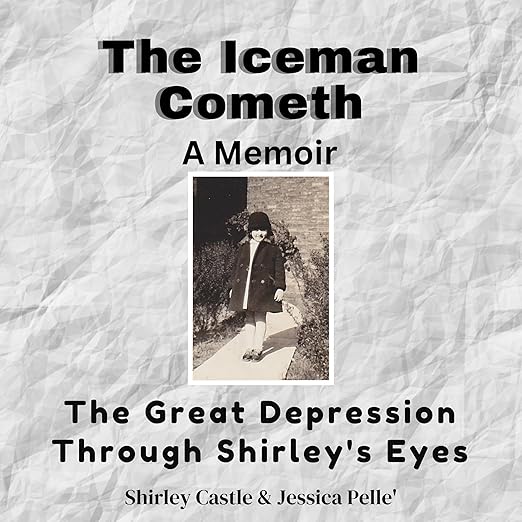
Photographs come up in the don c. review, and they are described as wonderful. A recording cannot carry them. If the images are part of what makes this family document work, and a Depression-era Chicago album very plausibly is, then the audio version is delivering an incomplete object and the listing never mentions the shortfall. Anyone buying for the historical texture should weigh a printed edition against this one before deciding.
An oddity sits in the star line too, though a benign one. The badge reads a full five, the counter says three votes, and three whole-star votes averaging five have to total fifteen out of fifteen. Since only two people wrote anything, the third vote is a silent five. A perfect score from three graders on a self-published family memoir is exactly the pattern you would expect when the earliest audience is small and close to the subject.
Grandparents and Grandchildren, the Ideal Pair
Family history listeners and anyone who has ever tried to record an elderly relative's stories will recognize what is happening here, and will probably find the effort moving regardless of its polish. Listeners drawn to the Depression as a lived experience, not an economic event get an hour of exactly that. It also works as a prompt: the most common reaction to a book like this is wanting to call someone in your own family before the same stories disappear. Teachers looking for a first-person voice to set beside a textbook chapter on the Depression will find the length convenient, since an hour fits inside a single class period with time left for discussion afterward. Grandparents and grandchildren listening together are probably the ideal audience of all.
This is not worth a credit if you want documented history with sources, breadth or analysis, because an hour of one family's recollection is a different object entirely. No review here describes the recording at all, because neither of the people who wrote had heard a second of it. Sixty-one minutes, two accounts of who wrote it, and a family story worth the hour anyway.