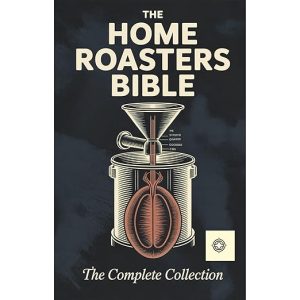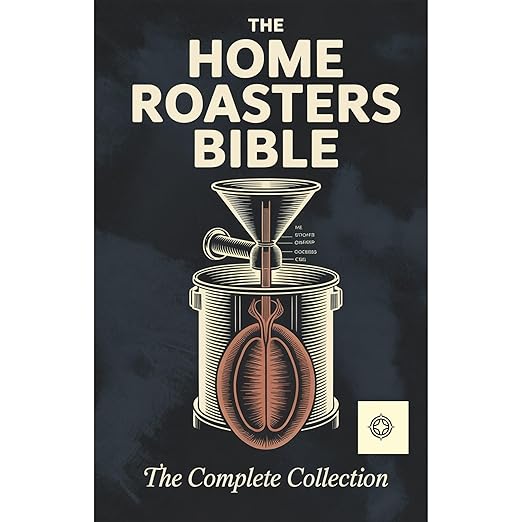
A twelve-and-a-half hour audiobook about home coffee roasting might sound like an unusual proposition, but the format makes a specific kind of sense here. The Home Roasters Bible: The Complete Collection arrived in my listening queue during a bout of kitchen-project restlessness, and Dennis Lloyd's three-volume series, collected here in a single release, proved to be a well-structured progressive curriculum from first roast to advanced flavor sculpting. That arc has a natural audio rhythm even when the material gets technical, though the narration raises questions worth addressing upfront.
A note on the production: this audiobook uses Virtual Voice, an AI-generated narrator rather than a human performer. That matters here because Lloyd's writing is instructional and sensory in equal measure. He wants you to listen for the first crack, to smell the difference between underdeveloped and overdeveloped, to feel when a roast is stalled. An AI voice delivers those passages accurately but without the experiential weight a human narrator would bring. The instructions are clear. The enthusiasm they are meant to convey is noticeably absent. Listeners who are primarily looking for technical reference material will be less troubled by this than those hoping for an immersive learning experience that teaches through vocal energy as much as through words.
Popcorn Poppers Lead to the Roast Curve Chart
The three-book structure earns its length. Book One, titled Your First Roast, is aimed at complete beginners and covers sensory foundations: how to judge a roast by sight, sound, and smell without relying on expensive equipment. Lloyd's decision to start here, with the claim that you can begin roasting in a single weekend using a popcorn popper, is well-judged. The barrier to entry he presents is genuinely low, and the first section is the most accessible and practically motivating part of the collection.
Book Two, Mastering the Profile, shifts into data-driven territory. Rate of Rise, the Roast Curve, and systematic troubleshooting for problems like baked or stalled coffee form the core of this section. This is where the audiobook format creates its main challenge: concepts like Rate of Rise benefit from visual representation, and the PDF companion that comes with the title is effectively required reading for this section rather than optional supplementary material. Listeners who engage with the audio while also working through the PDF will get significantly more from Book Two than those who listen passively.
Heat Transfer Physics for the Deliberate Roaster
Book Three, The Artisan Roaster, is the most ambitious section and the most technical. Lloyd moves into the physics of heat transfer, covering conduction, convection, and radiation as distinct variables in flavor development. The framework he builds here, around intentionally manipulating chemistry to highlight acidity for filter coffee versus body for espresso, is genuinely sophisticated and not commonly available at this level of accessibility in coffee education literature. For listeners who have already completed the first two books and want to move from competent to deliberate, this section justifies the entire collection and then some.
Lloyd's prose has a directness that suits the progressive curriculum format well. He is not trying to add romance to the subject the way many coffee writers do; he is primarily interested in demystification, and that tone is consistent across all three books. The synopsis describes the collection as a bridge between books that are "too simple" and books that are "too complex," and that framing is accurate. The Home Roasters Bible occupies a useful middle space that library-minded hobbyists and small-batch commercial roasters in early stages will both find valuable, even if the pedagogical warmth that a skilled human narrator would provide is absent.
AI Narration Treats First Crack Like Cleanup
The Virtual Voice narration is the most significant caveat for this audiobook. Sensory learning requires sensory engagement from the teacher, and the AI delivery flattens the distinction between a passage about the first crack, a genuinely exciting moment in roasting, and a passage about cleaning your equipment. Both are delivered at the same register. Listeners who would benefit from the instructional content should consider whether they want to use this audiobook as primary reference or as a supplement to hands-on practice and print reading. The technical accuracy of the content is not in question; it is the pedagogical warmth that the narration cannot supply, and for this genre of material that warmth is not incidental.
The collection also assumes access to at least basic roasting equipment, even if that equipment is a popcorn popper. Listeners who are still at the stage of deciding whether to invest in home roasting at all may find themselves making that decision based on the content of Book One alone, which is actually a reasonable use of this audiobook: Lloyd makes a persuasive case for entry-level roasting without overselling the investment required to get started.
Inconsistent Roasters Should Start With Book Two
Home roasting enthusiasts who want a structured curriculum rather than scattered online resources will find the three-book arc genuinely valuable. Listeners who have dabbled in home roasting but feel their results are inconsistent will benefit most from Book Two's systematic troubleshooting approach. Specialty coffee professionals in the early stages of developing a roasting program may use this as foundational vocabulary before moving to industry-level resources. Listeners who need human warmth and experiential teaching in audio form should be aware that the Virtual Voice narration significantly limits the instructional intimacy that makes the best how-to audiobooks distinctive. The companion PDF is effectively required, not optional, for anyone serious about applying the material in Books Two and Three.
At a Glance
- Performance: Virtual Voice AI narration is technically accurate but lacks the sensory engagement this kind of instructional content specifically requires.
- What it covers: Home coffee roasting progression, sensory learning, data-driven flavor development
- Feel: Methodical and informative, more reference manual than immersive listen
- Our call: A well-structured three-part curriculum for home roasters at every level, though the AI narration and reliance on the companion PDF make it best used alongside hands-on practice rather than as a standalone audio experience.
Frequently Asked Questions
Is the Virtual Voice narration a significant problem for this type of audiobook?
It is a meaningful limitation. The content is technically accurate throughout, but the AI delivery cannot convey the sensory excitement of moments like first crack or the frustration-to-resolution arc of troubleshooting a stalled roast. Listeners who process instructional material well through reading may prefer the print edition.
Do I need expensive roasting equipment to get value from this audiobook?
No. Book One explicitly covers how to start roasting with a popcorn popper and minimal investment. Lloyd's entry-level approach is one of the collection's genuine strengths, and the progression through Books Two and Three assumes you are building on basic equipment before upgrading.