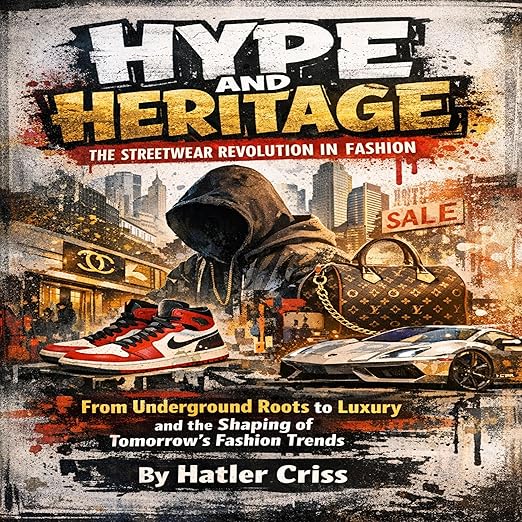
Streetwear runs on scarcity and timing, on limited releases and the resale market that assembles around them, so a seventy-four-minute audiobook about it carries a certain formal wit: the thing is over almost before it starts. Hype and Heritage promises the full route from underground subcultures to global luxury runways in a little over an hour. That is either admirable compression or a table of contents read at volume, and which one you get depends almost entirely on how much of this world you already move through.
Streetwear History Filed Under Crafts and Hobbies
Shelving is the first oddity, and it is not a small one. This record sits in home and garden with a Crafts and Hobbies tag attached, while the description promises an account of how street culture, music, skateboarding, hip-hop, and youth movements built a billion-dollar global fashion phenomenon. None of that belongs beside houseplants and needlework. A buyer browsing fashion, business, or cultural history will never walk past this title, and a buyer browsing crafts will meet something nobody asked them to consider.
Seventy-four minutes against seven stated subjects works out to roughly ten minutes apiece, and the seven are not modest: underground origins, sneaker culture and limited releases, the fusion of street labels with luxury houses, the role of music and art and youth culture, branding and storytelling and collaboration, social media and influencer dynamics, and the future of the form under sustainability and digital pressure. At that ratio the listener receives orientation rather than argument. Whether that counts against the book depends on which of the two you came for.
Compression Done Right, From Subculture to Runway
Compression has real uses. Anyone who has tried to explain to a colleague why a hooded sweatshirt can carry a luxury price tag will appreciate a short, ordered account that moves from subculture to scarcity to resale to runway without stopping for footnotes. The central claim, that casual wear became cultural currency, is the correct frame for the whole story. The order of operations the description walks, independent designers first, then limited drops, then digital hype, then acquisition by luxury houses, is also the order in which it happened.
Collaboration gets the most interesting treatment on offer, presented not as a marketing stunt but as a change in how brands narrate themselves to an audience that can tell the difference. The same instinct shows in the decision to close on sustainability, digital fashion, and global street influence rather than on a victory lap. A book that ends by asking what happens next to an industry built on manufactured scarcity is at least facing the hard question, even if seventy-four minutes leaves little room to answer it.
Webster Narrates a History With No Names
Webster is credited as the reader, which puts a live human voice on a description containing no live human beings at all. That absence is the strangest thing about the copy: an account of a culture assembled by particular designers, particular labels, and particular releases somehow names not one of them. No brand, no collaboration, no date. Every topic is present and every actor is missing, which is how a summary of a movement ends up standing in for the movement.
No Sneaker, No Drop, No Names to Recall
Abstraction is the cost of that choice, and it compounds over an hour. Sneaker culture without a sneaker, hype without a drop that anyone remembers, luxury fusion without the house that did it first: the ideas stay true and stop being memorable. Cultural history earns its keep through specifics, through the particular store, the particular line outside it, the particular resale figure that made everyone sit up. Take this as a framework you will fill in later from elsewhere.
Title trouble follows close behind. The description gives the full name as Hype and Heritage: The Streetwear Revolution in Fashion, while the listing stops after the first two words and strips out the only part that tells a browsing buyer what the subject actually is. Set that beside the crafts shelving and this record has managed to conceal its own topic twice over, in the two fields a shopper reads before any other.
Neither feedback column carries anything yet. Zero grades, zero written entries, on a title published in February 2026, which is ordinary rather than alarming and still leaves the sales copy as the only witness in the room. The publisher credit reads Han Gauthier Gregorya, matching neither the byline nor any imprint the description mentions. None of this is disqualifying on its own. Together it means the only account of this book available to you was written by somebody with something to sell.
Curious Outsiders Get More Than Genre Completists
Curious outsiders are the ideal audience. Someone working adjacent to fashion, running a small brand, or simply noticing the line that forms outside a store on release morning will get the shape of the phenomenon here in a single sitting, and one sitting is genuinely all it costs. The same applies to anyone who needs a fast orientation before committing to a longer reading list on the subject.
Historians and completists should keep looking, because a history needs names and dates and this one holds both at arm's length. Anyone already tracking the resale market, reading collaboration announcements, and able to date the shift from skate shops to runways will find the whole seventy-four minutes familiar territory. Anybody standing just outside this culture, close enough to see it and too far off to read it, will take more from seventy-four minutes than the price suggests.
Good to Know
Does the audiobook cover sneaker culture specifically, or stay at the level of fashion in general?
Sneakers get their own listed strand, built around how limited releases manufacture demand, and it sits alongside collaborations and influencer dynamics as part of the hype machinery. Expect the mechanism explained rather than a model-by-model account, since no particular release or brand is named anywhere in the description.
Do you need any background in fashion before starting this audiobook?
None at all. The stated audience runs from fashion enthusiasts and working designers through entrepreneurs, students, and general cultural trend followers, which is a wide enough net to imply a ground-floor entry point. Anyone who can picture a hooded sweatshirt and a resale price already has the prerequisites.
Is this closer to a business book or a culture book?
It splits the difference and leans commercial. Branding strategy, demand generation, and the economics of exclusivity share space with the youth movements and music scenes that produced the clothes, and the phrase the copy keeps returning to is a billion-dollar global fashion phenomenon. Culture supplies the story, commerce supplies the spine.