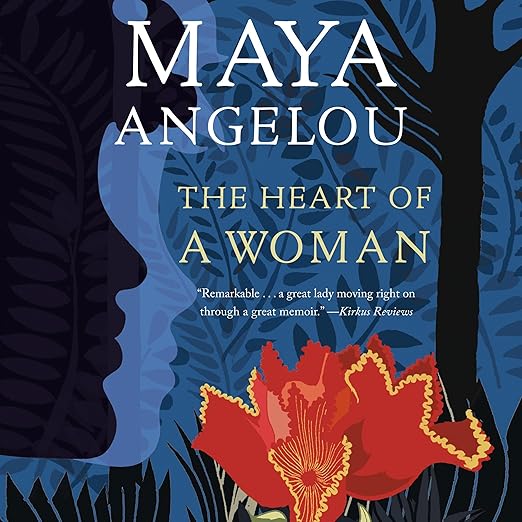
Maya Angelou's prose carries a dancer's sense of rhythm even when the subject turns painful, and this audiobook, the fourth installment of her autobiography, is where that rhythm meets some of the most eventful years of her life. The Heart of a Woman follows Angelou into New York City's Harlem Writers Guild, into Martin Luther King's inner circle as a movement organizer, and into a marriage to an African freedom fighter that unravels almost as fast as it forms.
Uzo Aduba narrates, and the casting carries real thematic weight beyond simple performance quality. Aduba won an Emmy for playing Shirley Chisholm, another Black woman navigating power and prejudice in the same broad era this book covers, and that history makes her a genuinely fitting match for Angelou's specific register of dignity under pressure.
The Review
This is the fourth of what eventually became a seven-volume autobiography, following the far more famous I Know Why the Caged Bird Sings, and readers coming to it fresh should know it assumes real familiarity with who Angelou already is by this point: a working single mother, a published writer finding her circle, a woman who has already survived a great deal before this book even opens.
The listener reception, thin in raw numbers but consistent in warmth, backs up Angelou's reputation directly. Reviewer Diamond called it beautiful work and appreciated encountering Angelou's historical context for the first time in adulthood; Kandy praised such an interesting and adventurous life and said she was already looking forward to the next volume; Treva simply called it a good book and meant it.
The Harlem Writers Guild that Angelou joins in this volume was a genuinely significant institution, a workshop and community for Black writers that helped shape a generation of American literature well beyond Angelou's own career. Placing her creative awakening inside that real historical context gives this volume a documentary weight alongside its personal one; this is not just one woman finding her voice, it is one woman finding her voice inside a room that was already changing American letters.
The synopsis specifically frames Angelou's arrival in New York around her identity as a singer-dancer entering the city's razzle-dazzle, a reminder that by this point in her life she had already built one full career, in performance, before the writing life that made her famous had properly begun. That layered history, performer first, writer second, activist throughout, is part of what makes her prose feel so attuned to rhythm and delivery even on the page.
Writing an autobiography across seven separate volumes, rather than one comprehensive book, is itself a notable structural choice, and it means each individual installment has to function as both a complete reading experience and a chapter in a much longer project; The Heart of a Woman succeeds at that balance by giving this specific stretch of years its own clear emotional throughline rather than feeling like a fragment.
The vignettes of Billie Holiday and Malcolm X that the synopsis promises are not name-dropping for its own sake, they are Angelou placing her own coming-of-age directly alongside the era's most consequential figures, and Aduba's performance gives each of those encounters distinct emotional weight rather than treating them as celebrity cameos.
Angelou's real work as the SCLC's northern coordinator during King's campaign grounds this book in genuine historical stakes, not just personal memoir, and that blend of political history and intimate confession is exactly where this autobiography series has always been strongest.
The wedding-day betrayal at the center of this volume, her heart stolen virtually on her wedding day, gives the book real narrative tension beyond the historical backdrop, and Aduba's range as a dramatic performer serves that emotional whiplash well.
The rebellious teenage son at the emotional center of this volume grew up to become a published poet in his own right, which retroactively adds a layer of poignancy to Angelou's account of a difficult, loving, occasionally exhausting mother-son relationship during these specific years. Listeners who know how that relationship eventually unfolded will hear these chapters differently than someone encountering mother and son for the first time.
Angelou's own later audiobook recordings of some of her work are well known for the distinctive richness of her speaking voice, and listeners familiar with those recordings should know upfront that Aduba offers a different, interpretive performance rather than an attempt to imitate Angelou's own delivery, a choice that lets this edition stand on its own rather than living in comparison.
Weak Spots in The Heart of a Woman
New listeners should decide upfront whether they want the fuller arc, which means starting with Caged Bird, or whether jumping in at volume four for this specific chapter of Angelou's life works for their purposes; the book does provide enough context to follow along, but it rewards prior familiarity.
At ten hours and forty-five minutes, this covers a genuinely eventful, sometimes difficult stretch of Angelou's life, including real heartbreak and real political danger, so listeners should expect emotional intensity alongside the warmth reviewers describe.
For listeners who came to Angelou through Caged Bird and have wondered what happened next, specifically how a young single mother in San Francisco became a civil rights organizer and published writer moving in New York's literary circles, this volume is where that specific transformation actually happens on the page, making it a genuinely satisfying answer to a question the first book leaves open.
The vignettes involving Billie Holiday and Malcolm X are brief by design, glimpses rather than extended portraits, so listeners hoping for deep biographical treatment of either figure specifically should adjust expectations; their real value here is what they reveal about Angelou's own position at the intersection of art and activism during these years.
Who It's For
Recommended for listeners of civil rights-era memoir, for existing fans of Angelou's autobiography series ready for volume four, and for anyone specifically drawn to Aduba's performance given her own history playing consequential Black women of this period.
New-to-Angelou listeners who want the fullest emotional payoff should start with Caged Bird first; this volume works better as a continuation than as an introduction.