Quick Take
- Narration: Virtual Voice (AI narrator), the absence of a human narrator is a significant limitation for a book that trades in legendary American mythology and dramatic storytelling.
- Themes: frontier mythology, outlaw versus lawman archetypes, the violence underlying American expansion
- Mood: Punchy and episodic, aimed at accessible history entertainment
- Verdict: A fast, readable introduction to Old West figures for casual history fans, but the AI narration and thin depth mean serious history readers should look elsewhere.
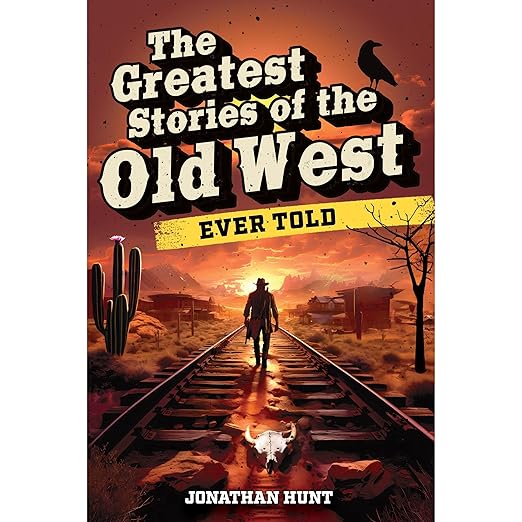
I want to be direct about the narration situation before anything else. The Greatest Stories of the Old West Ever Told uses a Virtual Voice narrator, which means this is an AI-generated audio performance rather than a human reading. That distinction matters more for some books than others, and it matters considerably here. The Old West as a cultural mythology is built on voice, on the particular way storytellers have always dramatized Wyatt Earp or Geronimo or Jesse James, and an AI narrator’s inability to bring genuine dramatic inflection to that material is a real limitation rather than a minor technical detail. I have factored this into the review throughout.
The book itself is a collection of narrative sketches about six figures: George Custer, Wild Bill Hickok, Billy the Kid, Wyatt Earp, Jesse James, and Geronimo. The author, Jonathan Hunt, frames each through a defining episode or through the arc of their most legendary moments. The Custer section covers the Battle of Little Bighorn and his characteristic overconfidence. The Hickok section ends with his death in Deadwood. Billy the Kid’s account includes the confrontation with Pat Garrett. The Geronimo section engages with what drove him to take up arms: the murder of his mother, wife, and children by soldiers.
Our Take on The Greatest Stories of the Old West Ever Told
At three hours, this is an introduction to legendary figures rather than a serious examination of any of them. The range of subjects across six major figures in three hours means each receives perhaps twenty to thirty minutes of coverage. That is enough to understand the outline of a life and the mythology surrounding it, not enough to understand the full context, the conflicting historical accounts, or the more complicated human beings behind the legends.
Hunt is aware of the tension between history and entertainment and, based on the reviewers’ responses, resolves it deliberately in favor of entertainment. One reviewer described it as history for entertainment, noting that the book recommended for juveniles. That framing is useful. This is not a book that is trying to revise or complicate the received mythology of the Old West. It is presenting that mythology in a readable, digestible form. Whether that is a feature or a limitation depends entirely on what you are looking for.
Why Listen to The Greatest Stories of the Old West Ever Told
For casual listeners who want a quick orientation to major figures of the Old West before a trip to Tombstone, or who want something accessible to share with a younger family member, the content itself is clear and reasonably organized. Hunt writes without pretension and the three-hour runtime ensures the book does not overstay the brief it has set for itself. The chapter on Geronimo is perhaps the most interesting, partly because it frames him through loss and revenge rather than through the romanticized resistance-fighter mythology that often distorts his story in popular accounts.
Several reviewers mentioned receiving or giving this as a gift, and that context suggests the book’s primary appeal: it works as an introduction for someone who has a general interest in Western history but has not read deeply in the subject. For that audience, the brevity and accessibility are genuine assets.
What to Watch For in The Greatest Stories of the Old West Ever Told
Beyond the AI narration, the historical depth is limited by design and by runtime. None of the six figures covered here can be adequately represented in thirty minutes, and the book does not attempt to reconcile conflicting historical accounts or engage with the significant scholarship that has complicated the received mythology of each of these figures. The history of Native American nations, for instance, appears in the Custer and Geronimo sections as context for the stories being told rather than as subjects with their own full historical weight.
One reviewer noted that the book did not hold their interest, and that response reflects the risk of the fast-sketch approach. The material depends on the legendary quality of the figures to carry the reader through sections that cannot develop real narrative depth. For listeners who already know who these people were, the sketches may feel too thin. For listeners who came hoping for something they did not know, the brevity may leave them wanting more without knowing where to go for it.
Who Should Listen to The Greatest Stories of the Old West Ever Told
This audiobook is best suited for casual history fans who want a light introduction to Old West mythology, gift buyers looking for something accessible and entertaining for a Western enthusiast, or younger listeners being introduced to these historical figures. If you have any prior reading in the subject, or if you come hoping for nuanced history rather than mythological narrative, you will be disappointed by both the depth and the narration. Serious readers of American Western history will want to go directly to primary sources or dedicated biographies of these figures. For what it is, the book delivers its limited brief honestly, though the AI narration prevents even its entertainment value from being fully realized.
Frequently Asked Questions
Does the AI (Virtual Voice) narration significantly affect the listening experience for this type of book?
Yes, more than it might for other genres. The Old West figures covered here exist largely within a dramatic storytelling tradition, and the absence of human vocal inflection, pacing, and dramatic emphasis flattens that tradition considerably. This is one category where human narration would have added genuine value.
Is the historical content in this book accurate, or does it prioritize legend over fact?
The book leans toward the legendary rather than the rigorously historical. It presents the received mythology of figures like Wyatt Earp and Billy the Kid in readable form without significant engagement with the competing historical accounts or revisionist scholarship that has complicated these stories. It is best treated as popular history entertainment.
Which of the six figures covered gets the most substantial treatment?
At three hours total across six figures, none receives extensive treatment. The Geronimo section is notable for framing his story through personal loss rather than pure rebellion mythology. The Custer and Hickok sections follow familiar narrative arcs. The brevity is consistent across all six.
Is this appropriate for younger listeners or primarily for adults?
Reviewers have described it as appropriate for juveniles and as a gift for a grandson, which suggests the content and tone skew accessible rather than adult. The violence of the Old West is present but handled in a broadly family-appropriate way within the limits of historical accuracy.