At a Glance
- Voice: Jonathan Todd Ross delivers Galloway's irreverent, combative prose with sharp comic timing and the right degree of controlled aggression.
- Big ideas: Tech monopoly power, consumer psychology, corporate mythology versus reality
- Atmosphere: Sharp, combative, and energizing
- Worth it?: Galloway's audiobook is the rare business analysis that makes you genuinely angry at systems you thought you understood.
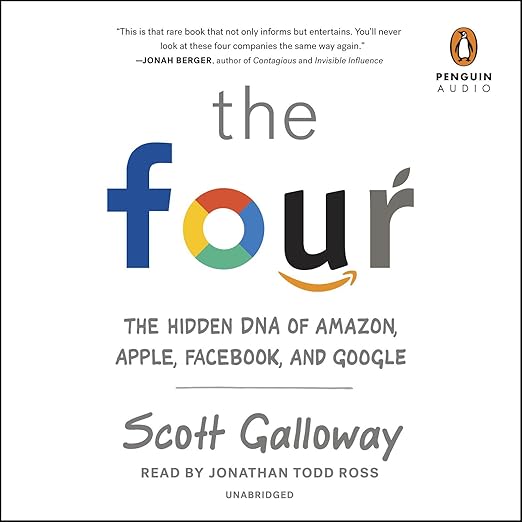
Scott Galloway has a gift for making people uncomfortable with information they thought they already had, and The Four audiobook, narrated with precise comic timing by Jonathan Todd Ross, lands that gift intact. The book takes Amazon, Apple, Facebook, and Google as its subjects, not to celebrate them, which has been done extensively, but to dissect the psychological and structural mechanisms that make them so difficult to dislodge. At eight hours and thirty-two minutes, it earns its length by building a structural argument rather than stringing together anecdotes about disruption.
Our Take on The Four
Galloway is an NYU Stern professor and serial entrepreneur, and his analysis combines academic rigor with the bluntness of someone who has watched these companies operate from inside the business world rather than from the outside commentary that produces most tech criticism. He does not hate the Four. He understands them, which is more unsettling. The core argument is that these four companies have each seized control of a fundamental human need: Amazon owns the id (instant gratification), Apple owns the luxury instinct, Facebook owns the need for social belonging, and Google owns the quest for knowledge. Once you hear this framework, it is difficult to interact with any of these platforms without noticing it working on you and on the people around you.
Jonathan Todd Ross's narration earns specific credit here. Galloway's prose voice is combative and funny in ways that are easy to flatten with overly neutral delivery. Ross calibrates exactly right: he does not editorialize where the text is analytical, but he catches the sardonic humor without mugging for it. One reviewer noted that Galloway's speaking style is so apparent on the page that hearing it performed is like hearing him speak in person, and Ross validates that assessment without doing an impression. It is a confident piece of commercial narration work that respects both the comedy and the argument.
The book's structure moves from diagnosis to implication. The first section establishes how each of the Four operates and what psychological territory they have claimed. The middle section addresses their immunity to conventional corporate accountability: why the stock market forgives them for behavior that would destroy other companies, how they have leveraged regulatory environments and public goodwill simultaneously, and what happens when these companies make errors that would be fatal in other industries. The final section turns personal, addressing what an individual career strategy looks like in a world organized around these platforms.
The audiobook format suits this material particularly well. Galloway's chapters move fast, with frequent shifts in register from data to provocation to career advice to historical analogy. Print readers have to supply their own rhythm. Ross supplies it without imposing it, which allows the analysis to accumulate its intended cumulative force. By the time Galloway reaches the final section on career strategy in a world dominated by the Four, you have been prepared by everything that came before, and the prescriptions land with weight rather than landing as boilerplate advice.
The book also rewards re-listening. The frameworks Galloway builds in the first third come back repeatedly in the second and third acts, and having already absorbed them in audio form means the return visits click rather than feel repetitive. This is one of those business audiobooks that functions genuinely differently from a chapter-by-chapter skim of the print version. The argumentative momentum that Ross's pacing creates is meaningful to the overall effect.
Reviewer responses confirm that the book works across professional backgrounds. One reader described themselves as an English teacher who rarely reads business books, yet found the work fascinating and the author's voice compelling. Another came from a finance background and found the analytical framing of platform power illuminating rather than reductive. That range of appeal is not accidental. Galloway writes for intelligent general readers who want their frameworks sharpened, not for specialists who want jargon confirmed.
What to Watch For in The Four
The Four was published in 2017, and some of the specifics are dated: the company valuations Galloway cites have changed substantially, and Facebook has since rebranded as Meta while its cultural standing has shifted considerably. The structural analysis remains sharp, but listeners should treat the particular examples as illustrations of enduring mechanisms rather than as current reporting. The company that has changed least since publication, in terms of public perception, is probably Apple; the company that has changed most is Facebook, and Galloway's chapter on it reads today as almost prescient about cultural backlash while also predating the specific collapses in trust that followed the book's release.
Galloway is not neutral, and he does not pretend to be. He admires certain aspects of these companies without apology, criticizes others with genuine heat, and the analysis is explicitly that of someone who has strong views and is not concealing them. Listeners who want a dispassionate account will find the tone bracing. For those who find most business writing too timid to say anything memorable, the directness is the point.
Who Should Listen to The Four
Business school graduates who want their frameworks challenged, marketing professionals trying to understand platform power, and anyone who has ever wondered why these specific companies succeeded when so many equally well-funded competitors failed to achieve anything comparable. The final section on building a career in a Four-dominated economy makes this useful not just as analysis but as practical orientation. Listeners who need current financials will find some numbers outdated. Those who want a structural lens on tech dominance that has aged better than most contemporary accounts from the same period will find The Four consistently worth their time.
Is The Four audiobook still relevant given it was published in 2017?
The structural and psychological frameworks Galloway builds remain largely accurate. Specific valuations and some cultural details are dated, but the core analysis of how these companies seized control of fundamental human needs still tracks well.
How does Jonathan Todd Ross handle Galloway's distinctive voice in the audiobook?
Very well. Ross captures the combative wit without performing it, which is exactly what the material needs. One reviewer described reading the book as hearing Galloway speak in person; Ross honors that register.
Is this audiobook suitable for listeners without a business background?
Yes. Galloway writes for intelligent general readers, not MBA students. The frameworks are explained with everyday examples, and the career advice section is directly applicable regardless of professional background.