The Short Version
- Narration: Sophie Loughran brings the dual-timeline structure into focus with warm but differentiated reads of Mellie and Penelope Jane, keeping the 19th and early 20th century perspectives from blending into each other across nearly 12 hours.
- Themes: Female scientific ambition, secrets across generations, the persistence of the past into the present
- Mood: Atmospheric and quietly tense, paced like a long weekend in an old house where something is definitely wrong
- Verdict: A dual-timeline historical mystery set in the Australian bush that earns its paleontology angle through genuine character investment in the fossil hunters themselves, not just the bones they're chasing.
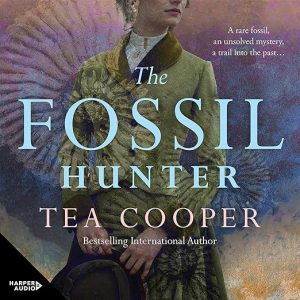
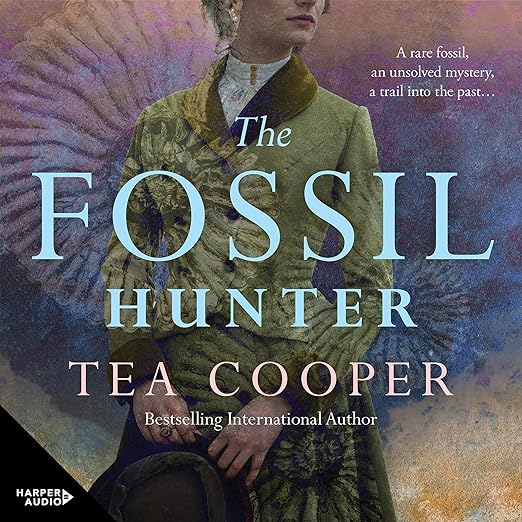
Bow Wow Gorge, an actual place in the Hunter Valley of New South Wales, anchors both timelines of this dual-narrative historical mystery. In 1847, Mellie Vale - recovering from a fever and a terrifying encounter no one believes - arrives at the property of Anthea Winstanley, an amateur palaeontologist convinced that the great sea dragons, the ichthyosaur and the plesiosaur, swam in the inland sea that once covered her land. In 1919, Penelope Jane Martindale returns from the battlefields of World War I and finds her way to the same gorge through a connection between a fossil at London's Natural History Museum and her dead brothers. That the gorge has a sinister reputation, that people disappeared there seventy years before PJ arrives, and that the past is quite literally reaching into the present: this is the architecture of a dual-timeline audiobook that works precisely because both timelines are doing real work rather than one merely providing historical atmosphere for the other.
At 11 hours and 52 minutes, narrated by Sophie Loughran, this is a sustained listening commitment that pays off in the specific way that good historical mysteries pay off - not through twist revelation but through the gradual satisfaction of understanding how a set of circumstances came to be, and why certain things were buried along with the fossils. Reviewers describe it as compelling and deeply absorbing, and the dual-timeline mechanism is specifically cited as one of its strengths: the 1847 and 1919 threads generate tension not just within themselves but between them, because listeners know something is connected before they can see exactly how.
Loughran Doesn't Caricature Either Distinction
The paleontology angle is not decorative. Both Anthea Winstanley and, by inheritance of passion, young Mellie are genuinely consumed by fossil hunting - the physical labor of it, the scientific stakes of proving that certain creatures existed in Australian waters, the social difficulty of being a woman in the 1840s who wants to be taken seriously as a scientific observer. That investment in the science gives the 1847 timeline a texture that pure mystery plotting couldn't generate alone. Anthea's dream - to find proof the sea dragons swam here - is as real a narrative engine as the supernatural menace Mellie encounters in the bush.
Loughran's narration understands these characters rather than simply reading them. Mellie, who is young and traumatized and overlooked, sounds different from Penelope Jane, who has come back from the Western Front with the particular quality of someone who has survived something that most of the people around her haven't. Loughran doesn't caricature either distinction, but across nearly twelve hours, listeners will find the timelines feel genuinely separate, which is the test that dual-timeline audiobooks have to pass.
The Audiobook Turns Connections Into Revelations
The Australian setting is the strongest argument for audio over print. The Hunter Valley landscape - the gorge, the bush at night, the colonial property with its accumulated history - has a sonic quality when described aloud that gains something from a British-inflected narration listening to it from the outside, as both PJ and a modern reader effectively do. Loughran's voice is warm enough to keep the period-specific material from feeling museum-like, which is a real hazard of historical fiction narration that takes itself too seriously.
The audiobook also benefits from the linear quality of audio when it comes to dual-timeline construction. Readers of the print version can flip back and check dates and relationships between the timelines; audio listeners encounter the connections as they are intended to land - as accumulating revelations rather than navigable information. The effect is that certain moments of recognition, when what the 1847 timeline has established suddenly illuminates something in 1919, hit with the force they were designed to have rather than being anticipated by readers who can see the structure from above.
The Monster in the Bush Stays Unresolved
The pacing is deliberate rather than propulsive. One reviewer described it as an easy-going pace, which in context was a positive observation - the Australian country setting suits a story that breathes. But listeners expecting rapid plot development and constant revelation will find this audiobook asks for patience that not everyone wants to give to a mystery. The character investment is real, and the mystery resolution is satisfying, but neither arrives quickly.
The synopsis touches on a monster in the bush that Mellie encounters in the fever sequence - an element that sits at the border between the supernatural and the delirious, and the audiobook is deliberate about not resolving that ambiguity quickly. Listeners who want clarity about whether this is a ghost story or a realist historical novel will find that uncertainty sustained longer than they might expect. That is a literary choice rather than a flaw, but it is worth knowing before committing to nearly twelve hours of it.
Choosing Australia Over the Usual English Locales
Readers who enjoyed Kate Mosse's dual-timeline historical fiction, or who want the Australian bush as a setting for mystery rather than the more common English or American locales, will find this audiobook a distinctive entry in the genre. Fans of paleontology history - particularly the recovery of women's contributions to nineteenth-century natural science - will get an additional layer of pleasure from the Anthea Winstanley material. Anyone who found the Australian setting of books like Hannah Kent's Burial Rites immersive will respond to similar qualities here.
Listeners who need fast-paced plotting and regular revelation to stay engaged with historical mystery should look at more propulsive titles in the genre. Those who want the supernatural element to be definitively either real or explained will need to make peace with the audiobook's preference for holding that question open longer than they might find comfortable.
How does Sophie Loughran's narration handle the 1847 and 1919 timelines in this audiobook?
With clear but not exaggerated differentiation. Mellie Vale - young, recovering from trauma, overlooked - sounds distinct from Penelope Jane Martindale, who returns from World War I with the self-possession of someone who has survived the front. Across nearly twelve hours, Loughran keeps the timelines feeling genuinely separate, which is the essential test for dual-timeline audiobooks.
Is the paleontology and fossil-hunting content in this audiobook substantial or mainly backdrop?
Substantial. Both the 1847 amateur palaeontologist Anthea Winstanley and young Mellie Vale are genuinely invested in the physical and scientific work of fossil hunting, and the audiobook gives real attention to what is at stake in Anthea's conviction that sea dragons swam in the inland sea that once covered her property. The science grounds the mystery rather than simply decorating it.
Does this audiobook work as a standalone or is it part of a series?
It works as a complete, standalone story. The dual-timeline mystery has its own resolution and does not require prior knowledge of other books or promise continuation in a sequel. Listeners can commit to the nearly twelve hours knowing they will get a complete narrative arc.
Is the supernatural element in The Fossil Hunter audiobook resolved or left ambiguous?
Deliberately ambiguous and sustained. Mellie's encounter with something in the bush during her fever is neither definitively explained as hallucination nor confirmed as genuine supernatural occurrence. The audiobook holds that uncertainty for a significant portion of its runtime, which is a conscious literary choice rather than a loose end. Listeners who need clean resolution on this question should be aware going in.