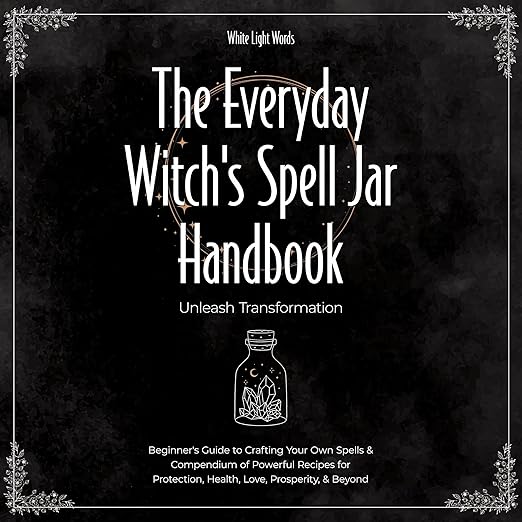
Quick Take
- Narration: Rhonda Pownall’s narration has a warm, practiced quality that suits instructional audio well, guiding listeners through the step-by-step content without sounding clinical.
- Themes: Practical witchcraft, intentional living, the history of magical tradition
- Mood: Calm and ceremonial, like a workshop run by someone who takes the material seriously
- Verdict: A capable introductory guide to spell jar practice with over 50 recipes and solid historical grounding, though experienced practitioners may find the depth limited.
There is a real question embedded in any review of a practical witchcraft guide in audiobook format: can step-by-step instructional content, the kind that requires you to have your hands in jars of herbs and crystals, actually work as an audio experience? I listened to this one on a weekday afternoon, curious about how the format would handle material that is fundamentally procedural. The answer, with The Everyday Witch’s Spell Jar Handbook, is: better than you might expect, and with some caveats worth knowing.
White Light Words has constructed a guide that moves from historical and philosophical grounding into practical instruction, with over 50 spell jar recipes organized by magical intent: love, protection, health, prosperity, and so on. The historical section covers the roots of spell jar practice with genuine care, including a differentiation between Wicca and witchcraft that reviewers flagged as one of the more useful things the book does early on. Many introductory texts collapse these traditions into each other; this one takes the time to explain the distinctions.
Our Take on The Everyday Witch’s Spell Jar Handbook
The structure is sensible and accessible. The book opens with context and history, moves into foundational principles and ingredient knowledge, and then delivers the spell jar recipes in a format that is described by reviewers as streamlined but still aesthetically satisfying in its wording. The recipes cover a wide range of intentions, which means listeners at different points in their practice will find something applicable rather than having to mentally translate content designed for a single use case.
What the book does well, and what Rhonda Pownall’s narration supports, is treating the material with the seriousness that its intended audience brings to it. This is not a novelty guide or a skeptic’s tour of witchcraft tradition; it is written for people who are genuinely interested in the practice. One reviewer described the ethical dimension of the book, its attention to practicing with respect and integrity, as something she found particularly welcome in a genre where that grounding is not always present.
Why Listen to The Everyday Witch’s Spell Jar Handbook
Pownall’s narration is well-suited to instructional material. She does not rush the step-by-step content, which matters considerably when listeners may be following along actively rather than just absorbing. The audio format comes with an accompanying PDF in Audible Library, which addresses the obvious practical concern: if you need to refer back to an ingredient list or a specific recipe, you are not stuck trying to rewind to the right moment in the audio. That design decision is thoughtful and makes this significantly more useful as a practical guide.
Reviewer responses are strongly positive across the board, with multiple listeners describing the historical sections as the most revelatory part of the experience. One reader who had been exploring Wicca and witchcraft texts more broadly said this book gave her the history that answered questions other books left open. That is a real value for someone building a foundation in the tradition.
What to Watch For in The Everyday Witch’s Spell Jar Handbook
One reviewer raised a specific and legitimate concern: the early chapters are repetitive in ways that could have been consolidated. If you are listening sequentially, the redundancy in the first few sections is noticeable. Another reviewer caught an error in the ritual instructions, specifically that salt appears to be blessed twice in a sequence where the text seems to intend separate blessings for salt and water. These are editing issues rather than conceptual failures, but they are worth noting.
At three and a half hours, this is a short listen. Experienced practitioners who have deep familiarity with the history and principles of witchcraft may find the depth insufficient for their needs. The value here is primarily for newcomers and those at an early intermediate stage of practice, not for seasoned witches seeking advanced technique.
Who Should Listen to The Everyday Witch’s Spell Jar Handbook
The primary audience is people new to witchcraft or spell jar practice specifically, who want a guide that takes the subject seriously and provides clear, usable instructions alongside sufficient context to understand what they are doing and why. Those who have been practicing for several years and are comfortable with the history and foundational principles will likely find the content introductory rather than enriching. Anyone who has been curious about the tradition but unsure where to begin will find this a genuinely accessible and respectful entry point.
Frequently Asked Questions
Does the audiobook format work for a practical guide that involves hands-on ingredients and preparation?
Reasonably well, partly because the publisher includes a PDF companion in Audible Library. You can use that for reference during active practice. The narration walks through instructions clearly, but the PDF is a meaningful supplement for anyone planning to actually make spell jars rather than just learn about the practice.
How does Rhonda Pownall’s narration handle the ritual instruction sections?
With the appropriate gravity. Pownall does not rush the step-by-step content and treats the material with the seriousness the intended audience brings to it. The pacing suits the instructional format well, though the early chapters’ redundancy noted by some reviewers does come through in the audio.
Does the book distinguish between Wicca and witchcraft, or does it treat them as the same thing?
It distinguishes between them, which several reviewers called out as one of the book’s strengths. The historical section covers paganism, Wicca, and witchcraft separately and explains the distinctions clearly, which is not universal in this genre.
Is this guide appropriate for someone completely new to witchcraft, or does it assume prior knowledge?
It is specifically designed for beginners, with no assumed prior knowledge. The historical foundation and step-by-step approach make it accessible to someone with no previous experience. More experienced practitioners may find the depth insufficient for their level.