Quick Take
- Narration: Brian Nishii reads with a quiet reverence that suits Dogen’s meditative prose, allowing the weight of individual passages to land without overpowering them.
- Themes: Impermanence, the nature of time and being, Zen practice and enlightenment
- Mood: Still and contemplative, demanding slow listening rather than passive absorption
- Verdict: A beautifully curated introduction to one of Zen Buddhism’s most demanding thinkers, best taken in short sessions rather than continuous play.
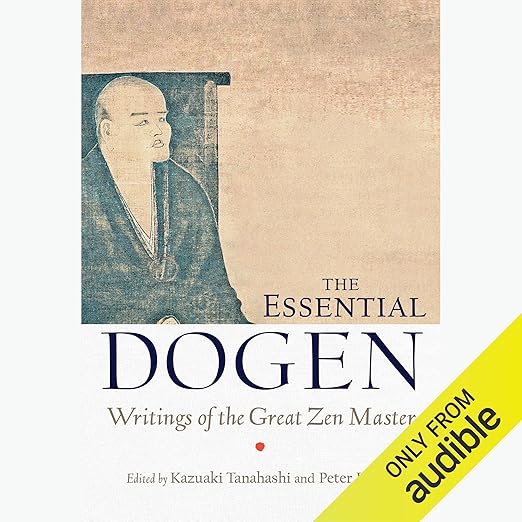
There is a particular challenge in reviewing a compilation of 13th-century Zen philosophy, because the usual critical framework, does it entertain, does it surprise, does it deliver on its premise, misses the point almost entirely. Dogen’s writings are not designed to be evaluated; they’re designed to be encountered. What I can tell you is what the experience of listening to this particular selection, curated by Kazuaki Tanahashi and Peter Levitt and narrated by Brian Nishii, was actually like. And what it was like was demanding, illuminating, and occasionally transformative in the way a single sentence sometimes is.
Eihei Dogen, founder of the Soto School of Zen Buddhism, lived from 1200 to 1253 and left behind a body of writing that has been studied for centuries, most famously his massive masterwork the Shobogenzo. This collection draws from the full range of his works and arranges the selections thematically, which is the right editorial decision for an introduction. Dogen’s writing is lyrically dense and often paradoxical, and context, even the small context of being grouped with related passages, helps.
Our Take on The Essential Dogen
One reviewer described the experience of finally giving this book their attention as the moment when it “exploded,” having sat silent in their library for years. That rings true to me. Dogen is not a writer you can approach on autopilot. His best passages require you to stop, not literally when listening, but mentally, to let the implications settle before moving on. The audio format is both a strength and a challenge for this reason: it doesn’t give you the option to linger on the page the way physical reading does.
Tanahashi and Levitt have made excellent editorial choices. The bite-size format, as one reviewer called it, with minimal commentary between selections, puts you in the room with Dogen’s actual words rather than with an intermediary’s explanation of them. For a thinker this opaque and this rewarding, that directness is valuable. You’re not being told what to think about what Dogen said; you’re being given what Dogen said and left to work.
Why Listen to The Essential Dogen
Brian Nishii’s narration is quiet and precise, which is exactly right. Dogen’s prose is already doing so much work that a narrator who over-emotes would be actively harmful to the listening experience. Nishii seems to understand that his job is to deliver the words clearly and then get out of the way. The result is a performance that feels almost monastic in its restraint, which may sound like a limitation but is actually a form of interpretation that suits the material perfectly.
This collection serves as the rare introduction to a major figure that doesn’t compromise the figure in the process of making them accessible. Several reviewers noted they came to Dogen through other Zen texts, encountering his name with repeated reverence, and found this compilation confirmed why. The selections are varied enough to show the range of Dogen’s concerns, from highly technical Zen practice instructions to passages of unexpected lyrical beauty, without flattening him into a single note.
What to Watch For in The Essential Dogen
The thematic organization means you’ll encounter passages of different character in proximity to each other, which can initially feel disorienting. Dogen on time is a different register than Dogen on daily practice, and the transitions don’t always signal themselves clearly. This isn’t a flaw in the compilation so much as a feature of listening to a 13th-century thinker whose different modes of writing reflect different audiences and intentions.
One reviewer with a Theravada background noted that Dogen’s writing is “lyrically cryptic/poetic,” which is accurate. Some passages are immediately accessible; others require patience and, ideally, some secondary reading. The review that described coming to this compilation after reading the Gateless Gate and the Blue Cliff Record describes the ideal approach: use those texts as preparation, and let this be the deeper dive.
At five hours and 43 minutes, this is a manageable length, but I’d strongly recommend against listening in a single sitting. This material is better taken in 20 to 30 minute sessions, with time between for what was heard to settle. The way you’d read a book of poetry, not the way you’d listen to a novel.
Who Should Listen to The Essential Dogen
Ideal for listeners with some prior exposure to Zen or Buddhist practice who want to engage with Dogen’s actual writings rather than secondary accounts of them. Also valuable for practitioners of any tradition who are drawn to contemplative philosophy and can work with its demands. Less recommended for those new to Zen with no prior context, since Dogen assumes a level of familiarity with basic Zen concepts that this compilation doesn’t provide. Read Shunryu Suzuki’s Zen Mind, Beginner’s Mind first, as multiple reviewers suggest, and return to this when you’re ready.
Frequently Asked Questions
Is The Essential Dogen a good starting point if I’ve never read any Zen philosophy?
Not quite. Multiple reviewers recommend reading Shunryu Suzuki’s Zen Mind, Beginner’s Mind or encountering the Gateless Gate before coming to Dogen. This compilation assumes some familiarity with Zen concepts and doesn’t offer the introductory scaffolding that true beginners need.
How does the thematic organization of this collection compare to reading the Shobogenzo directly?
The Shobogenzo is enormously long, highly technical, and one of the more demanding texts in world literature. This compilation extracts what the editors consider the most accessible and illuminating passages from across Dogen’s full body of work and groups them by theme, making it a practical first encounter without the full weight of the complete text.
Does Brian Nishii’s narration add to or detract from the philosophical content?
He adds to it through restraint. His delivery is quiet and precise, which suits Dogen’s demanding prose. A more emotive narrator would compete with the writing rather than serve it. The near-monastic quality of Nishii’s performance is an interpretive choice that works.
How should I structure my listening sessions given the nature of this material?
Short sessions are strongly recommended, 20 to 30 minutes at a time, with pauses between. Dogen’s passages reward slow attention and don’t yield their meaning easily on a single pass. Listening to the full five-plus hours in one sitting will likely produce absorption without comprehension.