Quick Take
- Narration: Freddy Silva reads his own material with the measured intensity of a researcher who believes completely in what he has uncovered, unhurried and immersive.
- Themes: Sacred architecture as technology, global network of ancient power sites, consciousness transformation through physical space
- Mood: Contemplative and expansive, spanning continents and millennia with steady conviction
- Verdict: A rewarding listen for those open to alternative archaeology, Silva’s research is more systematically presented than most in this space, even where you may question the conclusions.
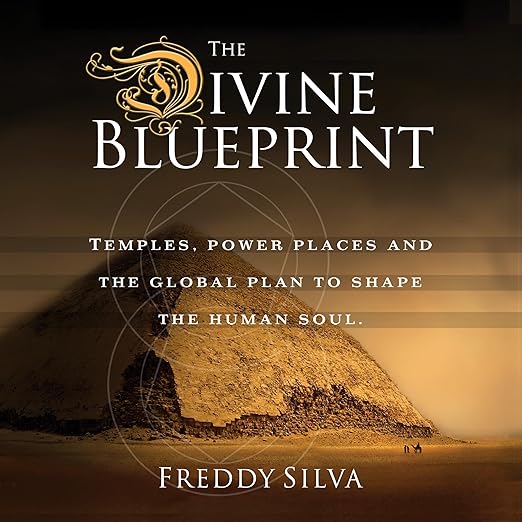
I listened to the opening chapters of this one during a long walk on a grey November afternoon, which turned out to be the exact right conditions for it. Freddy Silva’s The Divine Blueprint is the kind of audiobook that asks you to let seventeen thousand years of human spiritual history settle over you slowly rather than rushing toward any particular conclusion. By the time I had looped back home and started the second chapter, I had already accepted that this was going to be a long engagement with a very specific kind of mind.
Silva is a best-selling author in the alternative spirituality and sacred sites space, and this book, narrated by the author himself, presents what he frames as a systematic account of how ancient temples functioned not as monuments but as technologies for transforming human consciousness. The framework spans Stonehenge, the sacred sites of Egypt, India, the Americas, Pacific islands, and the Far East. The 17,000-year journey the synopsis promises is not metaphorical.
Our Take on The Divine Blueprint
What distinguishes Silva from the more breathless end of the alternative archaeology genre is his investment in structure. He builds his argument through what he calls seven laws that transform ordinary locations into portals, and he engages with scientific literature on the measurable effects of ancient sites on human neurophysiology. Whether you accept the framework or not, there is a genuine attempt here to be systematic rather than simply evocative. Reviewers who have read his full catalog describe his work as cohesive and interconnected in a way that rewards reading multiple titles.
Silva narrates his own work, and this is the right decision for this material. His delivery has the quality of a patient scholar presenting findings he has spent decades accumulating rather than a performer dramatizing a hypothesis. He is measured and unhurried, which suits both the scope of the subject and the meditative quality the book invites. Those who want a faster pace will find the ten-hour runtime demanding. Those who can match Silva’s speed will find it generative.
Why Listen to The Divine Blueprint
The section on what Silva calls the global network of power places is the book’s most ambitious stretch. He argues that the survivors of a global flood in 9703 BC, figures he identifies with mythological groups across multiple cultures, the Seven Sages, the Shining Ones, the Followers of Horus, undertook a coordinated project of rebuilding a network of sacred sites on specific energy hotspots. This is the kind of claim that will either open a door or close one, depending entirely on the listener’s tolerance for alternative chronology.
For those for whom the door opens, the synthesis Silva offers is considerable. He draws on architecture, archaeology, archaeoacoustics, mythology, and what he describes as measurable geomagnetic properties of sacred sites. The range is impressive even to skeptical listeners. Reviewers across multiple of his books describe the experience as expanding their understanding of ancient spiritual practice, with one noting that it cuts through the miasma of false religion to reveal something more personal and ancient. That register, experience-centered spirituality rooted in pre-institutional practice, is Silva’s consistent offering.
What to Watch For in The Divine Blueprint
The book begins slowly. At least one reviewer notes this directly, describing the opening as taking time to find its pace. Silva is building conceptual scaffolding before introducing the primary material, and the patience that requires is real. The reward is that when the specific sites and their properties are introduced, the framework is in place to make them meaningful rather than merely anecdotal.
Listeners coming from a strictly materialist framework should be prepared to encounter claims that will not be verifiable through standard academic channels. Silva distinguishes his work from popular alternative archaeology by engaging with scientific literature, but his conclusions extend beyond what that literature alone would support. This is a book for people who are genuinely curious about consciousness, ancient architecture, and spiritual technology, not a neutral survey of established archaeological consensus.
Who Should Listen to The Divine Blueprint
Readers already familiar with Silva’s work will find this a natural progression in his argument about sacred technology. Those drawn to alternative archaeology, sacred site tourism, archaeoacoustics, or the overlap between ancient mythology and physical anthropology will find over ten hours of material to engage with. Committed skeptics of alternative chronology will find the foundational claims too far from established scholarship to work with. Silva is preaching to a specific choir, and it is a large and devoted one.
Frequently Asked Questions
Does The Divine Blueprint require familiarity with Freddy Silva’s earlier books to follow?
Not strictly, but reviewers consistently recommend reading his full catalog together. Silva’s argument builds across his body of work, and multiple reviewers note that this book connects to and extends themes from his earlier titles. It functions as a standalone but rewards prior exposure.
What does Silva mean by the seven laws that turn ordinary locations into portals?
Silva presents seven principles, drawing on geomagnetic properties, architectural geometry, acoustic properties, and positioning on energy hotspots, that he argues ancient builders used deliberately to create sites capable of inducing altered states of consciousness. The laws are presented systematically across the book’s middle section.
Is the 9703 BC global flood date and the survivor network claim central to the whole book?
Yes, it is the foundational historical premise. Silva argues that coordinated groups of survivors from this event undertook a global project of rebuilding sacred sites on energy hotspots, and that this network was maintained by esoteric groups into recent history. Accepting or rejecting this claim will significantly affect how you engage with the rest of the argument.
How does Silva’s self-narration affect the listening experience for a 10-hour audiobook?
Silva reads with measured, unhurried authority that suits both the scholarly register and the contemplative quality the book invites. The pace is slow by audiobook standards, he is not a performance narrator, but reviewers consistently describe the experience as immersive rather than tedious, particularly for listeners already oriented toward the subject matter.