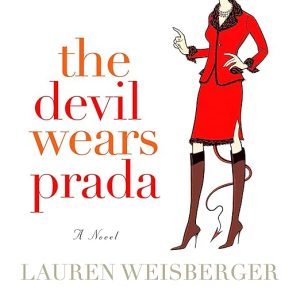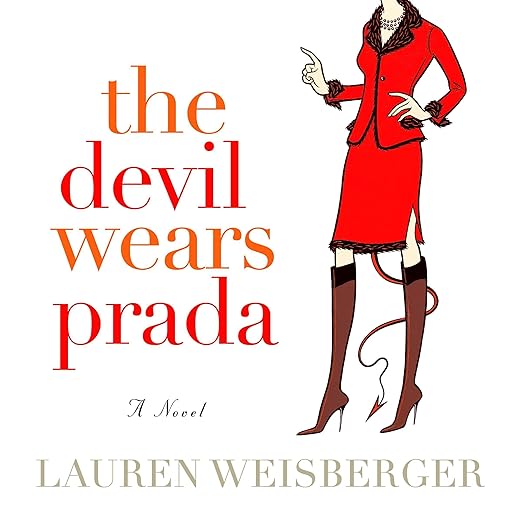
Lauren Weisberger's The Devil Wears Prada audiobook has a specific kind of energy that suits the listening format almost better than the page. Andrea Sachs narrates her own suffering in real time, and hearing Bernadette Dunne give voice to that suffering turns the novel's central horror into something you can almost laugh at while it is happening to you. Miranda Priestly's demands land as comedy precisely because they are delivered with the flat affect of someone who considers them entirely reasonable, and Dunne threads that needle throughout the full 14-hour-and-10-minute runtime.
The setup is deceptively simple: small-town Andrea lands the coveted junior assistant position at Runway, a thinly veiled analog for Vogue, and proceeds to have her life systematically dismantled by Miranda Priestly, a figure so imperious she has transcended mere managerial cruelty into a kind of weather event. Weisberger worked as an assistant to Vogue editor Anna Wintour, and whatever biographical liberties she took, the specificity of the indignities feels absolutely earned. The private jet delivering a Harry Potter manuscript to Miranda's children in Paris. The coffees at exactly the right temperature. The antique dresser from a shop with no name in a city with no address. These are not comic exaggerations so much as the texture of a very particular kind of servitude.
The Review
The novel's real subject is not fashion or ambition but the mechanics of submission. Weisberger is interested in how an intelligent, principled person gradually acquiesces to conditions she would have found unconscionable at the start. Andrea is not naive, and she is not weak, which makes her accommodation of Miranda's escalating demands genuinely unsettling beneath the humor. The book has been criticized for its somewhat rickety narrative structure, and those criticisms have merit. The supporting characters, particularly Andrea's boyfriend Alex and her best friend Lily, exist mostly as barometers of how far she has drifted from her pre-Runway self. Their resentments can feel schematic and their conversations with Andrea function more as pressure gauges than as scenes with their own life.
But Weisberger is sharp enough about the culture of aspiration in media to make even the thinner stretches worth sitting with. The world of Runway is rendered with the kind of insider granularity that feels like testimony rather than invention. The impossibly thin women, the men in fine-ribbed turtlenecks, the way Miranda can turn any of them into a scared, whimpering child with breathtaking ease. The satire earns its exaggerations.
Why The Devil Wears Prada Works as an Audiobook
Dunne's performance is the best argument for this format over print. She gives Andrea a voice that is simultaneously sharp-tongued and shell-shocked, someone who has developed the habit of interior sarcasm as a survival mechanism. Miranda's dialogue, relatively sparse but always devastating, lands with exactly the weight it needs. The audio edition also lets Weisberger's prose rhythms work the way they are meant to: her sentences have a comedic snap that benefits from being heard rather than read in isolation. The long stretches of workplace humiliation, the late-night phone calls, the impossible tasks delivered as if they are obvious, accumulate differently in audio than on paper because you cannot skim them. You have to sit with them.
Listeners who already love the 2006 film adaptation should know that the book and film are related but distinctly different animals. The film sharpens Miranda into something almost sympathetic, with Meryl Streep giving her a private dimension the novel does not extend. The book keeps Miranda at a colder, more alarming distance throughout. Several plot points diverge significantly, and Andrea's ultimate choices feel different on the page, more ambiguous and less neatly resolved. One reviewer noted that the movie is better, which is a common and not entirely unfair position, but it misses what the audiobook does that the film cannot: sit inside Andrea's head for the full duration of her ordeal without any external framing to give it distance.
The Caveats
The humor in this book operates in layers. There is the obvious comedy of Miranda's absurdity, the deadpan catalog of Prada and Armani and Versace worn by people who live in terror of one woman's disapproval. But beneath that is a more uncomfortable joke: that everyone in the building, including Andrea, has decided this is worth it. Weisberger never editorializes about that directly, which is the right call. The satire is most effective when she trusts the reader to feel the discomfort without being told to feel it, and Dunne's performance respects that trust in how she reads Andrea's interior commentary.
The novel also has a more direct relationship to its cultural moment than some readers expect. Published in 2003, it captures a specific phase of magazine culture that no longer quite exists in the same form, and there is something quietly elegiac about it now, even amid the laughs. The fashion industry's particular power structures, the mythology of the all-powerful editor, the sense that suffering under someone sufficiently glamorous was itself a kind of credential, these things have not vanished but they have mutated, and listening to the book in that context adds a note of historical satire that Weisberger probably did not fully intend.
Who Lauren Weisberger Is Writing For
Listeners who have ever worked in a prestige industry where the prestige was entirely asymmetrically distributed will find this cathartic and uncomfortably familiar. Fans of workplace satire with a literary edge, readers who enjoy novels about the gap between aspiration and reality, and anyone who has spent too long performing gratitude for a job that cost more than it paid will find Weisberger's Andrea a recognizable figure. Those seeking a faithful audio equivalent of the film adaptation will find the book a different, and in some ways richer, experience. Skip this one if you have zero tolerance for a protagonist who knows better but keeps going anyway, since that is the engine of the entire story and the source of its deepest comedy.