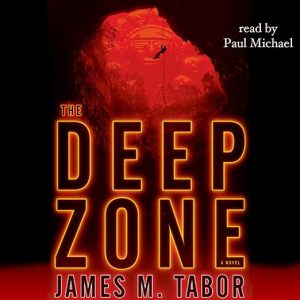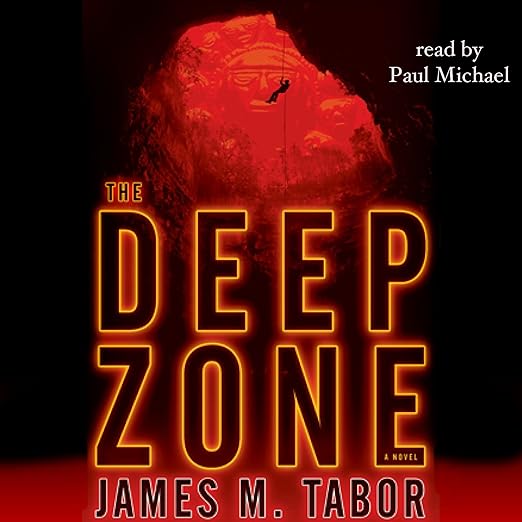
Hallie Leland spent her career being pushed out of the clandestine science world before a White House summons pulls her back in, and the very first pages of this audiobook make clear how high the stakes have already climbed: a mysterious epidemic is killing American soldiers in Afghanistan, and it's poised to spread far beyond the battlefield. James M. Tabor's debut thriller sends Leland and a mysterious operative named Wil Bowman deep into a Mexican supercave to find the one rare organism that might stop it.
How The Deep Zone Holds Up
Tabor's real background as an award-winning nonfiction writer on adventure and exploration shows up in exactly the right places: the supercave sequences, flooded tunnels, acid lakes, and total blackness described in the synopsis, read as informed by genuine caving expertise rather than generic thriller set dressing. Reviewer Heather Marsten's summary of the plot, a fungus that 'only grows deep in the earth' as the cure for a disease with a '90% mortality rate,' captures how tightly the science-thriller premise and the physical cave-exploration premise are wound together throughout.
The book layers a second, more grounded threat on top of the biological one: before Leland's team even reaches the cave, they have to cross a Mexican jungle controlled by warring cartels, and the synopsis promises a Washington insider working against the mission alongside a killer waiting underground. Reviewer MayaOne's description of the experience as being 'yanked onto a roller coaster' with 'ongoing danger, thrills, twists, turns' and 'nauseating dips' suggests Tabor keeps that layered structure moving rather than letting any single thread slow the pacing down.
The synopsis itself draws a direct line from Tabor's nonfiction career into this novel, describing him as 'the award-winning and bestselling author of two nonfiction books about adventure and exploration' who 'now plunges readers into the harrowing subterranean world of supercaves.' That's not incidental framing; it explains why reviewers keep singling out the cave sequences as the novel's strongest material, since Tabor isn't imagining what a flooded passage or a lightless chasm feels like from pure research, he's building on a career already invested in exactly this kind of extreme exploration.
Hallie Leland's specific backstory, unjustly fired from a clandestine government laboratory before being pulled back in by necessity, follows a recognizable thriller convention, the wronged expert whose skills the institution suddenly needs again, but the synopsis gives it real specificity: she 'swore she would never look back,' which sets up genuine internal reluctance for Wil Bowman and the mission's urgency to overcome rather than a blank-slate protagonist simply along for the ride.
Why The Deep Zone Works as an Audiobook
Paul Michael's established strength, a controlled gravity that doesn't dramatize danger for effect, comes from his work narrating nonfiction military and survival history rather than genre thrillers, which raises a genuinely interesting question for this specific book: does that same restraint serve a pulpier, more plot-driven action novel, or does it undersell the roller-coaster momentum reviewers describe? The synopsis's own mix of hard science, cartel violence, and claustrophobic cave exploration suggests his measured delivery may work best in the microbiology and Washington-conspiracy passages specifically, where overplaying the drama would actually undercut the technical credibility Tabor is going for.
Reviewer Jeremy's assessment of Tabor as writing like 'one of the next great science-fiction writers' points to what the narration needs to hold together: a debut author blending hard science, military technical detail, and pure thriller pacing across fourteen hours needs a narrator who can move between those registers without jarring the listener, and Michael's track record with tonal shifts between technical and dramatic material, confirmed across unrelated nonfiction titles, is a reasonable bet for exactly that kind of range.
Real supercave systems in Mexico, among the deepest known cave systems anywhere in the Western Hemisphere, involve exactly the kind of multi-day, multi-team logistics and genuine life-threatening hazards, flooded sumps, unstable passages, total darkness, that the novel's fictional cave draws on for its own set pieces. Grounding a thriller's central location in a real, documented category of extreme exploration rather than an invented fantasy setting gives the book's most dangerous sequences a credibility a purely invented location wouldn't carry as easily.
Weak Spots in The Deep Zone
The genre tag on this listing, travel-tourism with an Adventure Travel subcategory, undersells what the book actually is; this is genre fiction, a science thriller built around a fictional epidemic and an invented supercave expedition, not a nonfiction travel narrative, even though the caving and jungle-exploration backdrop explains where the mismatched tag likely came from. Listeners browsing specifically for travel writing should know this is a novel first, not a chronicle of a real expedition.
As a debut novel, The Deep Zone also carries the specific risks debuts carry: reviewer Jeremy's four-star review, titled 'An impressive and promising debut,' offers genuine praise but stops short of the unqualified enthusiasm of the other two reviews, and it's worth reading his measured framing as a signal that the thriller mechanics, while strong, aren't yet as polished as a more established genre veteran's work might be.
The book's structure, alternating between Hallie's scientific and personal throughline and the broader cartel-and-conspiracy plot, asks a fourteen-hour audiobook to sustain two genuinely different registers, procedural science thriller and violent action thriller, without either one crowding out the other. Reviewer MayaOne's note of 'brief and welcome romantic pauses' amid the danger suggests Tabor also works in a third, quieter register periodically, a meaningful pacing choice for a debut this plot-dense to attempt successfully.
None of the three attached reviews raise concerns about pacing or plot logic specifically, a reasonably strong signal for a debut this ambitious in scope, though as with any small review sample, that absence of criticism shouldn't be mistaken for exhaustive vetting of every plot thread across fourteen hours.
The Right Listener for The Deep Zone
The Deep Zone suits fans of science-driven action thrillers in the Michael Crichton tradition, readers who want real technical and scientific grounding underneath their cartel chases and underground set pieces, and anyone drawn to claustrophobic cave-exploration settings specifically, which remain relatively rare in mainstream thriller fiction. Listeners who enjoyed the layered epidemic-plus-conspiracy structure of nonfiction outbreak accounts but wanted more forward plot momentum than a true story provides will find a strong fictional counterpart here.
Listeners who prefer character-driven literary fiction over plot-forward genre thrillers should look elsewhere, since The Deep Zone is built for pace and stakes rather than interior reflection, and anyone who specifically wants travel or exploration nonfiction, based on this listing's genre tag, should know upfront that they're getting a novel instead.
At a Glance
- Narrator: Paul Michael brings a controlled, non-dramatized delivery built on nonfiction military narration, an intriguing rather than obvious fit for this pulpier science thriller.
- Subjects: bioterror epidemic race against time, supercave exploration, cartel danger and Washington conspiracy
- Tone: Tense and propulsive
- Bottom line: A strong science-thriller debut for Crichton-style readers, though its travel-tourism genre tag is a clear mismatch worth ignoring.
Before You Listen
Is The Deep Zone audiobook fiction or nonfiction travel writing, given its genre tag?
It's fiction, a science thriller. The travel-tourism genre tag is a mismatch likely caused by the book's cave-exploration and jungle setting, not an accurate description of the content.
Does Paul Michael's narration style suit an action thriller like this audiobook?
His established controlled, non-dramatized delivery comes from nonfiction military narration, an interesting rather than obvious fit here; it likely serves the science and conspiracy passages best.
Is The Deep Zone audiobook part of a series, or a standalone thriller?
No series is listed for this title, and the synopsis presents it as James M. Tabor's standalone fiction debut following his earlier nonfiction adventure books.
How does this audiobook balance its science-thriller and cartel-conspiracy plotlines?
The two threads run in parallel throughout: the race to find a rare organism for a cure sits alongside cartel danger, a Washington traitor, and an underground assassin, keeping multiple threats active at once.