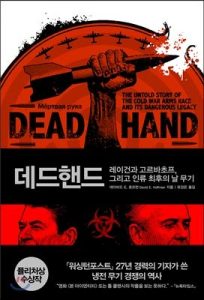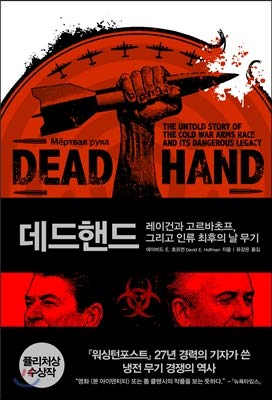
David Hoffman's reporting background as the Washington Post's Moscow bureau chief and White House correspondent gives The Dead Hand access and analytical depth that most Cold War histories cannot match. This audiobook, narrated by Bob Walter and running 20 hours and 46 minutes, covers the final decades of the nuclear arms race from both sides of the superpower relationship: drawing on Soviet archives, American classified documents, and extensive interviews with the scientists, soldiers, diplomats, and spies who operated inside the weapons programs. The Pulitzer Prize for General Nonfiction, awarded in 2010, signals that Hoffman's sourcing and rigor were assessed against demanding standards. The garbled synopsis associated with this title on some platforms is a translation artifact that does not reflect the quality of the original work.
What We Made of It
The book's title refers to the Soviet dead-hand system, known internally as Perimetr: a semi-automated nuclear retaliation mechanism designed to launch a counterstrike even if Soviet command and control had been destroyed by a first strike. The existence of this system was unknown to most Americans during the Cold War and remained classified until the Soviet archives began to open after 1991. Hoffman's ability to document it, including the technical details of its operation and the Soviet military scientists who built and maintained it, is one of the book's most striking achievements. The dead-hand system embodies the book's central argument: that the logic of nuclear deterrence, followed to its endpoint, produces outcomes that are rational within the system and catastrophically irrational in human terms. A machine designed to ensure retaliation is a machine designed to prevent peace. Reagan and Gorbachev are the book's central political figures, and the account of their relationship, the mutual suspicion, the gradual recognition of shared interest, and the negotiations that produced the Intermediate-Range Nuclear Forces Treaty, is among the best accounts of Cold War diplomacy written for a general audience.
Hoffman is equally attentive to figures below the presidential level. Vil Mirzayanov and Kanatjan Alibekov, Soviet scientists who eventually disclosed their country's biological weapons programs, are profiled with the same biographical care as the political leaders. The biological weapons material is one of the book's less discussed dimensions in public conversation but one of its most disturbing contributions to the record. Soviet violations of the Biological Weapons Convention continued even as nuclear arms reduction negotiations proceeded, and Hoffman documents that parallel track with the same documentary rigor he applies to the nuclear programs. American intelligence analysts trying to understand what the Soviets were actually doing, and lower-level diplomats whose work made the high-level agreements possible, receive sustained attention throughout.
Why Listen to The Dead Hand
Bob Walter handles the book's tonal complexity well. Hoffman writes at two registers simultaneously: the intimate register of biographical narrative, following specific scientists and diplomats through specific events, and the analytical register of institutional history, tracking weapons programs as systems with their own momentum and logic. Walter moves between these registers without jarring the listener, and his delivery gives the most alarming passages, the near-misses, the command failures, the moments when the system nearly fired without a political decision to fire it, a controlled urgency that respects the listener's intelligence. At 20 hours and 46 minutes, this is a substantial commitment, but the material demands the space. Hoffman is building the case that the arms race was not an abstraction but a specific set of decisions made by specific people under specific pressures. Understanding which decisions were made badly requires the context he provides. The 4.6 rating from over 1,500 listeners reflects consistent appreciation for both the writing and the narration.
What Might Not Land
The book's most alarming single thread for many listeners is the account of how close to automated launch the nuclear systems came during specific periods of the 1980s, particularly during the Able Archer 83 NATO exercise, which Soviet intelligence misread as a possible cover for a real first strike. Hoffman's reconstruction of that episode, drawing on since-declassified intelligence from both sides, produces genuine alarm rather than retrospective drama. The arms control chapters, covering the negotiations and eventual ratification of the INF Treaty, provide some counterweight, but Hoffman does not end the book with reassurance. The systems he describes did not simply disappear when the Cold War ended, and the final sections of the book address the post-Soviet proliferation of weapons material and expertise with the same level of documentary seriousness.
The book's most lasting contribution may be its documentation of the Soviet biological weapons program, which continued in violation of the Biological Weapons Convention throughout the 1980s and into the 1990s. Hoffman's account draws on the testimony of scientists who eventually defected or disclosed, and the picture it assembles is both specific and disturbing: a program of significant scale, operating with official state support, producing agents that had no defensive application. The nuclear arms reduction treaties that Reagan and Gorbachev negotiated did not address this parallel program, partly because American intelligence did not yet fully understand its scope. The chapters covering the biological weapons disclosure, including the role of Kanatjan Alibekov, who directed part of the program before defecting, are among the most important and least discussed in public conversation about the book. Listeners who come to The Dead Hand primarily for the nuclear history will find that the biological weapons material demands equal attention.
Should You Listen to The Dead Hand?
Essential listening for anyone seriously interested in Cold War history, nuclear policy, or the history of arms control. Also for listeners who found Richard Rhodes's The Making of the Atomic Bomb and Dark Sun compelling and want a narrative that carries the story through to the end of the Soviet period. Skip only if you are looking for a single-figure biography or a narrative focused on one specific event rather than a comprehensive institutional history. Hoffman's scope is wide by design, and the 20-plus-hour runtime is appropriate for it. Walter's narration makes the commitment sustainable.
A Few Questions About The Dead Hand
Is The Dead Hand audiobook suitable for listeners who are not specialists in Cold War history?
Yes. Hoffman writes for a general audience and explains technical and historical context throughout. Prior knowledge helps but is not required. The book works as an entry point into Cold War nuclear history as readily as it works as a supplement to prior reading.
Does this audiobook cover the biological weapons programs as well as the nuclear arms race?
Yes. The Dead Hand devotes significant coverage to Soviet biological weapons programs that continued operating even as nuclear arms reduction negotiations proceeded. This is one of the less-discussed dimensions of the book and one of its more alarming contributions to the historical record.
How does The Dead Hand audiobook handle the Reagan-Gorbachev relationship compared to other accounts?
Hoffman's portrait of the relationship is among the book's strengths. He has reporting access that most historians lack, including Soviet-side documentation of Gorbachev's internal deliberations. The account is neither hagiographic nor cynical; it focuses on what the two leaders actually agreed to and what enabled the agreement.
Is the 20-hour runtime of The Dead Hand audiobook justified, or does the book feel padded?
The runtime reflects the book's scope rather than padding. Hoffman covers the full arc of the late Cold War arms race from both sides, including biological weapons, intelligence operations, and arms control negotiations. Listeners who want an overview rather than a full account may find the pace demanding, but those engaged by the material report it as consistently absorbing.