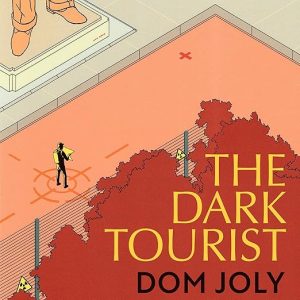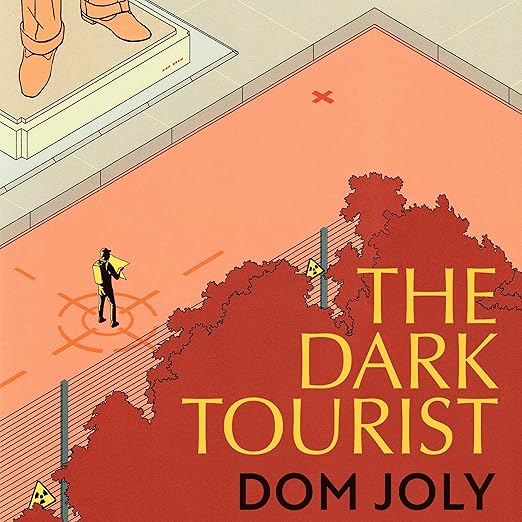
A shrapnel collection replaced marbles as Dom Joly's schoolyard currency growing up in war-torn Beirut, and that single detail tells you most of what you need to know about why this audiobook works as well as it does. Joly turns a childhood most people would call traumatic into the founding logic of an adult career spent seeking out exactly the destinations ordinary travel guides warn against. The verdict up front: this is a genuinely funny, occasionally moving travel memoir that earns its darker moments by having lived through the real thing first, rather than performing danger tourism for laughs alone.
First, the Big Picture
The destinations do a lot of the entertaining on their own: segregated ski slopes in Iran, a weekend in Chernobyl, a tour of America's assassination sites, and a rare Western entry into North Korea. Joly frames each stop as a rejection of what he calls the sanitized modern travel industry, and the book's funniest material comes from watching him apply very British deadpan observation to genuinely surreal bureaucratic situations most travel writers never get close enough to witness firsthand.
The memoir's emotional center, though, is the return trip to Beirut itself, where Joly discovers he attended school alongside Osama bin Laden, a detail so strange it would read as fiction in a lesser book. That closing-the-loop structure, ending where his fascination with dark places actually began, gives what could have been a loose collection of travel dispatches a real narrative spine, and it's the section where the comedy briefly steps aside for something closer to reckoning.
The book's structure as a whole builds a kind of connoisseur's atlas of avoided places, and Joly is unusually good at explaining not just what he saw but why each destination developed its particular reputation for danger or absurdity in the first place, whether that's Cold War nuclear paranoia, post-Soviet economic collapse, or the specific bureaucratic caution of a totalitarian state managing foreign visitors.
Reviewer TravellingCari's mixed reaction is worth engaging directly rather than dismissing: finding some material 'definitely familiar' from prior reading doesn't necessarily mean the book is repetitive in a vacuum, it may simply mean Joly's specific voice and stories have circulated widely enough across his career that dedicated readers of his other work have encountered fragments before this book compiled them.
What Makes The Dark Tourist Worth Hearing
Joly narrates his own material, and for a comedian whose career runs through a hidden-camera prank show, Trigger Happy TV, that self-narration isn't a nice-to-have, it's close to essential. Timing carries most of the book's humor, and nobody delivers his own deadpan beats with the same instinct for pause and understatement as the person who wrote them. Reviewer N. Carter specifically flags 'some chapters that made laugh out loud,' and that kind of reaction depends heavily on hearing Joly's own voice land the joke rather than a professional narrator's approximation of British comic timing.
What makes the narration genuinely skillful, not just adequate, is how cleanly Joly shifts registers between comic bits and the book's darker material, childhood rocket attacks, a pile of severed heads glimpsed in a pine forest, without either undercutting the humor's momentum or trivializing the trauma. Reviewer E. Bossers calls the overall tone 'respectful of the topics' despite the comedy, a genuinely difficult balance to strike in audio, where tone shifts land more directly than they do on the page.
A format argument exists here too, distinct from the timing point: Joly's own voice carries the specific cadence of someone recounting his actual childhood, not reading a script about someone else's. When he describes the Beirut basement during a Syrian rocket attack, the audio format lets a genuine tremor of remembered fear sit underneath the comedic delivery in a way flat print text can't replicate. That layered quality, humor riding directly on top of real memory, is arguably the single hardest thing for a hired narrator to fake convincingly.
A Few Reservations
One reviewer, TravellingCari, notes recognizing some of this material from Joly's earlier writing or anthologized stories, particularly the North Korea sections, which suggests longtime fans of his other travel books may encounter some repeated territory here. For a first-time listener coming to Joly fresh, none of it will feel recycled.
It's also worth going in with calibrated expectations about tone. This is genuinely comedic writing applied to genuinely grim subject matter, war zones, disaster sites, authoritarian states, and listeners who prefer their dark-tourism content played completely straight, without jokes woven through the discomfort, may find Joly's persistent wit occasionally jarring against the subject matter. The three reviewers here land at five, four, and three stars respectively, roughly matching that split between listeners who embraced the register and those who found it a mixed bag.
Runtime-wise, nearly eight hours is a substantial commitment for a comic travel memoir, longer than most books in the genre, and that length works in the book's favor precisely because it allows each destination room to develop its own specific texture rather than compressing seven distinct trips into rushed vignettes.
It's also fair to note the destinations carry real ethical weight beyond entertainment value; visiting Chernobyl's exclusion zone or touring North Korea under state supervision both raise questions about what a visitor owes to sites of real tragedy or ongoing repression, questions Joly engages more than a lesser dark-tourism book might, even while keeping his own tone light.
One more calibration point: this is very much a comedian's memoir first and a rigorous journalistic investigation second, so listeners hoping for deep geopolitical analysis of, say, North Korea's internal politics should look toward more academic titles instead; Joly's interest lies in the lived, absurd texture of visiting these places, not in explaining the regimes that made them dangerous in the first place.
Should You Listen to The Dark Tourist?
This suits listeners who enjoy travel writing with a genuine comic voice, in the loose tradition of Bill Bryson's more irreverent passages, but want the destinations pushed considerably further off the beaten path than Bryson typically ventures. Anyone curious about Joly's TV work, or about the odd corners of Cold War and post-Soviet tourism specifically, will find plenty here even without prior familiarity with Trigger Happy TV.
Listeners who enjoyed Anthony Bourdain's willingness to sit with discomfort rather than resolve it neatly will recognize a kindred spirit in Joly's approach, even though the register here leans more comic than Bourdain's typically did.
Skip it if straight, comedy-free travel journalism is what you actually want, or if humor applied to sites like Chernobyl and North Korea feels like the wrong register for the subject matter regardless of how carefully it's handled. Listeners who've already read Joly's earlier travel writing closely should sample a chapter first to gauge how much specific material genuinely overlaps.
Before You Press Play
- Read by: Dom Joly's self-narration is essential, his deadpan comic timing and genuine emotional undercurrent can't be fully replicated by a hired reader.
- At its heart: Danger tourism, a Beirut childhood shaped by war, dark humor applied to genuinely grim destinations.
- Vibe: Wry and irreverent, with real weight underneath the jokes.
- Short version: A well-balanced comic travel memoir that earns its humor through lived experience, best for listeners open to jokes alongside genuinely dark subject matter.
Does Dom Joly's narration on this audiobook add comic timing the print book can't fully deliver?
Yes. Joly's comedy career runs through Trigger Happy TV, a hidden-camera prank show built on timing, and reviewer N. Carter's mention of laugh-out-loud chapters points directly to how much of that humor depends on hearing his own deadpan delivery rather than reading it silently.
Is the humor ever in poor taste given the dark subject matter, like Chernobyl and North Korea?
Reviewer E. Bossers specifically calls the tone 'respectful of the topics' despite the comedy, and Joly's own history growing up amid real violence in Beirut seems to inform where he draws that line. Listeners who prefer zero humor around serious destinations may still find his persistent wit occasionally jarring.
Does the audiobook cover Joly's own childhood in Lebanon in real depth?
Yes, and it functions as the book's emotional throughline. The memoir opens with his shrapnel-collecting childhood in war-torn Beirut and circles back there by the end, including the strange detail that he attended school alongside Osama bin Laden.
Is this audiobook a good fit for listeners who don't already know Joly's TV work?
It works fine without that context. The travel material and personal history stand on their own, though fans of Trigger Happy TV will recognize the same deadpan sensibility carrying over into how he narrates his own book.