At a Glance
- Read by: Stefan Rudnicki manages the shift between intimate reflection and structured guide material with real skill.
- At its heart: Teacher identity, mindful reflection, communal study
- Vibe: Thoughtful and grounding
- Short version: A strong companion for study groups and returning readers, not the right starting point for Palmer newcomers.
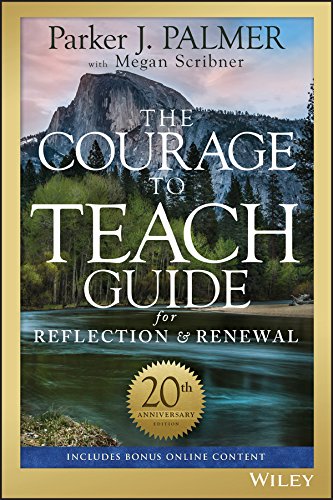
A twentieth-anniversary companion volume, not Parker J. Palmer's original narrative chapters, is what this specific audiobook actually delivers, and that distinction matters enormously for anyone expecting the classic memoir-style Courage to Teach they may have read in a college education course. The Courage to Teach Guide for Reflection and Renewal runs eight hours and thirty-three minutes, narrated by Stefan Rudnicki, and functions as a structured companion for individuals or study groups working back through Palmer's ideas on restoring identity and integrity to teaching, complete with chapter-by-chapter questions, exercises, and a bonus seventy-minute interview with Palmer himself woven into the discussion material. Twenty years on from the original book reshaping how a generation of educators thought about their own vocation, this companion revisits that impact deliberately rather than simply repackaging old chapters under a new anniversary label.
Twenty-Five Teachers Working Through One Building
Treating this correctly as a guide rather than the source memoir changes how to evaluate it. Reviewer Steve B. calls Parker Palmer his favorite author and recommends this specifically as a gift for a teacher, language that fits a reflection-and-renewal companion better than it would fit a straightforward audiobook of Palmer's original prose, since gift-worthy guide material typically signals something a teacher can return to repeatedly rather than consume once straight through. The chapter-by-chapter structure, safe space for honest reflection built directly into the content, is the guide doing exactly the job its title promises rather than trying to be something else.
Reviewer Pam's account of twenty-five teachers in one school building working through this together, calling it long overdue, points to the guide's real strength: it is built for communal, facilitated use rather than solitary listening. That is a meaningfully different audio use case than most nonfiction, closer to a shared curriculum than a personal listen, and Pam's note about a facilitator 'keeping the focus on the heart of the teacher' suggests the material rewards group discussion sessions structured around individual chapters rather than a single marathon listen straight through.
Seventy Minutes With Palmer, Woven Into Discussion
Stefan Rudnicki's narration is a genuine strength here, not just a competent voice filling runtime. He has built a reputation across demanding long-form nonfiction for managing tonal range, intimate reflection alongside larger institutional argument, without jarring shifts between registers, and that skill applies directly to a text moving constantly between Palmer's philosophical reflections on teacher identity and the more practical, exercise-driven guide material layered around it. A lesser narrator might flatten that distinction; Rudnicki's steady authority instead gives both registers their own texture without losing coherence across eight and a half hours.
The bonus seventy-minute interview with Palmer himself, folded into the guide's discussion questions, is a genuine audio-format advantage over the print edition. Hearing Palmer discuss the heart of the teacher, the crisis in education, and teachers as what the synopsis calls culture heroes in his own voice, then immediately following that with Rudnicki's narrated discussion prompts tied to those same topics, creates a listening experience closer to an actual conversation with the author than a printed guide's static question list could ever replicate on the page.
Teachers are a specifically time-starved audience, and the audio format has a real practical advantage for exactly this listener: a commute or grading-break listen fits into an already overloaded schedule more easily than finding dedicated time to sit with a print workbook. Rudnicki's narration lets an exhausted educator absorb Palmer's reflection prompts passively during a drive home, then return to specific chapters for the more active written exercises when time allows, splitting the guide's dual purpose, reflection and structured exercise, across the two formats a busy teacher actually has available day to day.
Rudnicki's Stamina Keeps Repetition From Feeling Like Padding
This is workbook-adjacent material at its core, built around exercises and group discussion questions, and audio alone cannot replicate filling out a written reflection prompt or working through a printed exercise the way the source guide intends. Listeners planning to use this for genuine individual study or a facilitated group session, the way Pam's twenty-five colleagues did, will likely want the print or PDF companion alongside the audio for the moments that specifically call for writing something down rather than simply listening and reflecting internally while driving or exercising.
Anyone arriving expecting Palmer's original 1997 narrative work specifically, rather than this reflection-and-renewal companion, should adjust expectations before starting. The content here assumes at least passing familiarity with Palmer's foundational ideas already, since it is explicitly built to extend and deepen engagement with that earlier text rather than introduce those concepts from scratch. A listener with zero prior exposure to The Courage to Teach's core arguments may find some of the guide's deeper discussion prompts land with less impact than they would for someone returning to reinforce ideas already known.
Stefan Rudnicki has built a reputation specifically for stamina across extremely long, demanding nonfiction narrations, and while eight and a half hours is comparatively modest next to some of his more marathon assignments, that same consistency shows here in how evenly the energy holds across chapters. A guide built around repeated structural elements, reflection questions, exercises, discussion prompts, risks feeling monotonous in a lesser narrator's hands purely through repetitive formatting, and Rudnicki's steady authority keeps that structural repetition from ever feeling like padding.
Administrators Selecting Programs for an Entire Staff
This suits working educators, especially those in a study group or facilitated professional development setting like the one Pam describes, far more than a general nonfiction audience browsing for a single standalone listen. It also suits anyone already familiar with Palmer's original book who wants a structured way to revisit and deepen that engagement two decades later, particularly educators feeling the disconnection from their own values and sense of purpose that the synopsis identifies as the exact gap this material addresses directly through guided reflection rather than abstract theory. Anyone tasked with mentoring newer teachers will likely find the discussion prompts especially useful as ready-made conversation starters, rather than material to prepare from scratch before a meeting.
This also suits school administrators and professional development coordinators specifically tasked with selecting material for staff-wide programs, given Pam's account of an entire building's faculty working through it together. For that specific use case, a guide built explicitly around chapter-by-chapter group discussion is a more practical selection than the original narrative memoir would be, since a shared listen genuinely needs the structured stopping points and questions this companion volume provides rather than open-ended reflective prose alone.
Skip this if you are looking specifically for Palmer's original narrative chapters and have not yet encountered them, since this companion guide assumes and builds on that foundation rather than replacing it. It is also a weaker standalone fit for anyone wanting passive, single-listen nonfiction rather than material designed for pausing, reflecting, and potentially working through with colleagues, given how much of its value depends on the kind of active engagement a guide format is specifically built to encourage rather than simple start-to-finish listening.
A Few Questions About The Courage to Teach
Is this audiobook Parker Palmer's original Courage to Teach, or a different companion book?
It is the twentieth-anniversary Guide for Reflection and Renewal, a structured companion built around exercises and discussion questions rather than Palmer's original 1997 narrative chapters, so listeners should expect guide-style content, not memoir prose.
Does this audiobook include Parker Palmer's own voice anywhere in the recording?
Yes. A bonus seventy-minute interview with Palmer himself is woven into the guide's discussion material, giving listeners direct access to his own reflections alongside Stefan Rudnicki's narration.
Do I need to already know Parker Palmer's original book before listening to this audiobook?
Some familiarity helps considerably. This guide assumes at least passing knowledge of Palmer's foundational ideas, since it is built to deepen and extend engagement with the original text rather than introduce those concepts from the beginning.