Quick Take
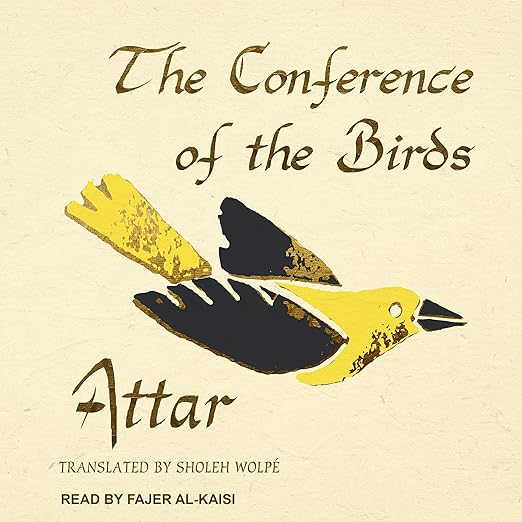
- Narration: Fajer Al-Kaisi brings a measured, reverent quality to the text that serves the devotional register of the poetry without making it feel remote or academic.
- Themes: the soul’s journey toward divine union, the necessity of surrendering rational control, the interplay of humor and the sacred in mystical tradition
- Mood: Meditative, allegorical, and quietly profound, demanding but not forbidding
- Verdict: Sholeh Wolpe’s contemporary translation makes one of the great works of Sufi mystical literature genuinely accessible in audio form, and Al-Kaisi’s narration honors both the poetry and the teaching stories.
There are texts that reward impatience and texts that require you to slow down to something approaching their own pace. The Conference of the Birds, the twelfth-century Sufi masterpiece by Farid ud-Din Attar, belongs definitively to the second category. I started it on a Sunday morning with coffee, expecting to treat it like background listening, and within twenty minutes I had put down everything else and was simply sitting with it. That kind of involuntary attention is rarer than it should be.
Attar’s poem is an allegory in the tradition that predates the word allegory’s currency in Western critical vocabulary. The world’s birds, representing different types of souls at different stages of spiritual development, set out under the hoopoe’s guidance to find the Simorgh, their king, in the distant peaks of Mount Qaf. Each bird offers a different excuse for turning back. Each excuse becomes the occasion for a teaching story. The journey is the content. What they find at the end of it is one of the great turns in world literature, and I will not spoil it for anyone who doesn’t already know it.
Our Take on The Conference of the Birds
Rumi’s assessment of Attar, “Attar traveled through all seven cities of love, while I am only at the bend of the first alley”, is quoted in one of the more thoughtful reviews here, and it establishes the proper orientation. This is not peripheral material in the Sufi tradition; it is one of the foundational texts that later poets and mystics were in conversation with. Coming to Attar after being introduced to Sufi poetry through Rumi or Hafiz, as many Western readers do, is actually reading in reverse chronological order. Attar is the source, not the derivative.
Sholeh Wolpe’s translation, which this audiobook uses, is the primary critical decision the production had to get right, and it did. Reviewer parvaneh, who has genuine familiarity with the Persian original, describes the translation as capturing “complexity and humor not in other translations” and notes that it allows readers to “hold a mirror up and see a reflection of themself.” Reviewer Merlyn C., who spent three years studying the Persian text, calls Wolpe’s work “amazing” in its understanding of each parable’s intent and the author’s meaning. These are not generic praise assessments, they’re coming from people with the knowledge to evaluate the translation specifically, and their consensus is meaningful.
Why Listen to The Conference of the Birds
Fajer Al-Kaisi’s narration operates in a register appropriate to the material, measured, attentive, without the theatrical expressiveness that would feel wrong for devotional poetry. The Conference of the Birds alternates between verse and prose teaching stories, and Al-Kaisi handles those transitions without making them feel like category shifts. The overall effect is contemplative, which is exactly right: this is a text that has been read aloud in devotional settings for eight centuries, and a performance that honors that tradition rather than modernizing it into something more immediately stimulating is the correct approach.
One useful warning from reviewer with the username “:”, the introduction contains an overview and spoiler on the ending, which diminishes one of the most profound surprises in the text. If you haven’t read The Conference of the Birds before, skip the introduction and return to it after you’ve heard the poem itself. That spoiler is significant enough that navigating around it is worth the slight inconvenience.
What to Watch For in The Conference of the Birds
This is not a text that rewards distracted listening. The teaching stories are individually self-contained in ways that might seem disconnected from the main allegory if you’re not attending carefully to the way each one illuminates the specific bird’s excuse for abandoning the journey. The connection between the frame narrative and the embedded stories is the literary architecture of the whole work, and losing the thread is easy if you’re treating this as background audio.
At just over eight hours, the audiobook is also shorter than the complexity of the source material might suggest, which reflects the genuine density of what’s present. Wolpe’s translation preserves the poem’s humor, Attar’s beguiling anecdotes are genuinely funny in the way that profound wisdom can be funny, when it catches you being exactly as foolish as the bird making excuses at any given moment, but humor operates differently in contemplative literature than in other genres. Don’t expect the pace of entertainment. Expect the pace of reflection.
Who Should Listen to The Conference of the Birds
Listeners with an existing interest in Sufi mystical tradition, particularly those who have worked through Rumi, Hafiz, or Ibn Arabi, will find this a natural and important addition. Readers who encountered The Conference of the Birds in other translations and found those versions dry or inaccessible should try Wolpe’s version specifically, the reviewers who know the text in Persian agree that her approach is significantly more alive than its predecessors. Listeners with no prior background in Sufi poetry are not excluded, but should approach this as an invitation to a tradition with real depth rather than as a light spiritual read. Reviewer Merlyn C. notes that “you don’t need any background or knowledge of poetry to understand this book,” and that’s true, but you do need to bring patience and a willingness to be changed by what you hear.
Frequently Asked Questions
Is Sholeh Wolpe’s translation substantially different from other English translations of The Conference of the Birds?
Reviewers who have read multiple translations, including at least one who spent three years studying the Persian original, consistently describe Wolpe’s version as capturing complexity and humor that other translations miss. The reviewer parvaneh specifically identifies this as the first translation that brought the psychological depth of the original into modern American English with full accessibility. The consensus among knowledgeable reviewers is that this is the strongest available English translation.
Should I listen to the introduction before or after the main poem?
After. At least one reviewer specifically warns that the introduction contains an overview and spoiler of the ending, which is one of the most profound reversals in the text. Skip the introduction, listen to the poem itself, and then return to the introduction as context. The ending is significant enough that experiencing it unspoiled makes a real difference.
Does The Conference of the Birds require familiarity with Islam or Sufism to be meaningful?
No, though familiarity enriches the experience. The allegory works on a structural level that is accessible to anyone interested in the soul’s relationship to what it is searching for, regardless of religious background. Reviewer Merlyn C. explicitly states that no background in poetry or religion is required to understand the book. That said, listeners who come with some knowledge of Sufi concepts will find additional layers in the teaching stories.
How does Fajer Al-Kaisi’s narration handle the transitions between verse and prose sections?
Smoothly, without over-marking the distinction. Al-Kaisi maintains a consistent contemplative register throughout, which means the shift from the allegorical frame narrative to the embedded teaching stories doesn’t feel like a format change but rather like a natural movement within a single devotional text. This is the right approach for the material.