![The Complete LLC & S-Corp Beginner's Guide: [2 Books in 1]](https://audiobookdaily.com/wp-content/uploads/2026/03/the-complete-llc-s-corp-beginner-s-guide-2-books-in-1.jpg)
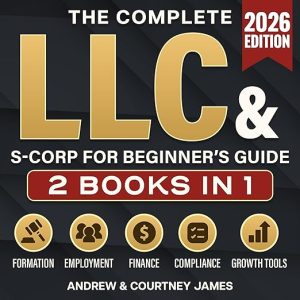
I usually approach business audiobooks in the self-published end of the market with some wariness, because the category has a high noise-to-signal ratio. The Complete LLC and S-Corp Beginner's Guide landed in my queue because three separate people in an online freelancer community mentioned it in the same week, which suggested actual word-of-mouth rather than review farming. After 10 hours with it, I understand why it circulates.
The pitch is simple: new or aspiring business owners routinely make entity formation decisions without fully understanding the tax and liability implications, sometimes expensively. Andrew James structures the two-book bundle so that the LLC content builds a foundation and the S-Corp material extends it, with the specific advantage of not requiring any prior legal or accounting background. The title claims it is for beginners, and it actually delivers on that claim rather than using accessible language as cover for shallow content.
Six Steps to Formation, Then the Salary Question
The strongest sections are the practical ones: the six-step LLC formation walkthrough, the discussion of which state to form in and why that matters, and the salary versus distribution breakdown for S-Corp owners. These are decisions that genuinely cost people money when made without proper information, and the book handles them in terms that a first-time business owner can act on. The chapter on payroll setup and audit risk is unusually direct for this genre, which tends to paper over the uncomfortable parts. Reviewers who specifically mentioned the focus on avoiding costly mistakes are responding to this quality: James writes as though the consequences of getting it wrong are real, because they are. The dual-book format allows LLC concepts to be absorbed before the S-Corp complexity arrives, which is a logical structure that works well in audio.
Hatak Keeps Freelancers and Side-Hustlers Oriented
Michael Hatak's narration keeps the material accessible across a runtime that could easily become tedious in lesser hands. Freelancers, real estate investors, and side-hustle operators are all addressed specifically rather than as a generic small business owner abstraction, which helps listeners locate themselves in the material. One reviewer described it as a lifesaver for anyone confused about what the IRS actually expects from small business owners, which captures the book's primary value: it translates professional-grade guidance into accessible language without dumbing it down into uselessness.
Rushed in Places, but Vocabulary Builds Steadily
The book is written by entrepreneurs, not lawyers or accountants, and that distinction matters. The guidance is practical and based on real business experience, but it is not a substitute for professional advice on your specific situation, particularly regarding state-specific formation rules or complex tax elections. One reviewer noted that some sections felt rushed and could have used more detail. The S-Corp content in particular involves enough complexity that a single audiobook chapter may leave questions unresolved. The 2025 framing means some material may become dated as tax law changes. Think of this as a strong orientation rather than a definitive reference.
One of the underrated features of the two-book format is what it does for the listener's confidence level. By the time you reach the S-Corp material, the LLC section has normalized the vocabulary. Terms like operating agreements, registered agents, and beneficial ownership reporting, which would have felt foreign at the beginning, have become familiar enough that the more complex tax discussions build on a foundation rather than introducing everything simultaneously. That progressive structure is what makes this work as an audiobook specifically, where you cannot flip back to earlier chapters as easily as in print.
Not for Owners With Multi-State Complexity
First-time business owners who have no formal business or legal background and need a clear explanation of why entity structure matters before consulting a professional. Freelancers earning enough to warrant considering S-Corp election who are not sure where to start. Not the right listen for established business owners with existing professional advisors, or for anyone with complex multi-state operations or significant investment holdings that require specialized guidance beyond introductory content.
Before You Listen
Does this audiobook replace the need for a CPA or business attorney?
No, and it does not claim to. The book provides a strong orientation to the concepts and decisions involved, but state-specific formation requirements and individual tax situations require professional advice. Think of it as preparation for that conversation.
Is the 2025 content still accurate for 2026 tax situations?
The core structure of LLCs and S-Corps is stable, but specific tax thresholds and IRS rules change annually. Verify current figures with a tax professional for anything time-sensitive before acting on specific numbers.
Is this relevant for someone running a real estate investment side business?
Yes, real estate investors are specifically addressed in the content. The asset protection and entity selection sections speak directly to property investment structures and their specific tax considerations.