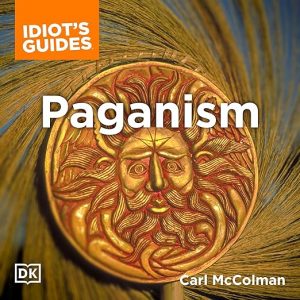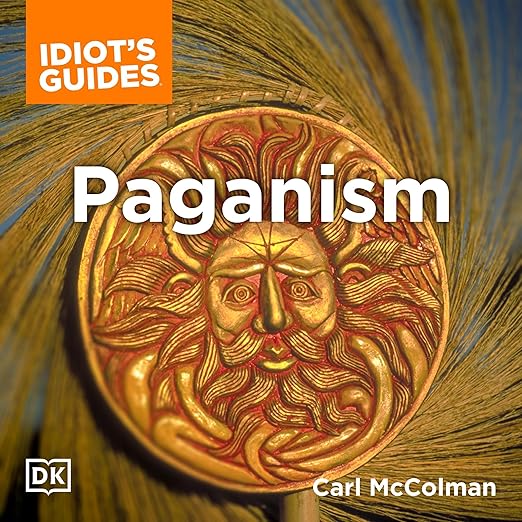
Wicca, shamanism, and druidism represent only three points in a much larger landscape of nature-based spiritual traditions that fall under the broad category of paganism, and that breadth is precisely what makes a genuinely comprehensive introduction so unusual and so useful. Carl McColman's The Complete Idiot's Guide to Paganism is one such introduction, and the audiobook version runs sixteen hours and fifty-five minutes with Kelly Hotten narrating. With a 4.5 rating from 106 reviews and a DK Audio production background, this is a title that has found the audience it was written for: people drawn to nature-based spirituality who want an honest, non-prescriptive orientation before committing to a specific path, as well as practitioners who want a reference that spans traditions rather than advocating for one.
McColman's approach is explicitly non-biased across traditions. One reviewer who called it an absolute must read before purchasing other pagan books was responding to exactly this quality, the guide does not advocate for one path over another, and it does not assume the reader is already committed to a specific tradition. That neutrality is harder to achieve than it sounds, because the various traditions within paganism have real theological distinctions and sometimes genuine tensions between them. McColman holds them all with equal respect, which is itself an expression of the pluralism that characterizes much of contemporary pagan practice.
Chapters Built Short, Simple, and to the Point
The scope of what McColman covers is the book's primary strength and the source of its primary limitation. Shamanism, druidism, and Wicca are the central pillars, but the guide extends to gods and goddesses across traditions, ritual practice, magic and divination, spiritual healing, and practical guidance on incorporating pagan practices into modern daily life. One reviewer who described himself as a long-time practitioner found the book valuable and comprehensive, noting that it covers gods, goddesses, Wicca, rituals, spells, spirit guides, and karma in a straightforward way. That a practitioner finds an introductory guide valuable is a meaningful signal, guides that only serve newcomers have limited shelf life, while a reference that sustains usefulness across levels of experience earns a permanent place in the library.
The chapter structure is worth noting specifically. Reviewers consistently praise the chapters as short, simple, and to the point, a structural choice that makes a large volume of material digestible and allows the audiobook to function as something you can dip in and out of rather than requiring linear consumption from beginning to end. For a sixteen-hour audiobook on a subject with this much internal diversity, that structure is not just convenient; it is the difference between a text that serves its reader and one that overwhelms them. McColman understands that the reader is trying to orient themselves in unfamiliar territory, and he maps the territory rather than lecturing about it.
The sections on meditation, magic, and spiritual healing are among the most engaging because McColman grounds them in specific practices rather than general description. The guidance on deepening connection to the Goddess, God, and nature is practical enough to serve someone actively exploring these areas, not just someone reading about them from outside.
Hotten's Narration Pairs Well With Active Practice
Kelly Hotten's narration brings a quality of respectful seriousness to the material that matters greatly for this subject. Paganism is often either sensationalized or condescended to in mainstream media contexts, and a narrator who treats the traditions with genuine intellectual credibility helps the audiobook fulfill its informational purpose. The measured pacing suits the reference-style chapter structure and makes longer listening sessions feel less demanding than the total runtime suggests.
The audiobook format is particularly well-suited to the sections on meditation, ritual practice, and spiritual healing, where the descriptive and instructional content benefits from being heard rather than read. Passages on deepening spiritual connection have a contemplative quality that audio delivers more naturally than print. For listeners who are exploring these traditions alongside active practice, the audiobook offers the possibility of listening while engaged in the activities the book describes, during a nature walk, a meditation session, or time spent in a garden.
A 2002 Guide That Predates Wicca's Gender Conversation
One reviewer accurately acknowledged that the guide is rather a condensed version given the scope it attempts, meaning there is limited depth in any particular subject. This is an inherent feature of comprehensive introductions and not a surprise to any reader who approaches the book with appropriate expectations. The Complete Idiot's Guide to Paganism is designed as a primer that maps the landscape, not a deep study of any single tradition. Listeners looking for authoritative treatment of the theological distinctions within druidism or the specific ritual practices of a particular Wiccan lineage will need to follow this with tradition-specific texts.
The original publication date of 2002 means the guide predates several significant developments within pagan communities, including the growing visibility of reconstructionist traditions and the expanded conversation around gender and deity within modern Wicca. The foundational framework McColman builds remains accurate and useful as an orientation, but listeners with a contemporary frame of reference may notice places where the field has evolved since the book was written.
The Ideal Starting Point for the Undecided
This audiobook is the ideal starting point for anyone drawn to nature-based spirituality who does not yet know which path resonates with them. The non-prescriptive, tradition-spanning approach makes it equally valuable for someone approaching paganism from a secular or academic perspective and someone actively seeking a spiritual home within these traditions. Experienced practitioners will find it a useful reference that may surface traditions adjacent to their own that they have not fully explored. Skip it if you are already deeply committed to a specific pagan path and are looking for advanced ritual or theological depth, McColman covers the landscape in breadth rather than depth, and serious students of specific traditions will want to go further with dedicated texts. Kelly Hotten's seventeen-hour narration is a reliable companion through all of it.
- Narrator: Kelly Hotten maintains a measured, respectful tone across nearly seventeen hours, the narration treats the subject matter with intellectual seriousness rather than sensationalism, which suits the introductory scope well.
- Subjects: nature-based spiritual practice, comparative pagan traditions, ritual integration into modern life
- Tone: Thorough and welcoming, appropriate for genuine spiritual curiosity as well as academic interest
- Bottom line: Carl McColman's guide covers more ground than most introductions to paganism attempt, and Kelly Hotten's narration keeps the comprehensive scope from feeling encyclopedic, a reliable orientation for anyone drawn to these traditions.
Good to Know
Is this audiobook appropriate for someone with no prior exposure to pagan traditions?
Yes, this is the primary audience McColman wrote for. The guide is designed for people who are curious about paganism or attracted to nature-based spirituality and want a comprehensive, honest orientation before exploring further. Multiple reviewers specifically recommend it as the first book to acquire before anything else in the pagan genre.
At nearly seventeen hours, how does this audiobook work as a listening experience, is it better as background or focused listening?
The chapter-based structure allows both modes. The short, focused chapters make it easy to listen in discrete segments, and the conceptual material rewards attention. The sections on meditation and ritual practice benefit from focused listening; the historical and comparative sections work well as engaged background audio.
Is this audiobook current, or has the pagan field changed significantly since its publication in 2002?
The foundational overview remains accurate and useful, but the field has developed since 2002, particularly in reconstructionist traditions and discussions around gender and deity in contemporary Wicca. The guide is a reliable primer, but serious students of specific traditions will want to supplement with more recently published texts.