At a Glance
- Narration: Douglas James delivers dense procedural material at a measured, clear pace that suits technical reference content well.
- Themes: Grant proposal writing, nonprofit and government funding strategy, sample-based instruction
- Mood: Practical, reference-oriented, thorough rather than fast-paced
- Verdict: A genuinely comprehensive grant-writing resource best used alongside its companion PDF, more valuable as a returnable reference than a single continuous listen.
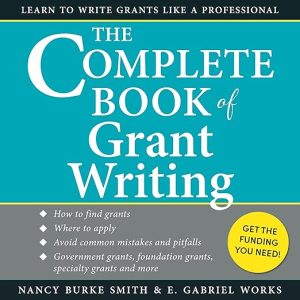
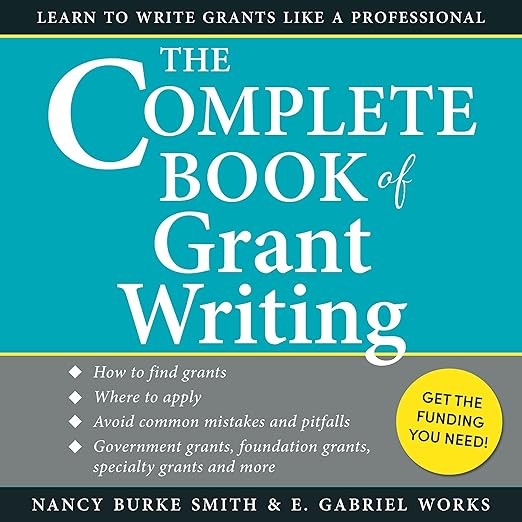
Thirteen hours is a serious investment for a reference book, and The Complete Book of Grant Writing earns most of it by refusing to stay theoretical. Nancy Burke Smith, working with philanthropy consultant E. Gabriel Works, built this audiobook around twenty full samples, actual grant proposals, letters of inquiry, budgets, support letters, rather than abstract advice about what makes a proposal compelling.
Five Core Components, Shown With Sample Documents
The book's real strength is structural: it walks through the five core components every grant proposal needs, the statement of need, the evaluation plan, and the budget among them, and then shows rather than tells by including sample documents for each. That's a meaningfully different approach from grant-writing books that stay at the level of general principle, and reviewers seem to notice the difference; one specifically called it a detailed, comprehensive resource built from the combined expertise of an experienced grant writer and an experienced grant maker, a less common pairing than it sounds.
It also covers ground most grant-writing guides skip: what to do after you're funded, and just as usefully, what to do if you're rejected. That second piece, treating a denial as a normal part of the process with actionable next steps rather than a dead end, is the kind of practical detail that separates a book written by people who've actually run grant programs from one written by an outside observer.
The pairing of Nancy Burke Smith, an experienced grant writer, with E. Gabriel Works, a philanthropy consultant and grant maker, means the book covers both sides of the transaction that most grant-writing guides only see from one direction. A funder's perspective on what actually gets a proposal rejected, generic language, unrealistic budgets, a poor fit with the funder's stated priorities, carries different authority than a writer's advice about the same pitfalls, and having both voices represented gives the material real credibility.
Twenty Samples for Nonprofits Without a Grants Department
The book's twenty included samples also span a wider range of document types than the phrase 'grant proposal' might suggest: letters of inquiry, concept papers, full proposals, and support letters each have distinct conventions, and treating them as genuinely different writing tasks rather than variations on one template is a level of specificity that separates this from shorter, more generic grant-writing guides.
Smaller nonprofits without a dedicated development or grants department are arguably this book's ideal audience, more than large institutions with specialized staff who already have access to boilerplate and mentorship. A one-person nonprofit executive director trying to write a first grant proposal alone gets, in this audiobook, something close to the mentorship a larger organization would provide internally.
James Paces Dense Procedural Detail Carefully
Douglas James narrates with the clear, measured pace this material needs; dense procedural content, budget line items, the specific language funders respond to, demands a narrator who won't rush past a detail a listener might need to pause and absorb. He gets that balance right, moving briskly through connective material and slowing appropriately when the content turns technical.
The book also spans grant writing across sectors, educational, governmental, environmental, faith-based nonprofits, which broadens who gets real value from it. A newcomer trying to break into grant writing as a career gets a roadmap alongside the mechanics, and an established nonprofit staffer looking for a specific technique, how to structure an evaluation plan, say, can use it as an audio reference rather than starting from zero.
Echo Point Books & Media, the independent Vermont publisher behind this edition, has built a catalog specifically around reissuing practical reference titles, and that publishing context matters here: this isn't a rushed, trend-chasing release but a title selected specifically for its durability as a working reference, which tracks with the comprehensive, unhurried way it's organized.
For nonprofit staff wearing multiple hats, a common reality at smaller organizations, the audio format offers a practical advantage: the material can be absorbed during other work rather than requiring dedicated reading time that's often the first thing cut from an overextended schedule.
The book's cross-sector range, educational, governmental, environmental, faith-based, also means it holds up as a reference across a career that moves between sectors, which is common in nonprofit and grant-writing work specifically; a listener who starts in environmental grant writing and later moves into educational funding won't need an entirely different resource.
Reference Material That Resists a Straight Listen-Through
Reference-heavy books built around sample documents face a real tension in audio. A grant proposal sample or budget table is meant to be studied, annotated, and returned to, and a linear listen-through can't replicate flipping back to compare two letters of inquiry side by side. The publisher includes a companion PDF with purchase specifically to address this, and treating that PDF as required rather than optional will matter a great deal for anyone actually drafting a proposal alongside the audio.
One reviewer put it plainly: useful as a reference to come back to for examples, not necessarily a book most people finish start to finish in one pass, calling parts of it 'a little dry to read.' That's a fair description of thirteen hours built substantially around sample documents rather than narrative; go in expecting a resource, not a page-turner, and the runtime will feel appropriate rather than long.
The book's coverage of government, foundation, and specialty grants each comes with meaningfully different requirements, government grants typically demand more rigid compliance documentation, while foundation grants often reward a more narrative, mission-aligned pitch, and listeners working in only one of those categories should expect some sections to be more directly useful than others. That's not a structural flaw so much as an inherent feature of trying to cover the full landscape in one book.
Thirteen hours also means this sits at the longer end of professional-development audiobooks generally, closer to a graduate course than a weekend primer, and listeners should budget accordingly rather than expecting to absorb the full reference in a single week of commutes.
Career Changers Get Real Professional Value Here
Listen if you're seeking funding for a nonprofit, school, or government program and want a genuinely comprehensive, sample-heavy resource covering the full grant lifecycle from finding opportunities through reporting back to funders.
Career changers specifically considering grant writing as a profession get real, practical value from the sections on how to become a professional grant writer, since this is a less crowded career-guidance niche than most business or writing audiobooks address directly.
Skip it, or at least don't expect to finish it in one sitting, if you're looking for a quick primer rather than a full reference; the depth here, twenty full samples across every stage of the process, rewards return visits more than a single continuous listen.
Frequently Asked Questions
Is the companion PDF included with The Complete Book of Grant Writing audiobook necessary?
Effectively yes for anyone drafting an actual proposal alongside the audio. Sample documents are meant to be studied and compared side by side, which a linear audio listen can't replicate on its own.
Who is The Complete Book of Grant Writing audiobook written for, beginners or experienced grant writers?
Both, since it spans educational, governmental, environmental, and faith-based sectors. Newcomers get a full roadmap, while experienced grant writers can use specific sections as an audio reference for a particular technique.