Key Details
- Performance: Steve Madden self-narrates, and his Queens-inflected delivery gives the memoir an authenticity that no hired voice could approximate, you are hearing the man's actual cadences, not a performance of them.
- What it covers: Entrepreneurship under addiction, incarceration and comeback, product obsession
- Feel: Raw and energetically self-aware
- Our call: A genuine business memoir that earns its emotional weight because Madden refuses to clean up the parts that cost him most.
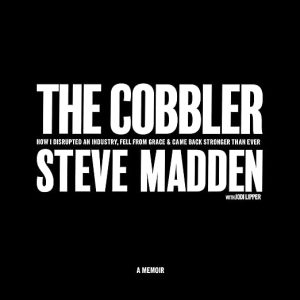
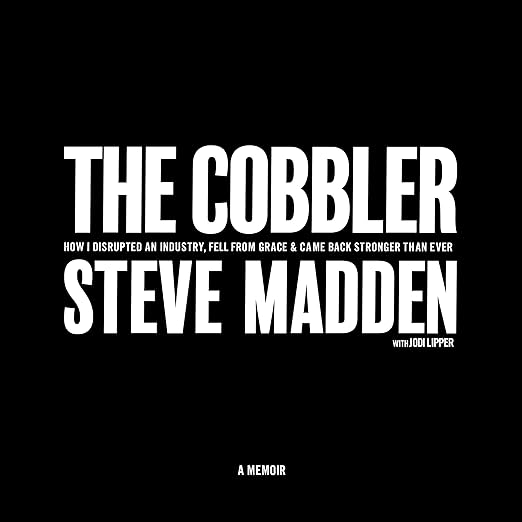
How many people can say they built a billion-dollar shoe empire, lost it to federal prison, and built it back again? Steve Madden can, and The Cobbler audiobook, narrated in his own voice, is his account of how all of that happened in both directions. The shoe is famous. The story behind the shoe is not, at least not the version Madden tells here, unfiltered by a ghostwriter's smoothing or a publicist's damage control. He founded his eponymous company with $1,100. That number is not metaphorical modesty. It was a shoestring startup in the literal sense, built from product obsession and hustle in a market that already had plenty of both.
The Same Firm From The Wolf of Wall Street
By the time federal prosecutors came calling, Steve Madden shoes were a cultural phenomenon and the company was worth far more than anyone operating on $1,100 would have predicted. The criminal charges connected to the Stratton Oakmont brokerage, the same firm at the center of The Wolf of Wall Street, interrupted that trajectory without ending it. The book's most interesting question is not whether Madden recovered but what recovery actually required from him personally and professionally.
Madden holds nothing back on the addiction chapters. His battle with substance abuse runs parallel to the business story rather than being tucked into a single confessional passage, and the audiobook is stronger for that honesty. Addiction shaped his decision-making in ways that affected the company's trajectory, and separating the two narratives would have produced a cleaner story and a less true one. The prison chapters are similarly unsparing, not melodramatic, but frank about what incarceration does to a person and to a company that must continue operating without its founder for years at a stretch.
Madden's Queens Accent, Restless and Direct
Self-narration is the only defensible choice for a memoir this personal. Madden's Queens accent and conversational delivery make the audiobook feel like an extended interview rather than a formal reading, which is exactly the right register for a story this unpolished. At five hours and forty minutes, the production moves at a pace that reflects Madden's own energy: restless, occasionally digressive, always direct. One reviewer who came to the book as a shoe enthusiast rather than a business reader found themselves absorbed by the story regardless, which is a useful measure of how broadly the memoir travels beyond its immediate niche.
The business philosophy sections are genuinely interesting, particularly the material on hiring and product development. Madden's approach to hiring is described as unconventional, and his devotion to product is not a branding claim but a documented behavioral pattern. The reason the company survived his absence is partly that the product culture he created did not depend entirely on him being present to enforce it. One reviewer noted the book changed their appreciation of the shoe empire itself, which suggests Madden succeeded in connecting the business to the person behind it rather than simply producing a founder hagiography. Another reviewer asked why a film adaptation had not yet arrived, which is probably the most sincere form of literary praise available.
The Texture of Authenticity Over a Tight Edit
Madden's self-narration has the texture of authenticity and occasionally the structure of stream-of-consciousness. This is not a tightly edited memoir with clean chapter logic and carefully placed reveals. It is a man talking about his life with genuine candor and uneven formal control. Readers who want a polished business biography with cited sources and analytical distance will need to adjust their expectations. The value here is in the directness, not the architecture.
The Wolf of Wall Street parallel is inevitable given the Stratton Oakmont connection, and Madden acknowledges it without making it the center of his story. His account of that period positions him as someone who made decisions he should not have made, not as a hapless bystander or as the protagonist of a cinematic crime drama. That restraint is one of the memoir's more effective choices.
The fashion industry context adds a layer of specificity that general startup memoirs rarely provide. Shoe design operates under constraints that software or service businesses do not face: physical supply chains, manufacturing relationships, seasonal buying cycles, and a consumer market where trends shift faster than production cycles can always accommodate. Madden's account of managing these constraints, including his unconventional approach to trend identification and his direct relationships with manufacturing partners, gives the business sections a particularity that makes them genuinely illuminating rather than interchangeable with any other founder story. The shoe is the specific object through which all the larger themes about product, identity, and persistence run.
Very Few Business Books Claim This Combination
This audiobook works for people interested in founder stories that do not sanitize the founder, business readers who want the drug-and-prison version of entrepreneurship history alongside the product strategy, and fashion industry observers who want to understand how a $1,100 startup became a global brand. It also works for general memoir readers who appreciate raw personal honesty over polished narrative craft. Skip it if you want a conventional business book with frameworks, statistics, and clean conclusions. Madden is telling you what happened to him and what he learned from it. The lessons are real precisely because the failures were genuine, costly, and survived rather than tidied up in retrospect. The Cobbler works as a business memoir, a recovery memoir, and an account of what it actually takes to build a brand identity so strong that the company outlasts the founder's most destructive years. Very few business books can claim that combination of registers, and fewer still pull it off with this degree of honesty.
Does Steve Madden narrate The Cobbler audiobook himself, and does that work for this kind of story?
Yes, Madden narrates the full five hours and forty minutes himself. His Queens inflection and conversational delivery make the listening experience feel like a direct account rather than a produced memoir, and reviewers consistently cite his narration as one of the audiobook's strengths, particularly given how personal the content is.
How much does The Cobbler audiobook cover the Stratton Oakmont and Wolf of Wall Street connection?
Madden addresses the stock fraud charges and his prison time directly but does not frame his story primarily through the Stratton Oakmont lens. He acknowledges the decisions that led to his conviction without dramatizing them as cinematic crime or minimizing their lasting impact on his life and company.
Is this audiobook primarily a business book or a personal memoir?
Both, with the personal driving the structure. Madden covers his product philosophy, hiring approach, and business strategy, but these are embedded in a story about addiction, incarceration, and comeback rather than extracted as transferable frameworks. The hybrid quality is the book's distinctive strength.
Does The Cobbler audiobook cover Madden's business philosophy in useful detail, or is it mainly personal story?
Both threads are substantively present. Madden discusses his unconventional hiring strategies, his relationship with product development, and how the company's culture allowed it to survive his prison years. Reviewers find this material genuinely illuminating rather than biographical filler.