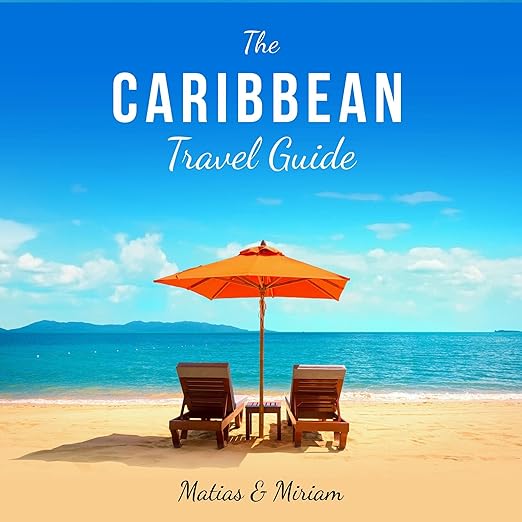
Quick Take
- Narration: Ethan Samuel reads with a pleasant, unhurried delivery appropriate for travel content, informative rather than performative.
- Themes: Budget-range Caribbean travel, first-hand experience over sponsored content, island-by-island practical planning
- Mood: Practical and encouraging, with a personal voice behind the advice
- Verdict: A solid planning companion for first-time Caribbean visitors who want first-hand perspective over glossy resort marketing, but the concise format leaves some destinations feeling underserved.
I listened to The Caribbean Travel Guide during a planning session for a trip I had been putting off for three years. I had a spreadsheet open, a map on my second screen, and a growing sense that the internet had given me too many contradictory opinions about which island was the right starting point. What I wanted was someone who had actually been to these places on a normal budget and could tell me what mattered. Matias and Miriam, who wrote this guide, are roughly that person.
The book covers eleven destinations: the Bahamas, Belize, Cayman Islands, Cozumel, Cuba, Dominican Republic, Netherlands Antilles, Puerto Rico, Roatan, Turks and Caicos, and Virgin Islands. That is an ambitious scope for a five-and-a-half-hour audiobook, and the ambition creates both the guide’s main strength, breadth of coverage, and its main limitation, necessarily thin coverage of each individual island.
Our Take on The Caribbean Travel Guide
What distinguishes this guide from resort-catalog travel writing is the voice behind it. Matias and Miriam traveled these islands on average American salaries, which means the advice is grounded in real budget constraints rather than aspirational spending. The multi-budget hotel options, the guide explicitly covers low, medium, and high budget accommodation for each destination, are one of its most practically useful features. Most travel media is either budget backpacker content or luxury travel content; this guide operates in the middle range where most actual vacationers live.
The chapter called Travel Like A Local stood out to multiple reviewers, including one planning to sail the Caribbean on their own boat who found it directly applicable to their specific situation. That kind of detailed, experience-grounded advice is what distinguishes this guide from what you can assemble from a few hours on TripAdvisor.
Why Listen to The Caribbean Travel Guide
Ethan Samuel narrates with the appropriate register for travel content, clear, friendly, and direct without being chatty. He moves through the island chapters at a pace that allows practical information to register without making the listen feel like a recitation of facts. The PDF companion that accompanies the audiobook is worth downloading; the book was originally designed with visual elements including maps and images that the audio alone cannot deliver.
The historical trivia sections woven into each island chapter are a small pleasure. Matias and Miriam include cultural context alongside hotel recommendations and activities, which gives each destination a sense of place rather than reducing it to a checklist of attractions. That balance, practical and contextual, is harder to achieve than it looks.
What to Watch For in The Caribbean Travel Guide
The guide covers eleven destinations in five and a half hours, which works out to roughly thirty minutes per island. That is not much time, and some reviewers found the coverage too sparse for their needs. One reviewer concluded that the content is available online for free, which is technically true of most travel information but misses the value-add of curated first-hand experience over undifferentiated search results.
The book was published in October 2021, which means some specific details, hotel contact information, prices, operating hours, will have changed. The historical and cultural content remains accurate, but practical details should be verified against current sources before booking. The guide works best as an orientation and inspiration tool rather than an up-to-the-minute operational reference.
Who Should Listen to The Caribbean Travel Guide
First-time Caribbean travelers who want a structured, first-hand introduction to the region’s island options will find this a useful starting point. The book’s honest framing, no sponsor relationships, no comped stays, gives it a credibility that destination marketing content cannot replicate. The book’s honest framing, no sponsor relationships, no comped stays, gives it a credibility that destination marketing content cannot replicate. Budget-conscious travelers who feel underserved by luxury-focused travel media will appreciate the multi-tier approach. Experienced Caribbean travelers looking for deep coverage of a single destination will find the breadth-over-depth tradeoff frustrating, a destination-specific guide will serve them better. Sailors and liveaboard travelers will want the Travel Like A Local chapter in particular. Anyone who needs current pricing and availability should supplement this with real-time research before booking.
Frequently Asked Questions
Does The Caribbean Travel Guide cover all major Caribbean islands, or only a selection?
It covers eleven specific destinations: the Bahamas, Belize, Cayman Islands, Cozumel, Cuba, Dominican Republic, Netherlands Antilles, Puerto Rico, Roatan, Turks and Caicos, and Virgin Islands. Major islands not on this list, Barbados, Jamaica, St. Lucia, Martinique, and others, are not covered. The selection reflects where Matias and Miriam actually traveled.
How current is the practical information in the guide?
The guide was published in October 2021, so specific details like hotel contact information, prices, and operating hours may have changed. Cultural and historical content remains accurate. Treat this as an orientation guide and verify practical details through current booking platforms before traveling.
Is this guide useful for budget travelers, or does it skew toward luxury recommendations?
The guide explicitly covers low, medium, and high budget options for each island, which is one of its distinguishing features. The authors traveled on average American salaries and made that constraint visible in their recommendations. Budget travelers who feel overlooked by traditional travel media will find this more directly relevant than most guides.
Does the audiobook work without the companion PDF, or is the PDF essential?
The audiobook works as a standalone, the narrative content is self-contained. However, the guide was originally designed with visual elements including maps and images, and the PDF companion delivers those. For full value, download the PDF. It is included with the Audible purchase and adds context that the audio alone cannot convey.