Before You Press Play
- Voice: Ron Howard narrates both his own chapters and Clint's, lending real intimacy though Clint's story is always filtered through his brother's reading.
- Big ideas: Child stardom, sibling loyalty, family resilience inside the entertainment industry
- Atmosphere: Warm, candid, occasionally bittersweet
- Worth it?: A dual memoir worth hearing precisely because Ron Howard is the one reading it.
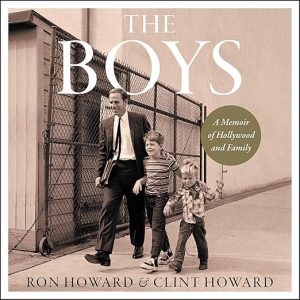
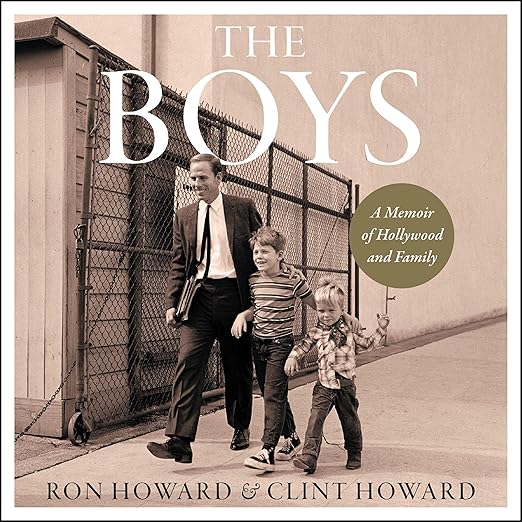
Opie Taylor and Richie Cunningham grew up to become the same person, and this audiobook is Ron Howard's account of how that happened, told alongside his younger brother Clint. The two men built parallel but very different careers as child actors, Ron riding The Andy Griffith Show and Happy Days into a director's chair, Clint bouncing between Gentle Ben and Star Trek before adolescence complicated things considerably. What sets The Boys apart from the usual Hollywood-childhood memoir is that it's genuinely a dual account, not one brother's story with the other as a supporting character, and Ron Howard narrates it himself.
The synopsis describes the finished result as "confessional, nostalgic, heartwarming, and harrowing" in turn, and that range is really the book's organizing principle: this is a story willing to sit in genuine warmth one chapter and real discomfort the next, rather than smoothing either extreme down for an easier listen.
The Family System Built to Survive Stardom
The memoir's real subject isn't stardom, it's the family system built to survive stardom: Rance Howard, an actor himself, set aside his own ambitions to become his sons' teacher and moral compass on set, while Jean Howard ran interference against everything Hollywood could throw at two young boys. Reviewer jcm4ccc calls out the back-and-forth structure specifically, the way the book alternates perspective between the two brothers rather than handing the microphone to one and letting the other fade into anecdote. Lucy's review frames it as a detailed account running from Rance and Jean's courtship through their deaths, which signals just how far the scope extends beyond the child-star years most readers expect going in.
Malcolm Gladwell's blurb calls it a story that "stands alone" among the Hollywood memoirs he's read, and Tom Hanks's praise notes that The Boys "will surprise every reader with its humanity". Those aren't throwaway jacket quotes; they point at what actually distinguishes this book, a willingness to sit with the uncomfortable parts of child stardom, the bullying Ron faced despite his success and the tougher adolescent unraveling Clint went through, without turning either brother's story into either a redemption arc or a cautionary tale.
Rance and Jean Howard's own backstory gets real space too: a Midwestern couple who moved to California chasing their own show-business ambitions, only to watch their two young sons find the steady acting work that eluded them. That generational irony, parents wanting the spotlight and raising kids who got it instead, gives the family material more shape than a simple chronological account of two acting careers would.
Howard Reads Both Brothers, and AudioFile Noticed
Ron Howard reads both his own sections and Clint's, which gives the book an intimacy a hired narrator couldn't match; you're hearing one brother's memory of the other filtered through decades of closeness, not a stranger doing impressions of two separate voices. AudioFile magazine named it a best audiobook of 2021 and gave it an Earphones Award, recognition that tracks with how the audiobook format specifically serves this material: a family telling its own story out loud, the way families actually tell stories at dinner.
Worth Ludwick's review is candid about the length while still praising the behind-the-scenes look at how television series and film directing actually get made, from a source who lived both sides of the camera. The production insight is genuine rather than padding, Ron's transition from Opie to director gets real texture here, and it pairs naturally with the more personal material instead of feeling like two different books stitched together.
The book's willingness to name "child-actor syndrome" directly, rather than dancing around what that experience actually costs a kid, is part of what earns the AudioFile recognition; Ron Howard isn't interested in a nostalgia lap through Mayberry, and hearing him name the harder parts of his own childhood in his own voice carries a weight a ghostwritten account read by a hired narrator simply couldn't replicate.
Jean Howard's role gets real texture too, described in the synopsis as the boys' "loving protector, sometimes over-protector", shielding them from the industry's worst impulses, while Rance modeled a different kind of restraint entirely, an actor himself who chose teaching his sons the craft over chasing his own name above the title. That specific parental division, one parent's fierce protection paired with the other's disciplined mentorship, is presented as the actual mechanism that kept two child stars from the kind of collapse Hollywood has seen plenty of times before and since. The book's own title does some quiet work too, both an affectionate label for two grown men who never fully stopped being "the boys" to their parents and colleagues, and a reminder of how long a child-star nickname can follow someone; Ron Howard was directing acclaimed feature films decades before this book's release, and interviewers were still bringing up Opie Taylor in nearly every profile.
Clint's Voice Always Arrives Secondhand
The narration's biggest strength is also its one real limitation: Ron Howard reading both brothers' sections means Clint's voice always arrives secondhand, filtered through his older brother's reading rather than delivered in his own cadence. It's a small trade-off given how well Ron handles the material, but anyone hoping for two genuinely distinct vocal performances, the way a full-cast production might offer, should adjust expectations accordingly.
At over thirteen hours, this is a substantial commitment, and Worth Ludwick's "somewhat long" comment is fair; the book covers roughly six decades of two overlapping careers, and pacing occasionally slows during the more granular industry history sections. Listeners who want a tight, single-arc memoir rather than a sprawling family chronicle should know what they're signing up for before pressing play.
The book's dual structure also means the emotional weight isn't evenly distributed between the brothers; Ron's chapters carry more of the industry-insider detail given his continued career, while Clint's sections deal more directly with the "tough consequences and lessons" that followed his early momentum stalling out in adolescence. Listeners expecting a fully balanced fifty-fifty split between the two brothers' material should adjust that expectation slightly.
Aspiring Filmmakers Get the Director's Origin Story
Fans of classic television who grew up on Happy Days or The Andy Griffith Show have the clearest reason to press play, but the book earns a wider audience than nostalgia alone would suggest; anyone interested in how families protect kids inside an industry built to exploit them will find real substance here, not just behind-the-scenes trivia. Aspiring filmmakers get an unusually candid look at how a child actor becomes a working director, told by someone who actually made that transition.
Clint's harder years, the stretch where fame petered out rather than compounded, arrive filtered entirely through his older brother's voice rather than his own; that's the one structural asymmetry worth naming for anyone specifically drawn to that half of the story before committing thirteen hours to an account that otherwise treats both brothers with equal weight and honesty.
Common Questions
Does Ron Howard narrate all of The Boys audiobook himself, including Clint's chapters?
Yes, Ron Howard reads the entire audiobook, both his own sections and his brother Clint's, which adds intimacy but means Clint's chapters come through in Ron's voice rather than his own.
Do you need to have watched Happy Days or The Andy Griffith Show to enjoy this audiobook?
It helps but isn't required. The audiobook spends as much time on the Howard family dynamics behind the shows as on the shows themselves, so the family story carries listeners unfamiliar with the specific series.