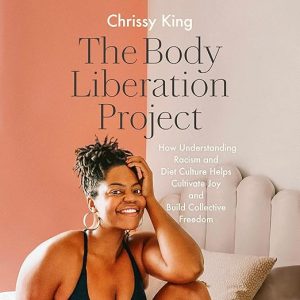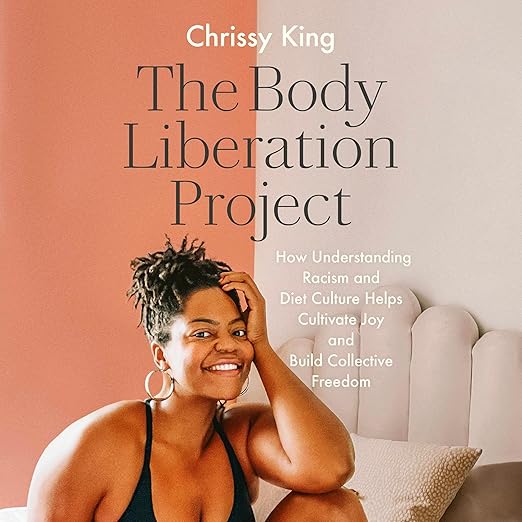
I started Chrissy King's The Body Liberation Project on a morning when I was already feeling the ambient pressure to look a certain way, the kind of morning where you have scrolled past enough images before 8 a.m. to carry a faint sense of inadequacy into the rest of the day. By the end of the first chapter, I was doing something that does not happen often enough with books in this genre: thinking differently about the architecture of that pressure rather than simply being consoled about it.
King begins her story where a lot of wellness narratives begin, in a gym, with a goal centered on becoming smaller. What she does differently is resist the narrative arc where self-acceptance arrives as a personal revelation. Instead, she asks a structural question: what if the problem is not my relationship to my body but the industries and systems that trained me to see my body as a problem in the first place? That question gives the book its political edge, and it is what distinguishes The Body Liberation Project from most of the body positivity literature that preceded it.
Body Liberation Asks Who Decided the Standard
The distinction King draws between body positivity and body liberation is the conceptual center of the book, and it is worth taking seriously. Body positivity, in its mainstream form, asks you to feel good about your body. Body liberation asks a prior question: who decided what bodies should look like, and who benefits from those standards? King argues that diet and fitness industries rooted in white supremacy are the problem; Eurocentric beauty standards are the problem; the cultural equation of physical appearance with personal worth is the problem. She is not simply asking you to look in the mirror more kindly. She is asking you to interrogate the history that produced the standard against which you have been measuring yourself.
That argument requires readers to do something most wellness books do not ask of them: examine their own role in perpetuating the systems that harm others. King addresses privilege explicitly, asking readers to recognize when their relationship to body standards comes with structural advantages that others do not share. One reviewer who gave the book five stars still noted that it felt oriented toward white readers by the midpoint, that the framing of systemic critique was largely pedagogical toward a non-Black audience, which meant a Black woman reader found herself feeling less centered than she expected. That critique is honest and worth passing along. King is teaching a wide audience, and the choice to write for breadth occasionally means that readers who are the primary subject of the harm being described find themselves in a supporting role rather than the center.
Chrissy King's Self-Narration Carries the Memoir
Chrissy King narrating her own book is the right call for this material. The memoir sections, where she traces her own journey from the get-skinny gym mentality through the realization that the goal itself was the problem, are most effective in her own voice. She speaks with the authority of someone who has lived the argument rather than constructed it, and the self-narration creates a kind of intimacy that a hired narrator would have had to work hard to manufacture. When the content turns demanding, when she is asking the reader to examine their own privilege or sit with the discomfort of recognizing harm they may have participated in, her voice maintains the warmth necessary to prevent defensiveness from shutting the listener down.
The book's hybrid form is also genuinely interesting. King describes it as a mix of memoir, inspiration, and activities and prompts, and at 6 hours and 35 minutes, the audio version delivers enough of each register to feel substantive without bloating. The activities and prompts work somewhat less naturally in audio form than they would in print. Listeners will need to pause and engage with them separately rather than working through them on the page, but they are valuable enough to be worth that friction.
Beyond a Personal Wellness Guide, Into Structural Critique
Readers who come to this book expecting a personal wellness guide in the conventional sense will be required to expand their expectations. This is not primarily a book about how you feel about your body; it is a book about why you feel that way, who taught you to feel it, and what it would mean to refuse those lessons collectively rather than individually. That shift in scope requires a different kind of engagement, and some readers may find the structural critique more demanding than they anticipated from a book in this category.
The reviewer from an eating disorder dietitian background gives an unequivocal five stars and describes the framework as directly applicable to her clinical work with body image healing. That endorsement from a professional context speaks to the book's credibility and its alignment with contemporary clinical thinking about body image, diet culture, and the intersection of social systems with individual psychological experience.
For Readers Who Found Body Positivity Insufficient
For readers who have engaged with body positivity and found it insufficient, who want to understand the structural rather than just the personal dimensions of body image, this book delivers. It is also valuable for fitness professionals, wellness practitioners, and anyone working in fields where body-related advice is given regularly, as a counterweight to the cultural defaults of those industries. Readers looking for a purely personal comfort listen about self-acceptance will find it more demanding and more politically engaged than they might prefer. Those willing to be challenged in addition to being supported will find it rewarding and genuinely distinct from the body image literature that surrounds it.
Frequently Asked Questions
What is the difference between body positivity and body liberation as King defines them?
King argues that body positivity asks individuals to feel good about their bodies within existing standards, while body liberation asks who created those standards and challenges the systems, including diet industry, fitness culture, and Eurocentric beauty norms, that produce them. Liberation is structural where positivity is personal.
Is this book primarily written for Black women, or for a general audience?
King writes for a broad audience, and the framing often positions racial justice and structural critique as content to be taught to a general readership. One reviewer, a Black woman, found that this pedagogical orientation meant she felt less centered as the primary audience than she expected. The book's primary readership appears to be broadly diverse, with an awareness that it may reach white readers encountering these structural arguments for the first time.
Does the audiobook format work for the activities and prompts included in the book?
Partially. King's self-narration is excellent for the memoir and instructional content, but the reflective prompts work better when you can engage with them on paper. Consider pausing the audio during those sections to journal or reflect, rather than treating them as listening-only content.
Is Chrissy King's self-narration emotionally effective for the more vulnerable memoir sections?
Yes. Her narration of her own story, particularly the gym-as-size-reduction origin and the turning points in her relationship with fitness culture, carries the weight of lived experience. She does not perform vulnerability; she simply tells it, which is more affecting.