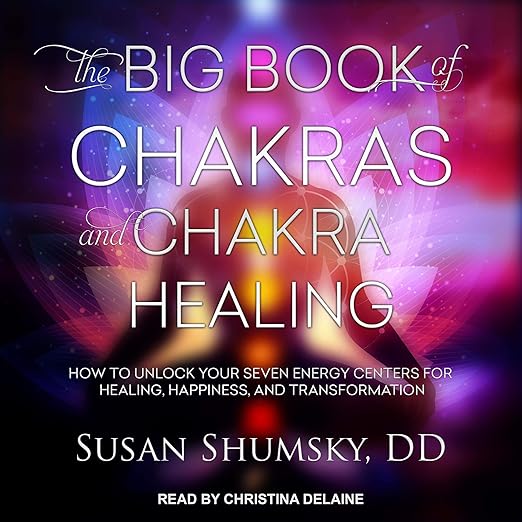
- Narrator: Christina Delaine provides a calm, measured delivery that suits the contemplative subject matter and the book's blend of instructional and philosophical content.
- Subjects: Subtle body awareness, kundalini energy and blockages, ancient Vedic and Tantric knowledge in contemporary practice
- Tone: Contemplative, instructional, and spiritually earnest
- Bottom line: A thorough reference for chakra study that goes beyond the standard seven-chakra overview, anchored by serious engagement with primary Vedic and Tantric sources.
Susan Shumsky's audiobook The Big Book of Chakras and Chakra Healing opens a door that most popular wellness titles barely acknowledge exists. The chakra system has been so thoroughly absorbed into mainstream wellness culture that the word itself has drifted far from its textual origins. Shumsky, who holds a doctorate in divinity and has spent decades working with Vedic and Tantric literature, goes back to those primary sources in a way that distinguishes this book from the surface-level energy-talk that dominates the wellness category. The result is a nearly ten-hour audiobook that takes its subject seriously at the level of scholarship.
Fourteen Chakras Instead of the Usual Seven
The most significant structural choice in this book is the expansion beyond the commonly discussed seven chakras to include seven subchakras and the full subtle energy system. Most popular chakra guides treat the seven main centers as a complete map. Shumsky's approach, informed by the ancient Tantric literature she draws on throughout, presents that map as a simplified starting point rather than the full picture. One reviewer specifically praised her for going beyond the traditionally seen chakras and exploring fourteen chakras with detailed information on how to work with each. That expansion gives the book its comparative depth and makes it more useful as a genuine reference than as a light introductory guide.
Shumsky structures the audiobook to work for both novices and experienced practitioners, which is a real challenge when the material spans from foundational concepts to advanced practices. She does not assume knowledge that a first-time listener would lack, but she also does not slow the pace to the point of condescension. The result is an audiobook that a curious novice can follow without getting lost and that an experienced practitioner will find contains material they have not previously encountered in more accessible wellness publishing.
Christina Delaine Holds a Meditative, Instructional Balance
Christina Delaine's narration is well matched to the material's contemplative register. The chakra literature requires a narrator who can hold a meditative quality without losing instructional clarity. The book covers specific visualization techniques, energy practices, and theoretical frameworks that need to be audible and followable rather than merely atmospheric. Delaine maintains that balance across nearly ten hours. She does not dramatize the spiritual content, which is the right call. Shumsky's writing is earnest and technically grounded, and a narrator who added theatrical performance would undercut the book's scholarly credibility.
The nine-hour-and-thirty-seven-minute runtime is appropriate for the scope Shumsky covers. The theoretical framework, the seven main chakras in individual depth, the subchakra system, kundalini energy mechanics, visualization practices, and a practical section on maintaining subtle body health all receive sustained treatment. For a subject this layered, a shorter audiobook would necessarily be more superficial. Listeners who want a quick practical guide will find other titles better suited. This one rewards time investment and benefits from active rather than passive engagement during the practice sections.
Filed as Sociology, Written as Spiritual Practice
The book's genre classification as sociology in some catalogs is a mismatch with its actual content. This is a spiritual and wellness title drawing on Hindu philosophical traditions. Listeners expecting a sociological or academic analysis of chakra beliefs as cultural phenomena will find instead a sincere instructional work written from inside the tradition and addressed to practitioners. That distinction matters for expectation-setting before purchase.
Some listeners may find the theoretical sections on Vedic and Tantric literature dense, particularly in audio format where you cannot easily revisit a passage. Shumsky's scholarship is genuine but the material assumes a receptive rather than skeptical orientation throughout. The section on kundalini energy is written from within a practitioner's framework and does not step outside to explain the tradition to an uninitiated or skeptical observer. Listeners who are already curious about the subject will find this a strength. Those who want critical distance built into the text may find that quality absent from this audiobook.
Experienced Practitioners Get the Most From This
This audiobook suits listeners who already have a foundation of interest in chakra study or Vedic spiritual traditions and want a more rigorous and comprehensive reference than most wellness titles provide. Experienced yoga practitioners and energy workers will find Shumsky's expansion into subchakras and subtle body mechanics genuinely useful beyond what introductory guides cover. Skip this audiobook if you are looking for a quick practical guide to chakra basics. The depth here is a strength but it comes at the cost of accessibility for complete beginners who want fast, simple application without extended scholarly context. Shumsky's contribution to the category is the insistence that the tradition contains far more than popular wellness culture has extracted from it. Whether or not you share her spiritual orientation, the depth she brings to the subject is a corrective to a category that badly needs it. For listeners who have grown frustrated with the shallow treatment of chakra concepts in mainstream wellness culture, this audiobook offers something substantively different. The nine-and-a-half hours required to absorb it are justified by the scope of what Shumsky covers and the seriousness with which she covers it. Experienced practitioners looking for a genuinely comprehensive audio reference on the chakra system will not find a more rigorous alternative in the mainstream wellness audiobook catalog. Delaine's narration makes the dense conceptual material followable across the full runtime without requiring listeners to pause and re-read passages.
Frequently Asked Questions
Does The Big Book of Chakras and Chakra Healing audiobook work as a starting point for someone with no prior knowledge of chakras?
Shumsky structures the book to work for both novices and experienced practitioners. She explains foundational concepts without assuming prior knowledge. That said, the depth and scope of the material rewards listeners who bring at least some basic curiosity about Vedic or Tantric traditions rather than complete skepticism.
Is this audiobook better suited to active practice or passive listening?
The visualization and practice sections are designed for active engagement rather than passive background listening. The instructional sequences covering specific techniques for working with kundalini energy and maintaining subtle body health require a degree of focused attention to follow in audio format.
How does the Chakra Healing audiobook differ from typical wellness chakra guides?
The main difference is the primary source engagement and the expansion beyond seven chakras to include subchakras and the full subtle energy system. Most popular chakra guides treat the seven-center map as complete. Shumsky treats it as a simplified entry point into richer Tantric and Vedic literature.
Is the Christina Delaine narration well suited to the contemplative tone of this audiobook?
Yes. Delaine maintains a calm, measured delivery that holds the meditative quality the subject requires while keeping the instructional content clear and followable. She does not dramatize the spiritual material, which is appropriate given Shumsky's earnest, technically grounded writing style throughout.