Key Details
- Read by: Virtual Voice narrates this sixty-one-minute fable, and the AI narration is a mismatch for a text that relies on lyrical pacing and emotional texture - listeners sensitive to narration quality should factor this in.
- At its heart: Grief and the ritual of letting go, the invisible bonds between the living and the dead, self-forgiveness
- Vibe: Quiet, contemplative, and melancholic
- Short version: A short lyrical fable with genuine emotional intelligence whose impact is unfortunately undercut by the AI narration delivery.
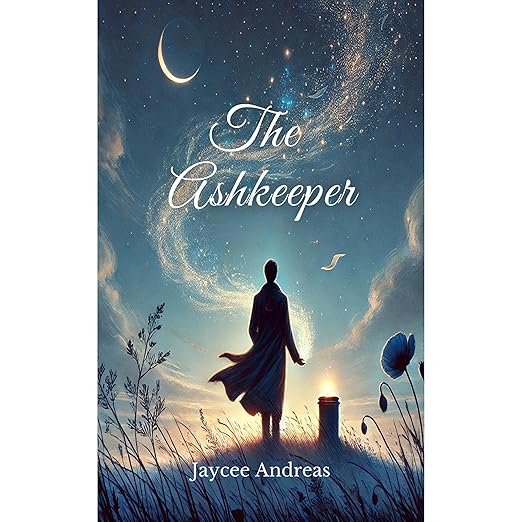
The Ashkeeper arrives as a small, deliberate thing - a sixty-one-minute spiritual fable by jaycee andreas about a nameless man whose entire existence is devoted to scattering the ashes of the dead in the places they once loved. This audiobook inhabits a rare category: the micro-literary short story structured as ritual rather than narrative. The Ashkeeper carries an urn, a letter, and the weight of someone else's final wish to fields, forests, mountains, and ruins. He reads their words aloud to the wind. He weeps sometimes. He never asks for recognition, never leaves a trace, never announces himself. The story's central question is not what he does but who he is - and why, eventually, the wind begins to whisper things back.
Lyrical Prose That Virtual Voice Cannot Quite Carry
Andreas has written something that belongs to the tradition of the lyrical fable - the kind of short fiction where image and ritual carry more weight than plot mechanics. The structure is accumulative: each ceremony the Ashkeeper performs adds a layer to his character without explaining him, until the moment when the ceremonies start to feel personally familiar and the story's hidden question surfaces. That question - what does a person carry when they have spent a life carrying other people's grief? - is the book's emotional core, and the writing approaches it through indirection rather than confrontation. The result, on the page, has the quality of a prose poem sustained over sixty minutes.
The challenge with this particular audiobook is that the Virtual Voice narration works against the text's inherent qualities. Lyrical prose depends on pacing, breath, and tonal variation to land its effects - the difference between a phrase that moves the reader and one that merely delivers information is almost entirely a matter of performance. Virtual Voice, however capable it has become for certain types of content, lacks the intuitive feel for rhythm and emotional weight that this text specifically requires. Listeners who have experienced human narrators handle similar literary fable material - the kind of short spiritual fiction that relies on quiet accumulation - will notice the gap. The text's intelligence survives the delivery, but it does not thrive under it.
A Fable Aimed at Those Who Hold Space for Others
Despite the narration limitation, the fable itself offers something genuinely rare in short audiobook form: a story that takes grief seriously without sentimentalizing it, and that frames the act of letting go as a skilled practice rather than an emotional event. The Ashkeeper is not a grief counselor or a priest - he is something more ambiguous, a figure who exists at the border between presence and absence, doing a job that has no institutional recognition but that the world clearly needs. Andreas builds this premise with care, and the fable's second movement, where the Ashkeeper's relationship to his work begins to shift, earns the emotional weight it reaches for.
At sixty-one minutes, this audiobook is the right length for its material. Extending it would require either more plot or more explanation, both of which would undermine the fable's logic. The story is complete in the way a short piece of music is complete - not abbreviated, but appropriately proportioned. Listeners who engage with this format on its own terms, rather than measuring it against longer narrative fiction, will find the experience more rewarding. The story specifically addresses those who hold space for others in grief while neglecting their own - caregivers, counselors, people who spend professional or personal energy on other people's losses. That specificity of address is one of the book's more honest qualities.
A Psychological Resolution Dressed as Magical Realism
The moment when the Ashkeeper begins to recognize something personally familiar in the ceremonies he performs is the story's pivot, and Andreas handles it with admirable restraint - the revelation does not announce itself but arrives quietly, through accumulation. The wind that begins to whisper is not a supernatural intervention in the usual fantasy sense but a form of internal recognition, the kind that comes when a person has been doing something long enough to start hearing what they have been avoiding. That distinction matters for how the fable's resolution lands: it is not a mystical resolution but a psychological one, dressed in the language of magical realism.
The story's emojis in the original description text reflect a marketing style that doesn't match the prose itself. Listeners who encounter the listing and find the promotional copy visually cluttered should not let that discourage them from the text - the writing itself is quieter and more carefully made than the marketing framing suggests. The fable belongs to a tradition of short European literary fiction about solitary figures who carry symbolic weight, and it holds up well in that context.
Grief Work for Readers of Calvino and Haruf
This audiobook will resonate most with listeners who are drawn to lyrical, contemplative short fiction - readers who appreciate writers like Italo Calvino or Kent Haruf's quieter work, or who seek out grief narratives that frame loss as something to be tended rather than overcome. At sixty-one minutes, it is accessible as a single listening session during a walk or a quiet evening. Those who require human narration for lyrical fiction will want to evaluate carefully given the Virtual Voice delivery. Listeners in active grief, or those who professionally support others in grief, are most likely to feel the specific emotional frequency this fable is broadcasting. Listeners seeking narrative pace and dramatic plot development will find the format unsuitable.