Quick Take
- Narration: Jonathan Yen delivers Cremades’s practical, conversational prose with appropriate energy without over-selling the motivational moments.
- Themes: Startup capital strategy, the JOBS Act and online fundraising, investor relationship building
- Mood: Practical and direct, with an encouraging tone that stops short of cheerleading
- Verdict: A solid, accessible overview of startup fundraising mechanics that is particularly useful for first-time founders navigating digital capital channels, though experienced operators will find much of it familiar.
I listened to the first half of this one during a stretch of mornings when I was doing research into how the literary startup space raises capital, a niche concern, perhaps, but AudiobookDaily has been growing and I have had more conversations about funding models than I anticipated. What struck me about Alejandro Cremades’s approach is how deliberately he has written for the person who has never done this before: the first-time founder who knows she has something worth building but has no map for how the money actually flows.
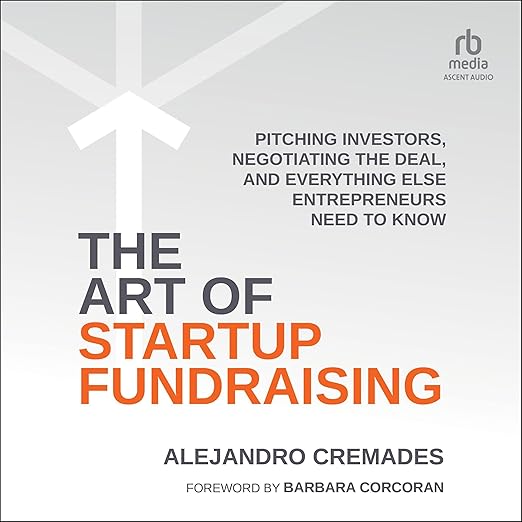
The Art of Startup Fundraising was originally published in 2016, updated for this 2023 Ascent Audio edition, and its central argument is that the fundraising landscape has shifted in ways that most older guides do not account for. The JOBS Act, crowdfunding regulations, and the movement of startup capital online have created channels that did not meaningfully exist for the previous generation of entrepreneurs. Cremades, a co-founder of CoFoundersLab and a serial entrepreneur with extensive investment experience, writes from inside that shift rather than observing it from outside.
Our Take on The Art of Startup Fundraising
The book works best as a structured orientation for people who are overwhelmed by the fundraising process. Reviewer FAV002, a former corporate VP who transitioned into co-founding a startup, describes it as a clear, insightful roadmap for how to successfully travel down the path of fundraising. That road map metaphor is apt: Cremades is not trying to give you the equivalent of a graduate seminar in venture capital. He is trying to ensure you know which roads exist and in which direction they run.
Reviewer Jeffrey S. Hall makes the useful observation that what distinguishes Cremades from other writers in this space is his language: simple, conversational, and easy to follow where competing books tend toward the dry and technical. That accessibility is a genuine service to the first-time founder audience, and it translates well to audio. The book is designed to be read rather than studied, and the audiobook format suits that intent.
Why Listen to The Art of Startup Fundraising
Jonathan Yen is a well-paced narrator for business nonfiction, keeping the delivery brisk without rushing through the more nuanced strategic sections. He handles the practical checklists and strategic frameworks without making them feel rote, which is the main failure mode for narrators of prescriptive nonfiction. At six hours and twenty-three minutes, the audiobook is pitched at a length that respects the listener’s time while covering the subject with appropriate depth.
One of the book’s underappreciated strengths is its emphasis on relationship building before the ask. Reviewer Darin Swick, himself a former founder, highlights Cremades’s consistent return to the idea that capital follows relationships, not simply pitches. That is not a new insight in venture circles, but it is one that first-time founders frequently underestimate, and Cremades articulates it with enough specificity, what to do at what stage, how to build the network before you need it, to make it actionable rather than merely advisory.
What to Watch For in The Art of Startup Fundraising
Reviewer Chris’s observation that much of the book covers information available through a Google search is not entirely unfair. Some of the content, what a pitch deck is, how seed rounds work, the basic structure of investor meetings, is genuinely foundational knowledge that any first-time founder could find in free online resources. The value Cremades adds over those resources is organization, sequence, and the experience-based perspective he brings to each component.
The book’s emphasis on friends and family as an early funding source is also worth flagging, as reviewer Chris notes: not every founder has a personal network capable of providing startup capital, and Cremades’s assumption that this avenue is broadly available reflects a particular socioeconomic starting point. For founders without that resource, the early sections of the book will feel less relevant, and they should be aware that the advice requires adaptation to their specific situation.
Who Should Listen to The Art of Startup Fundraising
This audiobook is most valuable for first-time founders who are building their first company and have limited prior exposure to venture capital, angel investing, or crowdfunding mechanics. Former corporate professionals making the transition to entrepreneurship, as reviewer FAV002 describes, will find it particularly grounding. It functions as an orientation course rather than an advanced practicum.
Experienced founders with multiple prior fundraising rounds under their belt, or investors who already understand the landscape from the inside, will find limited new material here. The book’s strength is breadth and accessibility rather than depth or novelty. Come for the map, not the territory.
Frequently Asked Questions
How current is The Art of Startup Fundraising given it was originally published in 2016?
This 2023 Ascent Audio edition reflects updates to account for changes in the fundraising landscape. The book’s core focus on the JOBS Act and online fundraising channels was forward-looking when first published, and the updated edition addresses how those channels have matured. That said, the venture capital landscape continues to evolve, and some specifics may date faster than the underlying strategic principles.
Is this book appropriate for founders outside the United States, given its focus on the JOBS Act?
The book is primarily written from a US regulatory and market perspective, and the JOBS Act discussion is specific to American crowdfunding regulations. Founders in other markets will find the strategic principles about investor relationship building and pitch construction broadly applicable, but should be aware that the regulatory framework discussion is US-centric.
Does narrator Jonathan Yen handle the prescriptive, list-heavy sections of the book effectively?
Yes. Yen keeps the delivery brisk through the more checklist-oriented sections without making them feel mechanical, which is the main challenge for narrators of practical business nonfiction. The conversational tone Cremades uses in the original text translates well to audio, and Yen matches that register throughout.
Does the book address what to do if you do not have a friends-and-family funding network?
This is a gap reviewers have noted. Cremades emphasizes friends and family as a common early-stage funding source, but the book does not extensively address strategies for founders who lack that social capital. Listeners in that situation will need to adapt or supplement the advice, as the framework assumes a level of personal network access that is not universally available.