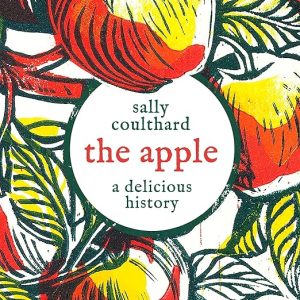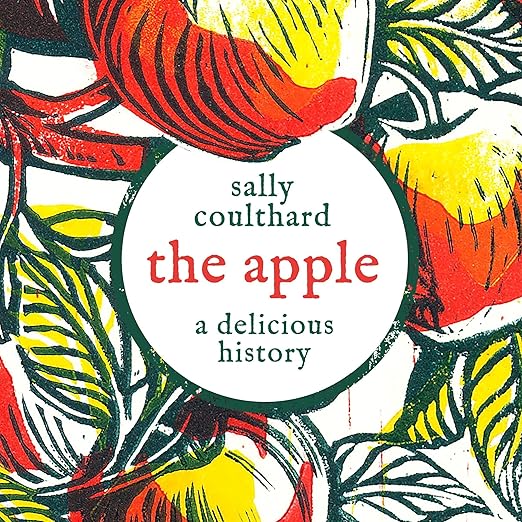
Sally Coulthard has a gift for the single-subject history - the kind of audiobook that takes one familiar thing and reveals the ten thousand years of human drama compressed inside it. The Apple works in that tradition, tracing the fruit from its prehistoric origins in the Tian Shan mountains of Kazakhstan through the Silk Road, Greek mythology, Roman military logistics, medieval European orchards, seventeenth-century American cultivation, and the current reality of commercial monoculture that has reduced a gene pool of more than seven thousand five hundred varieties to a handful of supermarket staples. Six hours and fifty-six minutes turns out to be the right length for that ambition - long enough to develop each period with genuine depth, short enough that the story never loses its momentum.
My interest in food history was already established before listening to this audiobook - I had read about the Columbian Exchange and some of the history of American apple cultivation through Michael Pollan's work - but Coulthard covers ground that Pollan does not, particularly in the earlier periods. The apple's journey along the Silk Road, its appearances in Greek myth as an erotically charged symbol of desire, its presence in the shopping list of a Roman officer stationed on Hadrian's Wall - these specifics are not background texture. Coulthard builds her argument from them: that the apple has been central to human civilization in ways so ancient and so pervasive that we have stopped seeing it.
Seven Thousand Varieties Down to a Handful
Coulthard's range across disciplines is one of the book's genuine strengths. She moves between culinary history, horticultural science, social history, mythology, and folklore without any of the seams showing, which is harder to do than it looks. The chapter on Charlemagne's orchards in the early Middle Ages - their role in provisioning his empire, the specific varieties he cultivated and promoted - sits comfortably next to the discussion of the yellow sweeting, the first new apple variety cultivated in seventeenth-century America, which sits comfortably next to an examination of how twentieth-century commercial agriculture collapsed the genetic diversity of commercial apple cultivation into a handful of aesthetically uniform, globally shipped cultivars.
Deborah Balm's narration is well suited to this kind of material. She brings warmth and quiet enthusiasm to Coulthard's prose without overdoing it - she is clearly enjoying the subject, but her performance never becomes showy. For a book that spans ten thousand years and four continents, the narration needs to feel like a single continuous voice rather than a series of separate performances, and Balm achieves that. The transition from a mythological digression to a historical account to a recipe anecdote is handled with consistency of tone throughout.
One reviewer described this as a book packed with information they did not know but would use - and that phrase captures something important about Coulthard's approach. The history is not academic for its own sake; it is history that illuminates present choices and present losses. The fact that more than seven thousand five hundred apple varieties exist globally but only a handful appear in modern supermarkets is not presented as a nostalgic grievance but as a concrete consequence of specific agricultural and economic decisions that Coulthard traces clearly. That kind of functional historical insight is what distinguishes the best single-subject nonfiction from mere curiosity-cabinet collecting.
Deborah Balm Keeps One Voice Across Ten Millennia
The audiobook format works well for this kind of discursive, wide-ranging cultural history. The recipe anecdotes and culinary digressions, which appear throughout the text, benefit from the listening context in particular - Coulthard's descriptions of cider pressing, of specific apple textures and flavor profiles, of the particular qualities of heritage varieties, are more immersive when heard than when read. Balm's delivery makes them feel like vivid illustrations of the history rather than interruptions of it.
Coulthard frames this as a book for gardeners, nature lovers, and anyone who enjoys a drop of cider or a slice of apple pie. That is a self-deprecating way of describing a book that is genuinely ambitious in its historical scope. The gift-book framing undersells it. This is solid cultural history that happens to be pleasurably written and pleasurably narrated, not a lightweight illustrated companion. Listeners who enjoy the long-form single-subject tradition of books like Mark Kurlansky's cod and salt histories, or Amy Stewart's plant histories, will recognize the genre and appreciate Coulthard's skill within it.
One reviewer, a food and nutrition teacher, described it as packed with information she did not know and would use in her work. Another described becoming more learned after listening. Neither is overstating the case. Coulthard is genuinely informative rather than merely entertaining, and the balance between the two is the source of the book's value.
Cultivation Notes Read Better Than They Listen
The book's stated appeal to gardeners means it occasionally slides into discussions of cultivation technique and varietal selection that will engage horticulturally minded listeners more than general history listeners. These passages are never overly technical, but they do represent a slight shift in register from the cultural and mythological history that occupies most of the runtime. They are also more clearly print-oriented - descriptions of planting practices and soil conditions that might benefit from visual illustration do not translate quite as cleanly to audio.
The recipes integrated throughout the text are accessible by audio description but cannot be followed during listening. Listeners who want to actually cook from the book will need the print edition or will need to take notes. The recipe content works best in the audiobook as an evocative illustration of the history - you get a sense of what these apples were used for and how they featured in domestic life across different periods - rather than as practical culinary instruction.
Coulthard's coverage of the modern commercial apple industry, particularly the concentration of genetic diversity and the market forces that drive it, is the most contemporary and arguably most urgent section of the book. It is also somewhat the shortest. Listeners who want more depth on the present-day situation will need to follow up with more specialized reading on agricultural biodiversity.
Cider Fans and Historians Both Find Their Match
This audiobook is an excellent choice for listeners who enjoy single-subject cultural histories written with range and light touch. Food historians, gardeners, cider enthusiasts, and general nonfiction readers who appreciate the kind of book that takes something familiar and makes it strange again will all find what they are looking for. Deborah Balm's narration makes it a comfortable and pleasurable listening experience. Those who need practical cultivation guidance or recipe instruction should supplement with print resources, but for the history and the prose, the audio edition delivers fully.
Before You Listen
Is this audiobook appropriate for listeners with no background in food history or horticulture?
Yes, completely. Coulthard writes for a general audience and assumes no prior knowledge of either food history or gardening science. The book is organized around storytelling and cultural context rather than technical expertise, making it accessible to anyone with curiosity about where familiar things come from.
How do the recipe inclusions work in this audiobook format?
The recipes appear throughout the text as historical illustrations rather than as a practical cooking resource. Balm reads them as part of the cultural narrative, they give you a sense of how apples have been used across different periods and cuisines, but they are not designed to be followed while listening. The print edition is better suited if you want to actually cook from the book.
Does this audiobook cover modern agricultural issues like monoculture and biodiversity loss?
Yes, though this section is relatively brief compared to the historical material. Coulthard traces how the genetic diversity of commercial apple cultivation, more than 7,500 varieties globally, has been compressed to a handful of supermarket staples through specific agricultural and market decisions. It is an accessible treatment of the issue rather than a deep dive.
How does Deborah Balm's narration hold up across the full seven-hour runtime?
Balm maintains consistent warmth and engagement throughout. Her transitions between the book's different registers, mythological, historical, horticultural, culinary, feel natural rather than mechanical. Listeners who worry about narrator fatigue in longer nonfiction audiobooks will find her performance sustains its quality across the full runtime.