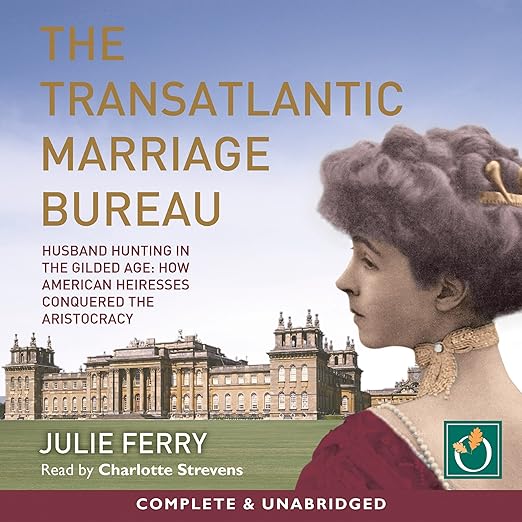
Key Details
- Narration: Charlotte Strevens is credited, on a book moving between American new money and English aristocratic idiom.
- Themes: American heiresses of the 1890s, titles bought with new money, estates rescued by marriage, the women brokering it
- Mood: Specific, sociable, faintly scandalous
- Verdict: A well-aimed group biography shelved somewhere nobody looking for it will ever think to browse.
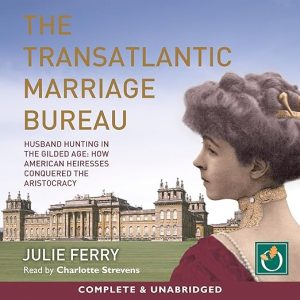
Somebody filed this audiobook under home and garden, then tagged it crafts and hobbies. It is a work of social history about nine American heiresses who crossed the Atlantic in 1895 to buy their way into the English aristocracy. No shelf on the page mentions history, biography or the nineteenth century at all. That is not a small clerical error, it is very likely the reason almost nobody has found this recording in the nine years it has been on sale.
Minnie-Paget and Yzanga Broker Nine Society Marriages
Julie Ferry's subject is one of the more startling arrangements in nineteenth-century society, and the description states the bargain with admirable economy. The American girls came from new money and wanted social prestige. The English gentlemen they married wanted their estates secured. Both sides got what they came for, and the whole thing was brokered rather than romantic, which is the part most popular accounts of the period leave out entirely.
The brokers are what lifts this above a costume piece. Lady Minnie-Paget and Consuelo Yzanga, Duchess of Manchester, are named in the copy as the unofficial marriage brokers who made it all happen from behind the scenes, and a book treating them as the operators rather than as background is doing something worth hearing. Nine marriages arranged inside a single year is a business rather than a coincidence, and businesses leave records that a historian can follow.
Charlotte Strevens Reads Ten Hours on a Four-Sentence Blurb
Charlotte Strevens holds the reading credit, and Oakhill Publishing released the recording in September 2017. Ten hours and twelve minutes is generous for nine linked biographies plus the two women who arranged them, which suggests room for period detail rather than a march through dates. The description runs to four sentences and tells you nothing further about how the material is organized, whether chronologically, by marriage, or by family. Four sentences is also all the publisher has ever offered a browser deciding whether to spend an evening here.
Nine Heiresses Give Group Biography a Real Shape
Group biography suits audio unusually well when the group is small and the connections between its members are strong. Nine women, one season, two brokers and a shared motive gives a listener a structure to hold on to, and the recurring cast means you are not restarting from nothing with every chapter, which is the failure mode of most collective biographies in audio. The 1895 framing is tight enough to keep the whole thing from dissolving into a general survey of the period, and a single season gives the book a natural shape that a decade-long study would have to invent.
This material has been picked over as fiction for a century and rarely as history. Anybody who has consumed the dramatized versions of that world knows the shape of the story and almost none of the names, and the description promises exactly the names: nine specific heiresses, plus the two women who arranged their marriages. Encountering the actual transactions after the fictional versions is a genuinely different experience, and usually a more interesting one, because the real arrangements were negotiated by people who had to live with the terms afterward.
A ten-hour recording behind a four-sentence description is also an invitation to be surprised. The copy establishes the premise and then stops, which means method, sourcing and period voice are all unknown until you press play. For a heavily marketed book that would count as a failure of copywriting. For a title this obscure it more likely means the page was assembled quickly and the book has simply never been given a proper hearing by anybody.
Silence on the Page, and a Shelf Mistake
Nine ratings sit on the page with nothing written beside them. Not one account, not one line, in all that time. The 4.4 average is arithmetically unremarkable and completely uninformative: nine votes is a village rather than a sample, and nobody has explained what they liked or disliked. Every judgment you make ahead of buying rests on the description, the reader's name, the publisher and the length, which is a thin foundation for a recording of this length.
Misfiling compounds that badly. A history listener browsing history will never see this title. A crafts and hobbies browser who does see it will not want it. The result is a page with almost no traffic and therefore almost no written record, which is a self-reinforcing problem rather than a verdict on the book itself. Nobody arrives, so nobody comments, so nobody arrives. Nine years is long enough for word of mouth to have done its work, had word of mouth ever been given a chance.
One more page-level oddity worth knowing: the description is written in British spelling. That tells you nothing about the quality of the writing and something about the idiom you will be hearing, which for a story running between American money and English titles is more likely an advantage than a problem. It does suggest a recording made with one market in mind and then shelved for another one entirely, which is consistent with everything else odd about the page.
The Real Paperwork Behind a Story You Know
Listeners who like their social history specific belong here. Nine named women, one year, one mechanism and two brokers is the opposite of a sweeping survey, and anybody frustrated by period histories that never get down to individuals will find this refreshingly concrete. American new money and the English estate crisis are both familiar contexts by now; the transaction that connected them is not, and that is exactly the gap this book sets out to fill.
Anyone who came to the period through fiction is the second audience, and probably the larger one. You already have the world. What you lack is the paperwork. A long recording of it, told through named participants rather than through a thesis, is an easy and rewarding way to acquire the real version of a story you have already enjoyed twice over. The copy names two of the brokers outright, which is more of a promise than most history blurbs make.
Buy elsewhere if you want a broad account of the American nineteenth century, since the frame here is deliberately one season and one arrangement. Approach with patience if a completely silent page unsettles you, because nobody has written a word about this recording and nobody will before you do. You are left with a strong premise, two named brokers, a credited reader and a shelf label that is simply, demonstrably wrong.
Is The Transatlantic Marriage Bureau audiobook history or historical fiction?
History. The description names nine real American heiresses who crossed the Atlantic in 1895, along with the two women who brokered their marriages, Lady Minnie-Paget and Consuelo Yzanga, Duchess of Manchester. Nothing on the page suggests dramatization, and the framing is a group biography of real participants in a documented social arrangement.
Why is this audiobook filed under home and garden?
No explanation appears anywhere, and it looks like a straightforward cataloging error. The page also tags it crafts and hobbies. Neither label has anything to do with nineteenth-century social history, and that misfiling is the most likely reason a recording released in 2017 has collected nine ratings and no written responses at all.
How many women does the book actually cover, and across what length?
Ten hours and twelve minutes, covering nine American heiresses who married into the English aristocracy in 1895, plus the two unofficial brokers who arranged the introductions. That works out to real room for each story rather than a summary, though the description gives no indication of how the chapters are divided.