Quick Take
- Narration: Ryan Haag self-narrates, which gives the memoir its intimacy but means you hear the amateur delivery alongside the amateur home-builder story. The rawness serves the material.
- Themes: custom home building, military life and transition, perseverance against institutional friction
- Mood: Emotionally uneven in the best way: funny and frustrating and occasionally gutting
- Verdict: A useful, honest account of the custom home building process for readers who want the unvarnished version rather than a curated how-to.
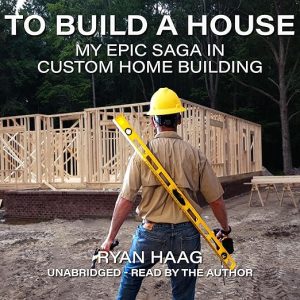
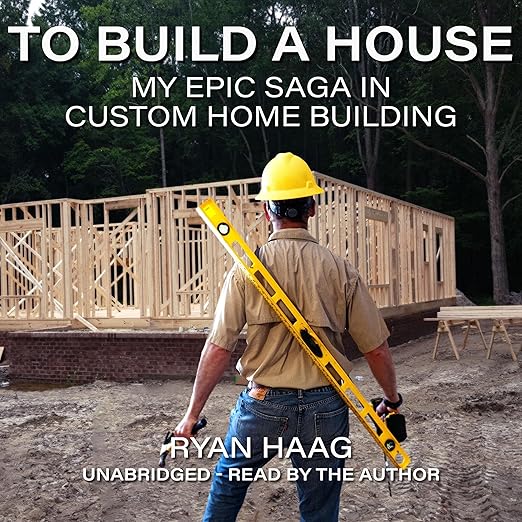
I came to To Build a House expecting something practical and got something more personal than that, which is exactly the experience one reviewer had and did not enjoy. I am more forgiving of the genre-blend. Ryan Haag is a US Navy Officer who spent years moving every three years, deferring the dream of a permanent home until circumstances finally made it possible, and then discovered that building from scratch on a virgin piece of land with a limited budget is a project that will test every organizational skill you possess while simultaneously testing your marriage, your relationship with contractors, and your tolerance for bureaucratic absurdity.
The book is memoir before it is manual, and that ordering matters. The first third, which one reviewer describes as not for the faint of heart, establishes the emotional stakes of the project before the first loan document is signed. Haag is processing significant personal material alongside the logistical story, and the combination is what distinguishes To Build a House from a more conventional account of residential construction. You understand why this house matters to him, which makes the cascade of complications that follow feel genuinely costly rather than merely inconvenient.
Our Take on To Build a House
The home-building process itself is documented with the kind of honesty that either reads as therapeutic or exhausting depending on your tolerance for extended accounts of things going wrong. Haag deals with a mortgage company and builder who actively fight each other, city bureaucrats who introduce obstacles at the worst possible moments, and the general instability of a construction project where every timeline is aspirational. He is not dramatizing these difficulties; he is reporting them, and the accumulation is what gives the book its texture.
What reviewers find most valuable is that Haag does not clean up the story in retrospect. He presents the decisions he made, including the ones that cost him time and money, without excessive rationalization. The organizational appendix, mentioned by one reviewer, adds practical utility for readers thinking about a similar project, giving the book a reference layer that compensates for the narrative’s inevitable subjectivity.
Why Listen to To Build a House
Self-narration is a double-edged quality here. Haag is not a professional voice performer, and the audio reflects that. But the amateur quality of the delivery fits the amateur quality of the home-builder learning as he goes, and it makes the emotional moments, which do arrive, land with more weight than a polished performance might achieve. One reviewer says they laughed out loud at certain points and cried at others. That range is accessible in Haag’s own voice in a way that a hired narrator might have smoothed over.
At just over seven hours, the book is appropriately sized for its scope. It does not overstay its welcome, and the narrative momentum picks up meaningfully once the construction phase begins and the specific obstacles multiply. The early sections, which are slower and more emotionally dense, are necessary context but require patience.
What to Watch For in To Build a House
The 3.0 overall rating reflects a genuine split in the audience. One reviewer expected a how-to and found a memoir; another found it emotionally raw and valuable. Both responses are honest, and both are understandable given that the book sits at the intersection of two different reader expectations without fully satisfying either. It is neither a comprehensive guide to home construction nor a purely literary memoir. It is a personal account of a specific project by someone who is organized and self-aware but not a professional writer.
The limitations of a single-perspective account also matter here. Haag can describe what the builder and bureaucrats did; he cannot explain their reasoning from the inside, which means some of the institutional friction the book documents is presented without full context. That is honest but also unavoidable in memoir.
Who Should Listen to To Build a House
Best for anyone seriously considering building a custom home who wants a realistic account of what can go wrong rather than an idealized project narrative. Also useful for readers drawn to military transition memoir or to stories about making a permanent home after years of enforced impermanence.
Skip it if you need a technical how-to, a professional production quality audio, or a resolved and tidy narrative arc. This is a messy, honest story about a hard project, and it makes no apology for either quality.
Frequently Asked Questions
Is To Build a House a practical guide to home construction or a memoir?
It is primarily memoir with practical elements. Haag documents the construction process in detail, and there is a useful appendix, but the book does not function as a step-by-step guide. One reviewer was disappointed expecting the latter; most who approached it as memoir found it valuable.
How much of the book deals with Ryan Haag’s military career versus the home building?
The military career is the context that explains why building a permanent home matters so much to him. The first third of the book establishes this backstory; the rest focuses on the construction process and the challenges that arose.
Does the self-narration by a non-professional affect the overall audio quality?
The production is clean; the delivery is conversational rather than polished. Some listeners find this works in favor of the memoir’s intimacy. Those who prefer professional narration performance may find it noticeable.
Is this book useful for someone planning to hire a contractor and not build themselves?
Yes. Haag hired contractors for the actual construction work; he managed the project rather than building the house himself. The book is largely about managing contractors, builders, and municipal processes, which is directly relevant to anyone considering a similar project.