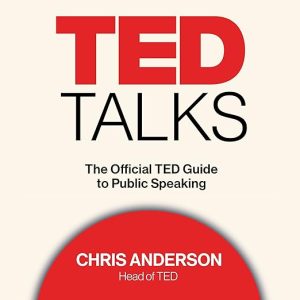
I came to TED Talks the book at an odd angle: I had spent several months helping a colleague prepare a public lecture and found myself cycling through the usual shelf of presentation guides, most of which offered variations on the same advice about eye contact and pausing for emphasis. Chris Anderson's book is different in a way that becomes apparent quickly. He is not writing about presentation techniques. He is writing about the transfer of an idea from one mind to many, which is a more interesting and harder problem.
Anderson has been running TED since 2001. He has watched thousands of speakers prepare, fail, recover, and occasionally do something genuinely extraordinary in front of an audience. That experiential base gives the book a credibility that most communication guides lack, he is not theorizing about what works. He is reporting from sustained observation of what actually happens when a speaker and an audience are locked into the same room for eighteen minutes.
A Closer Look at TED Talks
The organizing insight of the book is that a talk succeeds or fails on the quality of the idea at its center. Technique matters, but technique in service of a weak or unclear idea is still a weak talk. Anderson calls this idea transfer and spends significant time on how to identify and sharpen the single throughline that should organize everything a speaker does on stage. This is advice that applies far beyond the TED context, it is the foundational question of any act of public communication.
The book does skew toward the TED experience specifically, and one reviewer felt misled by the title, having expected more generalized public speaking guidance. That is a fair observation. Anderson is working from the TED format's particular constraints, the limited time, the no-notes convention, the video archive that will outlast any single performance, and some of his advice is calibrated to those constraints. But the core principles translate. Adam Grant called it the most insightful book ever written on public speaking, and while that is the kind of blurb that invites skepticism, the book earns more of that praise than most.
Anderson narrating his own work is a genuine asset here. There is a fluency in his delivery that comes through clearly, this is a man who has spent decades thinking about what good spoken communication sounds like, and he practices what he preaches in the narration itself. Listeners who have watched TED talks extensively will recognize the pacing and clarity of the written voice.
One reviewer described blazing through the book in a single sitting past their bedtime while preparing a TEDx talk, picking it up with a sigh and finding themselves unable to put it down. That experience tracks. Anderson writes with an urgency about communication that is contagious.
Where Chris Anderson Loses Some Ground
If you come to this book looking for a generic presentation skills guide, you will find it partially useful and partially too specific. Anderson does not spend much time on things like how to use slides effectively in a conference room context, or how to handle hostile Q and A in a business meeting. He is focused on the conditions of the stage talk, and the further your context is from that, the more translation you will need to do.
The book also reflects the cultural moment of TED's peak influence. Anderson wrote it when TED talks were reshaping how ideas traveled through professional culture, and some of the urgency in his framing reflects that moment. The principles remain sound, but listeners coming to it now should adjust for context.
Who Chris Anderson Is Writing For
This is essential listening for anyone who communicates ideas professionally, academics giving public lectures, executives preparing keynotes, professionals entering the conference speaking circuit. It is particularly valuable for people preparing an actual TED or TEDx talk, where Anderson's specific expertise becomes directly actionable. Listeners who want a general become-a-more-confident-speaker guide will find the book useful but may want to supplement it with material addressing everyday professional communication. For anyone building a talk around a single powerful idea, there is no better companion.
Frequently Asked Questions
Is this book useful for everyday presentations, or only for formal TED-style talks?
The core principles, building your talk around a single clear idea, earning the audience's trust, structuring for idea transfer rather than information transfer, apply to any public communication. However, some of Anderson's specific advice is calibrated to the TED format, so listeners should expect to do some translation for other contexts.
Does Chris Anderson's narration of his own book add to the experience?
Meaningfully yes. Anderson sounds practiced and authoritative without being stiff, and his cadence reflects exactly the kind of speaking clarity the book advocates. Listeners who have watched TED talks will recognize a familiar register.
How does TED Talks compare to other public speaking classics like Carnegie's How to Win Friends and Influence People?
Anderson is less interested in interpersonal persuasion and more focused on the architecture of a single powerful spoken idea. The books address adjacent but distinct problems. Anderson's is more useful for prepared talks; Carnegie's is more useful for ongoing interpersonal influence.
Does the book cover the use of visuals and slide design?
Anderson addresses slides and visual aids, but they are not the central focus. His emphasis is on the spoken word and the quality of the idea, he is suspicious of slides that carry the talk rather than supporting it. If visual design is your primary concern, you will want supplementary resources.