- Narrator: Sarah Mackenzie narrates her own material with the lived-in honesty of someone describing her own burnout, not a detached expert.
- Subjects: homeschool burnout, faith, restful learning
- Tone: Gentle and encouraging
- Bottom line: A short, genuinely comforting reframe for burnt-out Christian homeschool parents, not a full curriculum replacement.
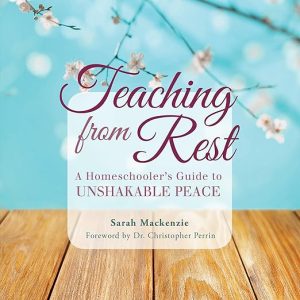
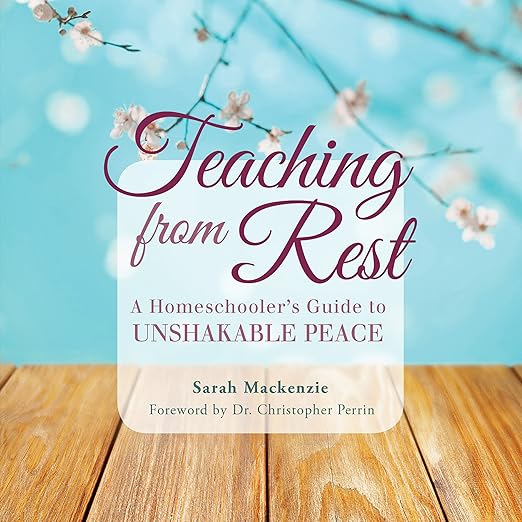
Homeschooling six children while running a household should sound impossible, and Sarah Mackenzie is upfront that it very nearly broke her before she found the approach behind this audiobook. Teaching from Rest spends two hours and thirty-nine minutes on what Mackenzie calls restful learning, a faith-based response to the stress, worry, and anxiety she says most homeschooling parents, overwhelmingly mothers, quietly carry even when they chose this path out of real love for their kids. This is a short audiobook built around a single reframing idea rather than a full curriculum, and that scope matters for anyone deciding whether it fits what they actually need right now. The book grew out of Mackenzie's own study of what she calls restful learning, developed over years of trial and error with her own family rather than academic research alone. That personal, tested-in-real-life quality is part of what reviewers keep coming back to.
How Teaching from Rest Holds Up
Sarah Mackenzie narrates her own material, and self-narration suits this book especially well given how personal its argument is: this is not a detached expert delivering research findings; it is a mother of six describing her own struggle to bring rest into a homeschool she loves but sometimes resents. Mrs. McNut's review calls it 'a WONDERFUL way to start out your school year.' She adds that it is not a heavy read and is practically applicable and encouraging throughout, a description that lines up with a two-hour-and-thirty-nine-minute runtime built for accessibility over exhaustive depth.
Dee P.'s review supplies the most personal account of the three: a year and a half into homeschooling, burnt out, discouraged, and constantly feeling 'behind', she found the book while searching for resources and says it challenged her Type A tendencies directly. That kind of specific, lived-in testimony matters more for a book like this than a plot summary would, since the entire pitch rests on whether Mackenzie's own hard-won reframing actually lands for a parent in the same state of burnout.
The book's brevity is itself part of its design philosophy: Mackenzie is arguing against overwhelm, so a two-hour-and-thirty-nine-minute audiobook that itself feels manageable rather than exhausting practices what it preaches in a way a four-hundred-page curriculum guide could not. That structural choice, matching form to message, is easy to miss but genuinely reinforces the book's central argument about rest over accumulation.
Why Teaching from Rest Works as an Audiobook
Annie Davis's review keeps it simple and direct: 'Sarah writes with truth and encouragement.' She specifically appreciated the practical tips and resources woven throughout despite the short runtime, suggesting Mackenzie manages to be actionable without turning two and a half hours into an overloaded checklist. That balance, encouragement paired with genuinely practical guidance rather than one at the expense of the other, is the book's real selling point across all three reviews. That is a consistent pattern across all three attached reviews, each a five-star reaction, for a book this specific in its intended audience.
The faith-based framing is not incidental to the argument; Mackenzie's own study of restful learning and her struggle to bring it to her six children are presented as inseparable from her Christian conviction about what homeschooling is for in the first place. Listeners drawn to a spiritual, not just practical, reframe of an exhausting responsibility will find that combination is the actual heart of the book rather than a light add-on to secular parenting advice.
Mackenzie's own experience raising and homeschooling six children gives her restful-learning philosophy real practical grounding rather than untested theory, and listeners can reasonably expect the encouragement here to come from someone who has actually lived through the exhaustion she is addressing, not a consultant offering advice from outside the experience.
Mrs. McNut's specific recommendation to start the school year with this book points at a natural use case: listening once at the beginning of a homeschool year as an intentional reset, then returning to specific chapters later whenever burnout creeps back in, rather than treating it as a single one-time listen.
Weak Spots in Teaching from Rest
Compressing an entire philosophy of homeschooling into under three hours means real trade-offs: this is a reframe and an encouragement, not a comprehensive curriculum guide or a substitute for the practical logistics of choosing books, tracking progress, or structuring a school day. Listeners looking for that kind of hands-on planning content should pair this with a more logistics-focused resource rather than expecting Teaching from Rest to cover both registers at once.
This is explicitly a faith-based, Christian book, and Mackenzie's argument for restful learning runs through her own study of scripture and prayer rather than secular educational theory alone. Homeschooling parents outside a Christian faith tradition can likely still take practical value from the core idea of rest over anxiety, but should know the framing throughout is devotional as much as it is educational.
This audiobook also assumes the listener has already committed to homeschooling as a path rather than helping a parent decide whether to start; anyone still weighing homeschooling against other schooling options will find little here to inform that earlier decision, since Mackenzie's entire argument begins from inside the choice already made.
The short runtime also means listeners should not expect deep engagement with any single specific homeschooling method, Charlotte Mason, classical, or unschooling among them; Teaching from Rest operates one level above method entirely, addressing the parent's internal state rather than the external choices about what or how to teach. Parents already deep into a specific method who want validation of that method's particular details should look elsewhere for that kind of targeted guidance.
The Right Listener for Teaching from Rest
Homeschooling mothers feeling burnt out or behind, exactly the state Dee P. describes in her own review, are the clearest audience for this short audiobook, along with anyone just starting a homeschool year and wanting encouragement before the anxiety sets in. Christian families looking for a faith-grounded reframe of an exhausting responsibility will find the two registers, spiritual and practical, woven together throughout. New homeschooling parents in their very first semester may find the encouragement lands even before burnout fully sets in.
Comprehensive is not really the word for how this audience found the book so far: word of mouth and homeschool community recommendations, the exact path Dee P. describes, seem to be driving most of its reach rather than a broad public rating pool, and the numbers on this specific title reflect that. Anyone judging the book purely by a small ratings count should weigh the specific, devoted reviews already available more heavily than the raw number.
Questions Listeners Ask
Is the Teaching from Rest audiobook only for Christian homeschoolers?
The framing is explicitly faith-based, built on Sarah Mackenzie's own scripture-grounded reframe of homeschool anxiety, though the core idea of choosing rest over anxiety could still land for listeners outside that tradition.
How long is the Teaching from Rest audiobook?
Just two hours and thirty-nine minutes, built as a short, focused reframe rather than a full curriculum guide.
Does Sarah Mackenzie narrate her own Teaching from Rest audiobook?
Yes, and her self-narration suits the material well, since the book is built from her own lived struggle homeschooling six children rather than detached research.
Is the Teaching from Rest audiobook useful for a first year of homeschooling?
Reviewers suggest yes, including one who found it exactly a year and a half into her own homeschooling burnout, though it works as encouragement alongside practical planning resources rather than replacing them.