Quick Take
- Narration: Tom Parks narrates forty hours of dense theological argument with consistent clarity and appropriate reverence, making an academically rigorous text far more accessible than it might otherwise be in audio form.
- Themes: Scripture as foundation for doctrine, the nature and attributes of God, evangelical Protestant theological method
- Mood: Scholarly and structured, demanding but rewarding for listeners committed to serious theological engagement
- Verdict: The definitive evangelical systematic theology in audio, essential for serious students of Christian doctrine who can engage with its particular theological commitments.
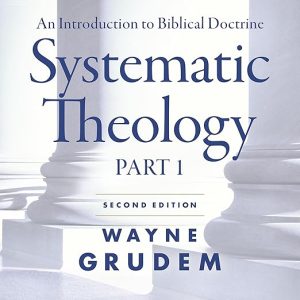
There are a handful of audiobooks I return to in sections rather than listening straight through, and Wayne Grudem’s Systematic Theology is one of them. I have listened to Part 1 across three separate occasions now, usually in the early morning before the editorial day begins, which turns out to be the right context for a book that asks you to think carefully about things that most contemporary reading culture treats as settled. At forty hours and five minutes, this is not an audiobook you approach casually. It is a commitment, and knowing that upfront matters.
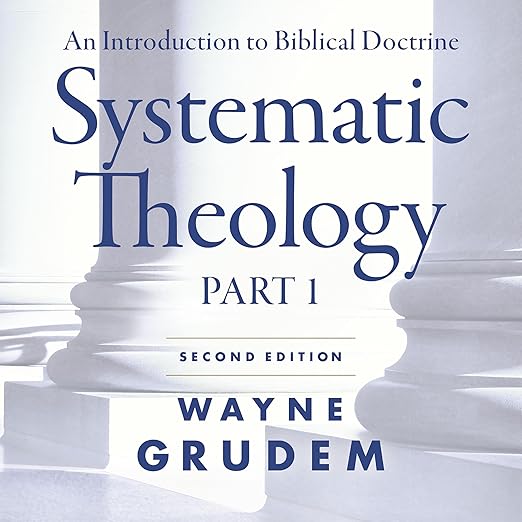
Grudem’s Systematic Theology is the most widely used evangelical theological reference work of the last quarter century. The second edition, published by Zondervan Academic, represents the first substantial revision of that work, incorporating nearly 250 pages of new content addressing controversies that have emerged within evangelicalism in the intervening decades. Part 1 covers the doctrine of the Word of God, the doctrine of God, the doctrine of humanity, and the doctrines of Christ and the Holy Spirit. It is a complete theological education in audio form for those willing to give it the attention it requires.
Our Take on Systematic Theology, Second Edition Part 1
John Piper called the second edition remarkable and described it as a precious gift to Christ’s people worldwide. Thomas Schreiner noted it stands out for its clarity and accessibility. Those are not blurbs without substance. Grudem has an unusual ability to explain complex doctrines like the eternal relationship between Father and Son within the Trinity, or the question of God’s atemporal eternity, in ways that engaged non-specialists can follow while still maintaining the doctrinal precision that scholars require. That accessibility without condescension is genuinely rare in theological writing.
What the revision adds is substantial engagement with debates that were either unresolved or newly contentious when the first edition appeared. The expanded treatment of the eternal subordination of the Son, the stronger chapters on the clarity of Scripture and on creation and evolution, and the new material on Molinism, open theism, and the new perspective on Paul all reflect decades of ongoing scholarship and controversy that Grudem addresses directly rather than sidesteps.
Why Listen to Systematic Theology, Second Edition Part 1
Tom Parks’s narration is the key that unlocks forty hours of dense theological argument. Parks reads with appropriate solemnity and precision, navigating the highly structured chapter format, each of which moves through doctrinal explanation, biblical support, objections, and application, with consistency that helps listeners maintain orientation across very long listening sessions. One reviewer who was following along with both a digital print copy and a hardcopy noted that the audio version contains additions not present in either printed version, which is a detail worth knowing for listeners who intend to use both formats together.
The structural consistency Grudem maintains across every chapter is part of what makes the audio format work as well as it does here. Because each chapter follows the same sequence of doctrinal explanation, scriptural support, and objections, listeners quickly learn to anticipate the architecture of each discussion. That predictability is a feature, not a limitation. It allows the mind to focus on content rather than structure.
What to Watch For in Systematic Theology, Second Edition Part 1
Grudem writes from a clearly defined evangelical Protestant theological position, and this shapes the analysis throughout. The book engages critically with Roman Catholicism, Protestant liberalism, and Mormonism, and it takes particular positions on contested evangelical questions including the role of women in the church, miraculous gifts of the Holy Spirit, and contemporary worship. Listeners who do not share those theological commitments will find much of value in the exegetical method and historical theological survey, but they should approach the normative claims with that context in mind. This is not a neutral theological survey; it is a confessional theological account from a specific tradition.
Who Should Listen to Systematic Theology, Second Edition Part 1
Serious evangelical students of Scripture seeking a single authoritative reference for Christian doctrine will find this essential. Pastors, seminary students, and informed lay readers engaged in deep theological study will benefit from the audio format particularly during commutes or exercise. The accompanying PDF, referenced throughout the narration and containing key terms, scripture memory passages, and hymn references, should be downloaded before you begin. Listeners approaching theology from outside the evangelical Protestant tradition will find the exegetical sections valuable but should be prepared for normative theological conclusions that reflect Grudem’s specific doctrinal commitments.
Frequently Asked Questions
What is included in Part 1, and how does it differ from the complete Systematic Theology?
Part 1 covers four major doctrinal sections: the doctrine of the Word of God, the doctrine of God, the doctrine of humanity in the image of God, and the doctrines of Christ and the Holy Spirit. It represents the foundational theological framework from which the remaining doctrines in Grudem’s complete work proceed. A separate Part 2 covers salvation, the church, and eschatology.
Is there a discrepancy between the audio version and the print edition?
One reviewer who was reading alongside both a digital print copy and a hardcopy noted that the audio version contains additions not present in either printed edition. The exact nature of those additions is not specified in the review, but listeners who want to cross-reference between formats should be aware of this discrepancy.
How does Grudem handle recent theological controversies like open theism and the new perspective on Paul?
The second edition addresses these directly. Grudem added thoughtful critiques of open theism, the new perspective on Paul, Molinism, and Free Grace theology, among other recent developments. The revised edition was specifically designed to engage debates that had emerged in evangelicalism since the first edition, making these sections substantially more current than comparable works published at the same time.
Does Tom Parks’s narration sustain forty hours without losing listener engagement?
Reviewers suggest yes, though the material itself requires active engagement from the listener regardless of narration quality. Parks maintains consistent clarity and appropriate reverence throughout. The structural regularity of Grudem’s chapter format, with each chapter following the same sequence of explanation, biblical support, and application, helps listeners maintain orientation across long sessions.