Rakim's Sweat the Technique arrives in audio form with a distinction that most craft-of-writing books cannot claim: the narrator is also the subject, and the subject is genuinely one of the most technically accomplished lyricists in the history of recorded music. This audiobook, narrated by Rakim across 13 hours and 48 minutes, is a master class in lyricism and creative craft delivered by the MC whose work with Eric B. changed what hip-hop sentences could structurally accomplish. The fact that Rakim reads the text himself transforms what could have been a conventional writing guide into something considerably rarer: an extended conversation with an artist at the height of their analytical reflection on the very process that defined their career.
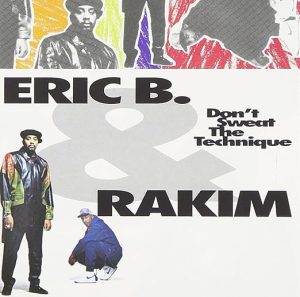
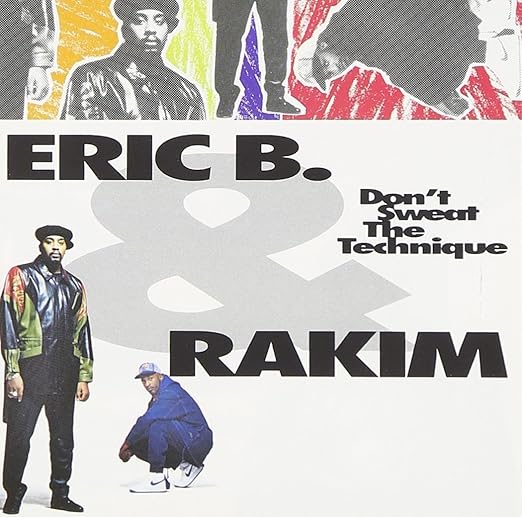
A note on the available reviews for this title: the reviews attached to this product appear to reference the Eric B. and Rakim album Don't Sweat the Technique rather than the book of the same name. That product confusion is worth flagging directly for potential listeners; the audiobook and the 1992 hip-hop record are separate works, and the experience being offered here is the book-length craft discussion, not the album. The book reviews that exist elsewhere are enthusiastic, but the material attached to this product page is for a different format entirely.
What We Made of It
The premise of the book is that writing, specifically lyric writing, is a technique in the precise sense of the word: a set of learnable, teachable skills that can be developed through deliberate practice, critical attention, and an understanding of how language generates meaning at the line and phrase level. Rakim approaches this not as a celebrity author delivering wisdom from a distance but as a practitioner who has spent decades thinking carefully about why certain word choices land and others don't, how rhythm functions below the level of conscious attention, and what it means to write a lyric that achieves something beyond its surface statement. The analytical rigor is real. This is not a memoir with craft observations attached; it is a craft book that uses autobiography as demonstration rather than subject.
The self-narration is the audiobook's decisive advantage over any alternative version of the text. Rakim's voice, its cadence, its weight, its deliberate placement of emphasis, is itself a demonstration of the technical principles he is discussing. When he talks about rhythm in lyric writing, you hear rhythm in the narration. When he describes the difference between surface meaning and deeper resonance, his delivery enacts that distinction in the same moment he is explaining it. No professional narrator working from the text, however skilled, could reproduce this quality. The 13-hour runtime gives Rakim space to work through the material at the pace the subject requires, and he uses that space with the same deliberate discipline he brought to making records in the late 1980s and early 1990s.
Why Listen to Sweat the Technique
The book is useful for writers across genres, not only for aspiring MCs or students of hip-hop history. Rakim's framework for thinking about language precision, about the gap between what a line says and what it does at the level of sound and association and rhythm, applies to poetry, fiction, and any writing where the musicality of sentences matters. The specific hip-hop examples and the golden age context are the entry point, but the underlying principles of craft translate widely. Writers who have absorbed the standard workshop writing advice and found it culturally narrow or aesthetically limited will find Rakim's angle refreshing: he is teaching from a tradition with its own rigorous standards, and those standards have a great deal to say about how language actually functions when it is working at full capacity.
For hip-hop listeners and students, the historical context is invaluable on its own terms. Rakim writing from inside the late 1980s and early 1990s hip-hop moment, drawing on the specific artistic and competitive pressures of that era, provides a perspective that retrospective analysis and documentary cannot fully replicate. He was making the music, watching the craft evolve, and making decisions in real time about how to push it further. That position is audible in the narration and irreplaceable by any other format or voice.
What Might Not Land
The book's depth means it rewards active listening rather than passive absorption. The material is substantial enough that listeners who approach it as background audio will miss the analytical content that makes it valuable. Rakim is teaching, and the teaching assumes you are paying attention, following the argument from one section to the next. At nearly 14 hours, this is a commitment that returns more with engagement and diminishes with distraction. It is not a book to put on while doing something else; it is a book to sit with.
Listeners who come to the book expecting primarily memoir or personal narrative will find that while Rakim does draw on his own experience and history, the primary orientation is instructional and analytical rather than autobiographical. This is a craft book that uses autobiography as illustration rather than a memoir that touches on craft as a secondary concern. The distinction matters for setting expectations about what the listening experience will actually deliver across its extended runtime.
The Right Listener for Sweat the Technique
Writers of any genre who want to think seriously about language precision, rhythm, and meaning-density will find this one of the more practically rigorous craft books available in audio format. Hip-hop fans and students who want direct access to Rakim's analytical framework for the artistry they have been admiring will find the 14-hour investment fully worthwhile. The self-narration is a non-negotiable part of the experience: this audiobook is not an equivalent to the print text but an enhanced version of it, because you are hearing the craft demonstrated as it is being described. Skip it if you want primarily memoir, need linear narrative structure rather than analytical instruction, or are looking for a quick craft overview rather than a sustained technical engagement with language as a working medium.
Before You Press Play
- Voice: Rakim narrates his own audiobook on lyricism and hip-hop craft, and his voice carries the weight of someone who has lived inside the artistry he is teaching; the self-narration is the single most important thing about this audio experience.
- Big ideas: Lyrical craft and wordsmithing, the creative process behind golden age hip-hop, storytelling as a technical discipline
- Atmosphere: Reflective and authoritative, intimate in the way only a master teaching from personal experience can achieve
- Worth it?: An essential craft audiobook for anyone who takes language seriously, made irreplaceable by the fact that the person teaching the technique is the same person who redefined what hip-hop technique could mean.
A Few Questions About Sweat the Technique
Is the Sweat the Technique audiobook a craft guide, a memoir, or a combination of both?
Primarily a craft guide on lyric writing and language technique, with Rakim's own career and creative process used as illustration rather than as the main subject. Listeners expecting a memoir in the conventional sense should adjust expectations: the book's center of gravity is analytical and instructional, drawing on autobiography to demonstrate principles rather than to tell a life story as its primary purpose.
Does Rakim's self-narration make this audiobook worth choosing over the print version?
For most listeners, yes. The craft principles Rakim discusses are enacted in his narration, which means you hear what he is describing rather than simply reading about it. His voice, rhythm, and emphasis are themselves demonstrations of technical lyricism. A professional narrator reading the same text would deliver information; Rakim delivers information and living evidence simultaneously.
Is this audiobook useful for writers working outside of hip-hop and rap?
Yes. The technical framework Rakim develops around language precision, rhythm, and the gap between surface statement and deeper resonance applies across poetry, prose fiction, and any writing where sentence-level craft and sonic texture matter. The hip-hop context is the entry point and primary illustration, but the underlying principles of effective language use are genuinely transferable.