Quick Take
- Narration: Muhammad Ibnu Adam brings a recitation quality appropriate to the sacred nature of the material, delivering the Quranic verses with care and the surrounding commentary with warmth.
- Themes: Faith as emotional refuge, Quranic guidance for mental wellbeing, the mercy of Allah as counterweight to despair
- Mood: Contemplative, devotional, and gently consoling
- Verdict: A purposeful spiritual companion for Muslim listeners navigating anxiety or depression, best approached as an act of devotion rather than a clinical resource.
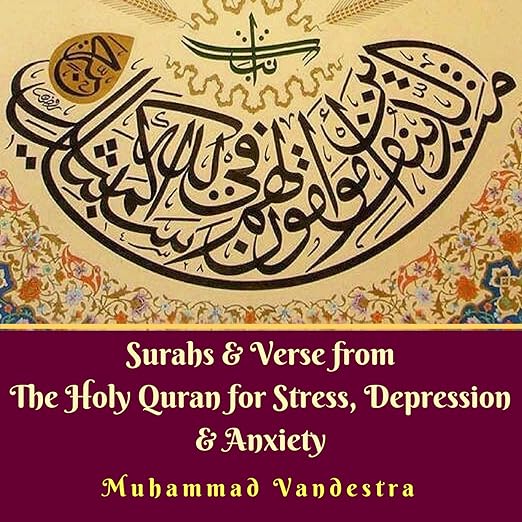
Some audiobooks resist the framework of conventional criticism, and this is one of them. Surahs and Verse from the Holy Quran for Stress, Depression and Anxiety by Muhammad Vandestra is not a book designed for literary evaluation. It is a spiritual companion, assembled with a specific listener in mind: someone who is struggling and who is looking for the particular comfort that comes from being inside a tradition rather than from outside advice about that tradition.
I approach this as a reviewer with the understanding that my perspective has inherent limits here. What I can assess is the audiobook as an object, its structure, the quality of the narration, and how well it achieves what it sets out to do based on reviewer response and the clarity of its stated intention. On those terms, it accomplishes what it promises.
Our Take on Surahs and Verse from the Holy Quran for Stress, Depression and Anxiety
Vandestra frames the book around a belief that is worth quoting directly from the synopsis: Allah does not demand results, only sincere effort. That theological grounding shapes the entire listening experience. This is not a productivity-adjacent self-help book dressed in religious language. The author takes seriously that depression can arrive without specific cause, and the book does not attempt to diagnose or treat but to offer spiritual accompaniment. The selection of surahs and their accompanying commentary is organized around the kinds of emotional states that depression and anxiety create: helplessness, isolation, hopelessness, and the specific suffering of someone who cannot explain why they are suffering.
The book is comparatively short at five hours and twenty-four minutes, which reflects its nature as a devotional companion rather than a comprehensive text. Listeners who noted the book was shorter than expected were possibly coming from a different set of expectations. As a curated spiritual guide, the length is appropriate.
Why Listen to Surahs and Verse from the Holy Quran for Stress, Depression and Anxiety
Muhammad Ibnu Adam’s narration carries a recitation quality that is distinct from conventional audiobook delivery. The Quranic verses are delivered with the reverence and cadence appropriate to their sacred status, and the surrounding commentary is warm without being saccharine. This is not the kind of narration where you notice the narrator’s craft. It is the kind where the narrator’s evident faith in the material creates a specific listening environment that is the whole point.
For Muslim listeners in particular, one reviewer noted that the experience deepened her sense of wellbeing and connection to her religion. That is the primary audience, and the audiobook serves that audience in good faith. The devotional atmosphere that Adam’s narration creates is genuinely effective within its intended register.
What to Watch For in Surahs and Verse from the Holy Quran for Stress, Depression and Anxiety
A few contextual notes for listeners approaching this for the first time. The book is not a mental health resource in the clinical sense. It does not engage with therapy, medication, or secular frameworks for understanding depression and anxiety. For listeners experiencing serious mental health difficulties, it is best understood as a spiritual companion alongside rather than instead of appropriate clinical support.
Some reviews appear to be for a physical book rather than the audiobook specifically, which occasionally creates confusion about format expectations. The audio version is the version being reviewed here, and the narration quality matches the devotional intention of the text.
Who Should Listen to Surahs and Verse from the Holy Quran for Stress, Depression and Anxiety
This is most clearly suited to Muslim listeners who find spiritual grounding through Quranic engagement and who are looking for a curated audio experience during difficult emotional periods. It is also accessible to listeners of other backgrounds who have an interest in how the Quran addresses human suffering, though the devotional experience it offers is rooted in a specific tradition. It is not suited to listeners seeking clinical guidance, secular frameworks for mental health, or an introductory overview of Islam more broadly.
Frequently Asked Questions
Is this audiobook appropriate for non-Muslim listeners interested in the Quran?
The book is designed primarily for Muslim listeners seeking spiritual comfort during mental health struggles. Non-Muslim listeners with genuine interest in how the Quran addresses human suffering will find much of value, but the devotional experience it creates is most fully accessible within the faith tradition it speaks from.
Does this book replace or complement clinical mental health support?
It is a spiritual companion, not a clinical resource. Vandestra is explicit that the book offers Quranic guidance and accompaniment through difficult emotional periods. Listeners experiencing serious depression or anxiety are encouraged to seek appropriate clinical support alongside spiritual practice.
Which specific surahs are covered, and is the Arabic recitation included?
The synopsis describes the selection as surahs particularly valuable during depression and anxiety, with their meanings and messages rather than a comprehensive study of the texts. Muhammad Ibnu Adam delivers the verses in a recitation style, though listeners seeking full Arabic recitation with translation should confirm the specific format before purchasing.
How does this audiobook differ from simply listening to Quran recitations available online?
Vandestra’s book pairs specific surahs with contextual commentary on why each one speaks to the particular emotional states associated with depression and anxiety. The editorial framing distinguishes it from unaccompanied recitation by offering guided reflection on the texts in relation to mental and emotional wellbeing.