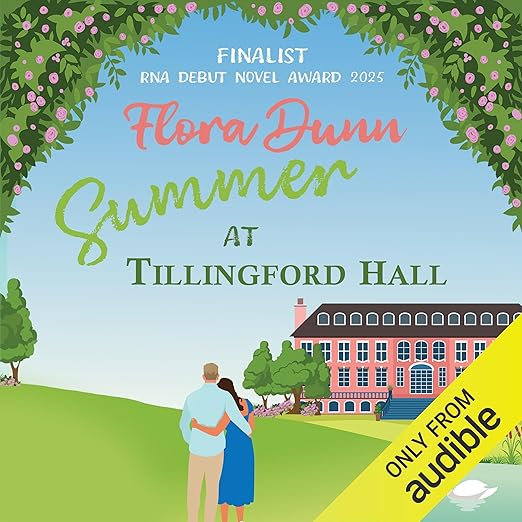
Britain's twenty-ninth most eligible bachelor, according to Tatler's Little Black Book, ranks three spots below a grime artist named Tornado and several rungs beneath the Marquess of Granby, and that absurdly specific detail tells you exactly the tone Flora Dunn is working in before this audiobook ever gets Alice Merrow through the front door. I queued it up during a week spent repainting my hallway, the kind of task that wants noise and company rather than silence, and the setup pulled me in faster than I expected from a country-house romance: a studious, recently divorced single mother, seconded to Hampshire for one job, cataloguing Lord Tillingford's unrivalled collection of miniature portraits, walks into a household where nobody turns out to be quite who they first appear.
Guy Tillingford himself is less interested in supermodel girlfriend Sahara Seaton-Smyth than the tabloid ranking suggests, and more invested in dragging his family's crumbling estate into the twenty-first century than his bachelor status would ever hint at. Alice's flamboyant boss, Desmond Kingston-Campbell, turns out to be the household's other outsider looking in, and the two of them start noticing cracks in the family's polished surface almost immediately. This is billed as romance and comedy, and it delivers plenty of both, but Dunn also threads in a real mystery current, the kind reviewer Chris B. compared to an old 'Columbo' episode: you sense who is responsible for the family's troubles fairly early, and the pleasure is in watching the how and why unspool.
Alice's Grounded Arc Meets Buscombe's Confident Debut
What makes this audiobook work better than a straightforward rom-com is how seriously Dunn takes Alice's actual circumstances. She isn't a blank ingenue swept into aristocratic life; she's a tired, competent mother to seven-year-old Hatty first, and Guy's love interest second, and that ordering shapes every scene between them. Cataloguing the miniature portrait collection becomes a clever structural device too, giving Alice a reason to wander the house, uncover old letters, and stumble into secrets that have nothing to do with romance and everything to do with the family's finances and reputation. Reviewer Ruth Kraemer called the setting idyllic and the plot intriguing, and that combination, a cozy backdrop with real stakes hiding underneath, is the book's actual signature move.
Nathalie Buscombe narrates, and this is her debut as a novel narrator, which makes her control over Dunn's large, class-stratified cast genuinely impressive rather than merely competent. Her Desmond Kingston-Campbell is the clear standout, flamboyant without tipping into caricature, and she resists making every aristocrat sound alike, which matters enormously with this many titled, moneyed side characters drifting through scenes. Buscombe also handles the pivot from droll social comedy to something closer to genuine family-secret drama without losing the warmth that keeps Alice sympathetic throughout. Anyone who has struggled with British ensemble audiobooks blurring together will notice the difference; this cast stays legible even through crowded dinner scenes and estate tours.
Buscombe's Ensemble Voices Sharpen the Mystery Thread
The Tatler ranking that opens the synopsis sets expectations for a self-aware kind of humor, and Dunn mostly earns it. Guy isn't just a romantic prize; he's a man visibly tired of being ranked and gossiped about, and that specific frustration gives the romance an emotional throughline beyond simple attraction. Liz Murphy's review put it bluntly, writing as a divorcee herself, that everyone secretly wants a Guy to walk into their life, and the book leans into that fantasy honestly rather than apologizing for it. What keeps it from becoming pure wish fulfillment is Alice's competence; her cataloguing work reads as genuinely skilled labor, not a flimsy excuse to put her near a lord, and that respect for her professional identity carries the entire first half.
The mystery current gives the audiobook format a real advantage over a lighter skim-read. Buscombe's pacing through the reveal sequences lets tension build scene by scene, and because this is fundamentally an ensemble book, hearing distinct voices for Desmond, Guy, and the wider Tillingford family makes tracking who knows what considerably easier than it might be on the page. As the first entry in a clearly continuing series, the story also does the necessary work of establishing Tillingford Hall itself as a setting worth returning to, not just introducing Alice and Guy. Both Liz Murphy and Ruth Kraemer said outright they're looking forward to the next installment, and by the finale it's easy to hear why.
A Light Mystery Coat, Not a Procedural Whodunit
Readers coming for a tightly clued whodunit should recalibrate first. Chris B.'s Columbo comparison is apt in spirit, you get a strong sense of who's responsible well before the reveal, but this is romantic comedy wearing a light mystery coat, not a procedural with forensic rigor. The 'who done it' current mainly deepens the family's stakes and gives Alice and Desmond something to investigate together, rather than sustaining genuine detective-novel suspense across all nine hours. At just over nine hours, the pacing also favors slow-burn development over rapid plot turns; scenes at the portrait collection and around the estate grounds take their time, which suits the genre but might test anyone wanting momentum from the opening chapter.
This is also unmistakably book one of a series, and Dunn leaves real threads dangling rather than wrapping every family question by the final chapter. That's a deliberate choice, but it means listeners wanting full closure in one sitting will come away with open questions about the Tillingfords' finances and reputation. Buscombe's status as a first-time novel narrator means no track record exists yet to compare against, though her range across comedy, romance, and darker family-secret material suggests she'll only grow more assured as the series continues. A 4.6 rating from a modest 22 reviews reflects genuine early enthusiasm rather than a large, settled consensus, worth knowing going in.
Country-House Comedy Fans Who Love a Second Chance
Fans of the English country-house comedy tradition, the posh chaos crossed with gentler modern romance, will feel instantly at home here. So will anyone drawn to the specific appeal of a competent, unglamorous heroine getting a genuine second chance, since Alice's divorce and single motherhood read as real texture rather than a sob story to be resolved by Guy's arrival. Listeners who enjoy a large, clearly differentiated cast of eccentric supporting characters, particularly anyone who appreciates a scene-stealing secondary player like Desmond, should find Buscombe's narration especially rewarding. Because this is a series opener with a mystery thread running underneath the romance, readers who like starting franchises from the beginning have good reason to start here.
A tightly plotted procedural mystery is not the draw here, so readers craving forensic detail or courtroom-style revelations over romantic comedy should look elsewhere. The same goes for anyone wanting a fully self-contained story; with a second Tillingford Hall installment clearly coming, several family and business threads stay open by design. Listeners sensitive to slower pacing in the first third might also want to know upfront that Dunn spends real time establishing the estate and its inhabitants before the plot accelerates. None of that undercuts what the book does well, but going in expecting a brisk thriller rather than an unhurried comedy of manners is the surest way to end up disappointed with something that was never trying to be a thriller.
Does the mystery plot in this audiobook get fully resolved by the end?
Mostly, though Dunn leaves some family and business threads open by design, since a follow-up installment is clearly planned.
Is this audiobook more romance or more mystery?
Romance and comedy lead, with a lighter 'who done it' current running underneath rather than a tightly clued procedural.