Michelle Cray's decision to narrate her own trauma memoir is not incidental to what this audiobook accomplishes. Her voice, reading her own words about the five-year-old who watched her sister nearly die and about the sexual assault that left its echo in every relationship that followed, carries something that a hired narrator reading the same sentences could not. The craft of this audiobook, its emotional texture, its particular kind of exposure, depends almost entirely on Cray speaking her own story. At six hours and seventeen minutes, it is a concentrated listen, and one that asks the same thing of you that it asks of her: to stay present with material that is genuinely difficult.
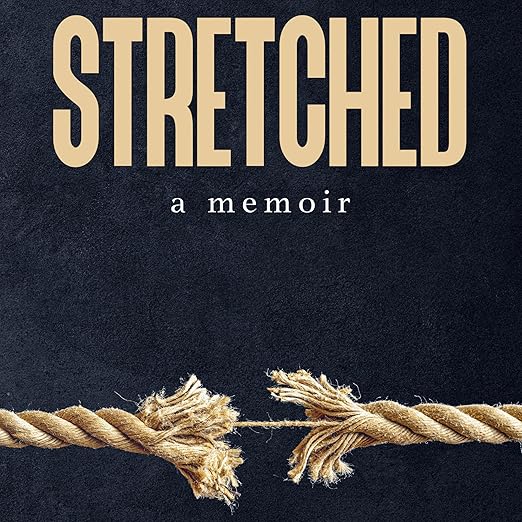
The memoir traces the long aftermath of trauma across multiple decades and multiple forms of rupture. Her mother's mental illness. Her parents' divorce. The patterns of abandonment and self-erasure that early violence can instill in a person's sense of their own worth. 'Stretched' refers to the condition of being pulled in too many directions for too long, of giving out what has not been replenished, of surviving on reserves that the world did not acknowledge existed. Cray is unflinching in how she traces these patterns without sensationalizing them, which is a harder literary and personal achievement than it sounds.
Processed Enough to Speak It Clearly
Cray's narration reveals the full range of what self-narration can do for a memoir. Her voice does not perform emotion in the way that some professional narrators approach difficult material, leaning into theatrical resonance. Instead, she reads with the specific quality of a person who has processed this story enough to speak it clearly, but not so far removed that the original weight has drained away. That calibration is extraordinarily difficult to achieve, and she achieves it consistently across six-plus hours. One reviewer described the book as 'raw, honest, and pulling you in from the beginning,' and the narration is the primary mechanism that makes that rawness functional rather than overwhelming.
The writing itself operates in a tradition of women's trauma memoir that includes works like Roxane Gay's 'Hunger' or Maggie Nelson's 'The Argonauts,' though Cray's register is more direct and less formally experimental than either. She is a storyteller first, reaching for clarity over artfulness, which means the audiobook rewards those who want to follow a life rather than inhabit a literary style. That clarity is itself a kind of courage: the book does not hide behind metaphor or structure when the facts of the life are present enough to carry the weight.
Cray's Voice Adds a Dimension of Verification
The argument for listening rather than reading this memoir is strong. Cray's voice gives the writing a dimension of verification: hearing her speak these events in her own cadence makes the story feel witnessed rather than merely reported. For listeners who have experienced their own cycles of trauma, abandonment, or self-worth erosion, the audiobook format creates an intimacy that the written page can approach but rarely matches. Multiple reviewers describe the book as speaking directly to their own experiences, and the format of hearing Cray's voice amplifies that identification.
The memoir's arc moves toward reclamation, not resolution. Cray does not promise that everything works out, that the scars disappear, or that the patterns she inherited fully dissolve. What she describes is something more complicated and more honest: the ongoing work of recognizing how early trauma shaped her and the incremental, nonlinear process of reclaiming her own voice. That framing is useful for listeners who have been served by the false triumphalism that some recovery narratives promote, and it is a mark of Cray's integrity as a memoirist.
The Narration Is Continuous With the Subject
Listeners should approach this audiobook knowing what it contains. The content includes childhood trauma, parental mental illness, divorce, and sexual assault. Cray handles all of it with care and without exploitation, but the material is substantive and the narration's intimacy means the emotional proximity is high. This is not a passive listening experience. It will move things in you, and that should be taken seriously as a consideration before pressing play, particularly for listeners who are in early stages of their own trauma processing.
The five-star rating across twenty-seven reviews reflects genuine enthusiasm from readers and listeners who found the memoir meaningful. The uniformity of the rating is notable: this is a book that clearly hits hard for people who are ready for it, even if its specificity of content makes it less universally accessible than a more general memoir of resilience.
The memoir's relationship to language is worth noting specifically, because Cray is writing about experiences that trauma survivors often describe as having resisted language entirely. The assault, the abandonment, the years of diminished self-worth: these are things that people frequently say they cannot put into words. Cray's choice to put them into words, and then to speak those words aloud in this audiobook, is itself a form of reclamation. The act of narration is not separate from the memoir's subject; it is continuous with it. Hearing her voice steady itself around difficult material is part of what the audiobook offers, and it is something that no reading of the print version can replicate.
What Unsentimental Resilience Sounds Like in Her Voice
Listeners who have navigated childhood trauma, cycles of self-worth erosion, or the long aftermath of violence will find this audiobook a genuine companion. It is also a strong choice for anyone who works in counseling, social work, or advocacy and wants a first-person account of the patterns they often see described in clinical terms. Skip it if you are in an emotionally vulnerable period where immersive trauma content could be destabilizing, or if you prefer memoir that follows a more resolved narrative arc. Return to it when you want to hear what honest, unsentimental resilience sounds like in someone's actual voice.
Quick Take
- Voice: Michelle Cray narrates her own trauma memoir with the exact calibration of someone who has processed enough to speak clearly but not so far removed that the weight has gone; the self-narration is essential.
- Big ideas: Childhood trauma and its long echo, self-worth and identity, the incremental work of reclaiming voice
- Atmosphere: Intimate and unflinching, emotionally proximate throughout
- Worth it?: A trauma memoir that earns its difficulty through honesty and precision, best heard in Cray's own voice.
Is this audiobook narrated by the author, and why does that matter for this particular memoir?
Yes. Michelle Cray narrates her own story, and that decision is central to the audiobook's impact. Her voice carries the specific weight of someone speaking their own lived experience, which no professional narrator reading the same words could replicate.
What kinds of trauma and difficult content does this audiobook contain?
The memoir addresses childhood trauma beginning at age five, a parent's mental illness, parental divorce, and sexual assault. Cray treats all of it with care and without sensationalism, but listeners should know the content is substantive before beginning.
How does this audiobook compare to other women's trauma memoirs in terms of tone and literary approach?
Cray's register is direct and storytelling-forward rather than formally experimental. It shares the unflinching honesty of works like Roxane Gay's 'Hunger' but operates in a more accessible, narrative-first mode, making it suitable for listeners who prefer clarity over literary complexity.