Quick Take
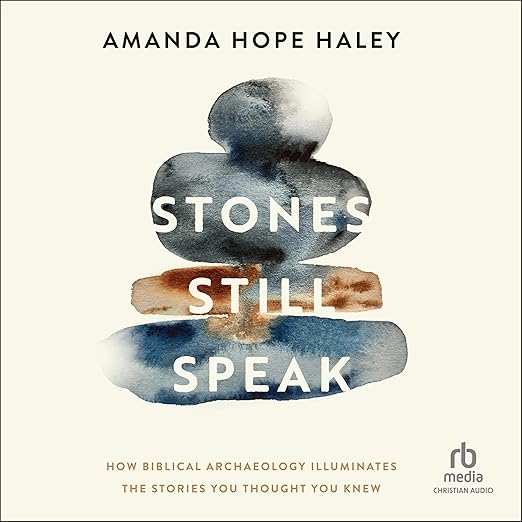
- Narration: Author-narrated by Amanda Hope Haley, confident, conversational, and genuinely engaged; her Harvard archaeologist background comes through in the cadence.
- Themes: Biblical archaeology, stripping cultural accretion, rigorous faith-based inquiry
- Mood: Intellectually brisk, occasionally sharp-tongued, devotionally earnest
- Verdict: A stimulating listen for Christians willing to have Sunday school assumptions challenged by archaeological evidence, less rewarding for those expecting strict academic neutrality.
I picked this one up on a Sunday evening, genuinely curious what a Harvard-trained archaeologist would do with the gap between popular biblical imagination and what the dirt actually tells us. The Adam and Eve of Renaissance paintings. The Moses of Charlton Heston. The Jonah who gets illustrated in children’s Bibles as a cheerful man in a whale’s stomach. These images are so thoroughly embedded in Western culture that they’ve become the default version of the stories themselves. Haley’s project is to scrape all of that away.
The premise is smart and the execution is largely confident. Haley argues that two thousand years of misguided cultural interpretation have layered so much over the biblical text that most modern readers are encountering a composite of Hollywood, medieval tradition, and Sunday school shorthand rather than anything close to the ancient world the texts actually describe. Her solution is archaeological and literary context, understanding the historical world of the people who experienced these events rather than projecting our own assumptions backward onto them.
Our Take on Stones Still Speak
What makes this audiobook distinctive is Haley’s combination of credentials and personality. A Harvard-trained archaeologist with a theology background who narrates her own work and clearly has strong opinions about how Scripture should be read, that is not a neutral authorial voice, and she doesn’t pretend to be one. One reviewer noted that she can be snarky about other Christians whose interpretations differ from her own, and that’s a fair observation. There’s a sharpness here that some listeners will find refreshing and others will find alienating, depending on where they sit in relation to the particular theological disputes she engages with.
The archaeological content is the strongest element. Haley walks through how artifacts are authenticated, how context shapes interpretation, and how specific discoveries have reframed understanding of particular biblical passages. For listeners with no prior exposure to biblical archaeology, these sections will feel genuinely revelatory. The way she traces how misunderstandings developed over centuries, the specific cultural moments when particular interpretations calcified into assumed fact, is the kind of intellectual history that rewards careful listening.
Why Listen to Stones Still Speak
Haley’s author narration is a real asset here. She knows this material intimately and reads it with the kind of authority that comes from genuine expertise rather than performance. The conversational register she uses, somewhere between lecture and essay, suits the six-hour runtime well. This is not a dense academic text read aloud by someone who would rather be writing; it’s a book clearly conceived with voice in mind.
For Christians who want a more rigorous engagement with Scripture than devotional reading typically offers, who find themselves frustrated when faith and intellectual inquiry are treated as mutually exclusive, Stones Still Speak occupies a useful space. It doesn’t ask listeners to abandon belief; it asks them to take the historical reality of that belief seriously enough to do actual homework about it.
What to Watch For in Stones Still Speak
The critical review in the data is worth taking seriously. One listener found Haley’s treatment of other believers’ positions, including a pointed section involving the Ark museum, more dismissive than the evidence warranted. The charge that she functions as an archaeological storyteller rather than a working scientist has some basis, in that the book is primarily oriented toward accessible interpretation rather than peer-reviewed methodology. If you approach this expecting the epistemic standards of academic archaeology, you’ll find the book more popular than scholarly in its framing.
The faith commitment embedded in the book is also explicit and unambiguous. Haley is writing to strengthen and clarify Christian belief through archaeological context, not to provide a religiously neutral historical analysis. That’s a legitimate project, but listeners who come from outside Christian faith looking for dispassionate inquiry may find the framing uncongenial.
Who Should Listen to Stones Still Speak
Listen if you’re a Christian with intellectual curiosity about the historical world behind Scripture, frustrated by the gap between popular biblical imagery and what scholarship actually suggests. This is also a strong pick for anyone interested in how cultural accretion shapes religious interpretation over centuries, a question that applies well beyond Christianity.
Skip it if you want strict academic neutrality, or if you find devotionally oriented framing of historical evidence uncongenial. Also approach with some caution if you’re sensitive to the author’s relatively sharp stance on certain intra-Christian debates about interpretation.
Frequently Asked Questions
Does Stones Still Speak assume prior knowledge of biblical archaeology?
No. Haley writes for a general Christian audience and explains archaeological concepts and processes as she goes. Listeners with no prior exposure to the field will find the material accessible, though those with some background in biblical studies or Near Eastern history will encounter familiar territory more quickly.
Is the author’s narration of her own work effective for a nearly seven-hour listen?
For most listeners who connect with Haley’s voice and style, yes. She narrates with genuine confidence and engagement, and the conversational quality of her delivery keeps the longer listen from feeling like a lecture. Those who find her tone occasionally sharp or combative may tire of it over the full runtime.
How does this book treat the tension between faith and archaeological evidence?
Haley’s position is that archaeological and historical context strengthens rather than undermines Christian faith by revealing Scripture in its proper setting. She does not present archaeology as a challenge to belief but as a tool for clearer understanding. This distinguishes her project from more skeptically oriented biblical history books.
Is this book appropriate for group Bible study or church use?
It could work well in that context, particularly for groups comfortable with intellectually challenging discussions. The content will likely prompt lively conversation about how cultural tradition shapes scriptural interpretation. That said, Haley’s occasionally pointed commentary on specific Christian practices and institutions means it may generate friction in some church contexts.