Quick Take
- Narration: Scott R. Pollak reads with businesslike clarity, appropriate for a reference text, though the delivery stays functional rather than distinctive.
- Themes: Board governance and structure, CEO and director relationships, startup lifecycle decision-making
- Mood: Dense and practical, built for reference rather than front-to-back immersion
- Verdict: The most comprehensive board governance resource available in audio format, and worth having even if you only dip into the relevant chapters as situations arise.
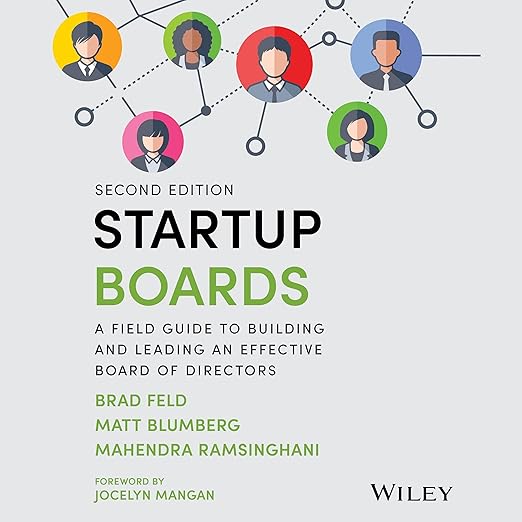
I have sat through enough conversations about startup governance to know that most founders learn how boards work by accident, usually at the worst possible moment. I listened to Startup Boards across two weeks of morning sessions, treating it less like a narrative and more like what it actually is: a field manual I wanted in my head before I needed it.
Brad Feld, Mahendra Ramsinghani, and Matt Blumberg have collectively attended thousands of board meetings over thirty years of investing and operating. That accumulation of experience shows throughout. The book covers the full arc from first board formation through major transactions, selling a company, going public, or winding down, with chapters structured to be accessed out of sequence when specific situations arise. One reviewer who had just started building their first board described doing a full read-through and then returning to individual chapters as needed, which is exactly how the authors designed it.
Our Take on Startup Boards
The most useful section for early-stage founders is the material on composition: how to think about VC directors versus independent directors, what to actually look for when recruiting, and how to structure onboarding so that new board members arrive genuinely useful rather than requiring months of orientation. The authors are honest about the full range of board dynamics, the good, the bad, and the genuinely ugly, and the case studies drawn from real situations give the advice texture that pure principle-listing lacks.
The legal characteristics section demystifies something that trips up a surprising number of first-time founders: the difference between a board’s formal obligations and its practical function. Understanding that distinction early saves significant political and legal energy later. The chapter on board meeting preparation is one of the more immediately actionable sections, specific enough to change how you run the meeting this quarter, not just how you think about governance abstractly.
Why Listen to Startup Boards
The audiobook includes a companion PDF, which matters because some of the reference material, structures, compositions, checklists, is easier to absorb visually than aurally. The combination makes this a more complete package than pure audio governance resources typically offer. Reviewers placed it alongside Venture Deals as essential startup reference reading, and that comparison holds up: both books are more useful as career companions than as single reads you finish and shelve.
Scott R. Pollak’s narration keeps a steady pace through the denser sections. The material is not light listening, and Pollak does not try to make it feel lighter than it is. For a reference text, that kind of sober consistency is more valuable than performed enthusiasm.
The chapter on board meeting preparation is worth calling out separately: the advice on board packet structure, how to sequence agenda items to protect discussion time, and the specific trap of turning board meetings into reporting sessions rather than strategic conversations is practical enough to implement immediately. These are details that experienced operators often learn through expensive mistakes, and having them laid out in advance is precisely what a field guide should offer.
What to Watch For in Startup Boards
This is a book written primarily for CEOs and board members at venture-backed companies. Founders running bootstrapped operations or very early pre-board companies will find some chapters less immediately applicable. The audiobook format also has natural limitations for reference material: you cannot skim, search, or tab a section the way you can with a physical book. The companion PDF addresses this partially, but listeners who know they will want to return frequently to specific chapters might consider the print edition for those sections alongside the audio.
Who Should Listen to Startup Boards
Strongly recommended for any founder preparing to build their first board, anyone considering a board director role, and investors who want to understand board dynamics from multiple vantage points. Skip it if your company is too early for board governance to be an active concern, the book will still be here when that changes, and it will be worth more with concrete context to apply it to.
Frequently Asked Questions
Is Startup Boards useful if I already have a board in place, or is it only for founders starting from scratch?
It covers the full lifecycle. There are dedicated sections on managing existing boards, handling difficult dynamics, compensating and removing directors, and navigating major transactions, all relevant to founders at any stage.
What does the companion PDF add to the audiobook?
The PDF includes reference material, structures, checklists, and frameworks, that is easier to use visually than to absorb purely through audio. It is included with the Audible purchase and meaningfully completes the package.
How does this second edition differ from the first?
Reviewers who read both described this edition as substantially updated with new content and a broader scope than the original. The core framework is extended with additional case studies and expanded coverage of board roles in transactions.
Can someone outside the startup ecosystem, say, a nonprofit board member, get value from this?
Some principles translate, particularly around board composition and meeting structure. But the book is written specifically for venture-backed startup context, so readers in other governance environments will need to filter for what applies.