
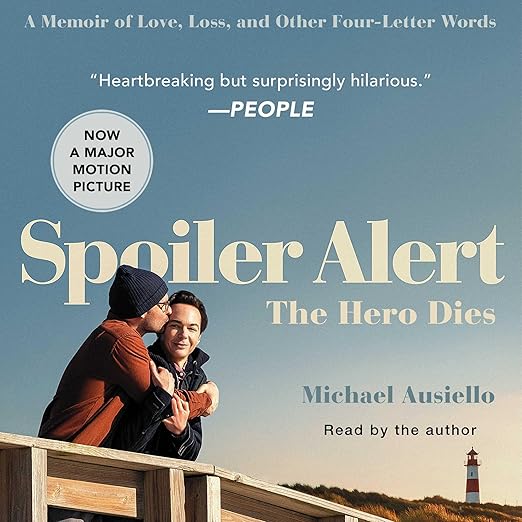
There is a reviewer who says they will never be able to look at this book the same way again, that even the happy moments, recalled weeks after finishing, come with a pit in their stomach. That is precisely the experience I had listening to Spoiler Alert: The Hero Dies on a long flight, headphones in, doing my absolute best not to audibly cry in seat 22B. I failed twice. The book earned it both times.
Michael Ausiello is best known as the TV journalist behind TVLine, the insider source for entertainment coverage. His husband, Kit Cowan, was diagnosed with a rare neuroendocrine cancer in 2014 and died eleven months later in 2015. This memoir is Ausiello's account of those eleven months, interwoven with the thirteen years that preceded them. That structure, grief and memory braided together, is one of the reasons the book works so well.
The darkly hilarious tone that the synopsis promises is real and not a marketing exaggeration. Ausiello and Kit had a relationship built on wit, pop culture fluency, and a specific kind of mutual absurdism, and the memoir captures that register with remarkable fidelity. There is a passage early in the book where Ausiello is processing his terror over Kit's diagnosis by organizing his feelings around a television narrative framework, which is both very funny and quietly devastating. He is using the only language he has for the situation, which turns out to be exactly the right narrative device for a story about a TV journalist facing something that cannot be managed by insider knowledge. One reviewer who watched the Jim Parsons film adaptation first found it so distant from the book's texture that it damaged the viewing experience. The film may have its merits, but the book is operating in a different emotional register entirely.
The Best Parts of Spoiler Alert: The Hero Dies
The self-narration is essential. Ausiello is not a professional narrator, and that imperfection is an asset. His voice catches in the right places. There is an authenticity to hearing the author work through these passages in real time that a polished performance would undermine. The book runs to ten hours, which is a substantial commitment, but the material justifies it. Ausiello's account of the medical system, the oncology consultations, the treatment decisions, the logistics of dying in the current American healthcare landscape, is one of the more unsentimental and practically useful aspects of the book, in the way that the best illness memoirs manage to be.
Before You Commit to Spoiler Alert: The Hero Dies
Pay attention to the ways Ausiello handles Kit's perspective. He is writing from his own point of view, but he is meticulous about not overwriting Kit's interiority or ventriloquizing what Kit felt in ways he cannot actually know. That restraint is a mark of genuine craft. The section covering their meeting, their years together, and the specific texture of their relationship before the diagnosis is not throat-clearing before the main event, it is load-bearing. The grief lands as hard as it does because Ausiello has made Kit irreplaceable as a character before the cancer arrives. The humor is also never used as deflection. Ausiello is honest about the moments when the comedy failed him, when the jokes ran out, which makes the moments when they worked feel like acts of survival rather than performance.
Should You Listen to Spoiler Alert: The Hero Dies?
Anyone who has loved someone through a terminal illness and is ready to sit with that experience on the page. The LGBTQ+ context, two gay men in a long-term committed relationship facing a catastrophic illness, is central but not exclusive; the emotional experience is legible to anyone who has been in a serious relationship and understood its stakes. Listeners who want uplifting closure should know that the title is not a misdirection. This is a book about loss. The question it answers is not whether Kit lives but what it costs to love someone fully in the face of that kind of ending.
Does Ausiello's lack of professional narration experience hurt the ten-hour listening experience?
The consensus is that it strengthens it. His voice has the quality of someone genuinely working through difficult material rather than delivering a polished performance, and that vulnerability is appropriate for what the book asks of its listeners.
How does the book handle the medical details of Kit's neuroendocrine cancer, is it heavily clinical?
Ausiello covers the medical landscape with enough specificity to be useful but not so much that the book becomes a medical document. He is honest about the treatment decisions, the oncology consultations, and the logistics of managing terminal illness, but the human relationship remains the primary focus throughout.
Is this memoir appropriate for listeners who are currently grieving a loss?
That depends entirely on where the listener is in their grief. Some readers have found it profoundly validating during active grief. Others have chosen to wait. Ausiello does not offer resolution or a path through grief, he documents the experience of it with honesty, which some find comforting and others may find too close to their own situation.







