Can Sixty Days of Audio Replace a Semester?
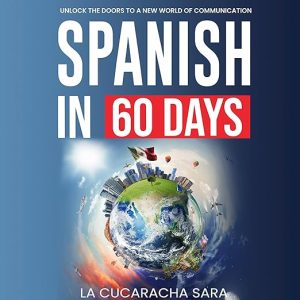
Can sixty days of audio really replace a semester of classroom Spanish? That's the implicit promise behind this audiobook, and the honest answer sits somewhere between the breathless marketing copy on the product page and the more measured praise in its three attached reviews. La Cucaracha Sara, who narrates her own course here, has built a three-hour, ten-minute program aimed squarely at absolute beginners, and the branding leans hard into urgency, exclamation points, scroll-up-and-buy prompts, the works. Underneath that noise, though, the actual reviewers describe something calmer and more useful: a foundational, chapter-by-chapter approach that starts simple and builds.
It helps to separate the sales copy from the product itself here, because they read like two different things. The official synopsis promises you'll never stick out on your dream vacation, which is the kind of language that makes a serious language learner's eyes glaze over. But one reviewer describes a genuinely thought-out chapter progression built on 'a foundational approach,' and another specifically praises the course for teaching how people actually speak rather than stiff textbook phrasing. That gap between marketing voice and classroom substance is worth knowing about before you buy, because the product undersells itself with its own cover copy.
Series positioning matters too. This is book one of an ongoing Learn Spanish series under the La Cucaracha Sara brand, and a 4.5 average across nearly a thousand ratings suggests a genuinely loyal, satisfied audience rather than a one-off impulse purchase gone wrong. Self-narration is a real asset in courses like this one; a language teacher reading her own material tends to have better instinct for where a beginner will stumble than a professional voice actor brought in cold. The specific niche she has carved out, Mexican Spanish with slang included, is narrower and more useful than a generic pan-Latin-American approach, and it shows up clearly across all three reviews attached to this listing.
Mexican Slang Is the Course's Biggest Bonus
The single most consistent praise across all three reviews is the slang. One reviewer calls out Mexican slang specifically as a bonus feature, and another independently flags the same thing as a helpful, practical addition most beginner courses skip entirely. That's a meaningful differentiator. A lot of foundational language courses stay so grammar-focused that graduates can conjugate verbs correctly and still sound stiff the moment they order tacos from a street vendor. If Mexico specifically is your destination, and the review titled 'Must Have for Mexico Trips' suggests that's exactly who's buying this, that slang layer is doing real, practical work a more academic course would leave out entirely.
The structural discipline is the second real strength. One reviewer describes the chapter layout as 'well thought out' and built on a foundational approach, meaning new material builds deliberately on what came before rather than jumping around by topic. That matters enormously in an audio-only format, where you can't flip back three pages to check a rule you half-remember; the sequencing has to do that work for you. A third reviewer, contrasting this course directly against apps and textbooks that felt 'boring and hard to stick with,' calls this one a genuine breath of fresh air built around how people actually talk in real life.
Listening to your own teacher narrate her own curriculum also has a subtler benefit worth naming. La Cucaracha Sara isn't reading someone else's script; she wrote this course and knows exactly which words a nervous beginner will trip over, which is a different skill than voice-acting talent. That instructional intimacy is hard to fake with a hired narrator, however polished. Combined with a genuinely strong aggregate rating and three specific, detailed, non-generic reviews rather than vague five-star praise, this listing has more real evidence behind it than most self-published language courses manage, which often arrive with thin or nonexistent reviewer feedback, leaving a buyer to take the sales copy almost entirely on faith.
Three Hours Can't Deliver on a Sixty-Day Title
The marketing register genuinely is a liability, not just an aesthetic quirk. Phrases like 'scroll up, click on buy, and get your copy now,' sitting inside the actual synopsis text, read more like a sales funnel than a course description, and that tone risks scaring off exactly the thoughtful, serious beginners who would benefit most from the content underneath. If you bounce off the sample description, know that the reviewers, who have actually completed the course, describe something calmer and more substantive than the copy suggests. It's also worth remembering the format's built-in limitation: this is audio-only instruction for a language that uses accent marks and specific spelling patterns you'll eventually need to see written down, not just hear spoken, so pairing this with even a basic phrasebook or app for the written side is a reasonable idea.
Three hours and ten minutes is also a real constraint against the sixty-day promise in the title. That's not a full immersion curriculum; it's closer to a solid, well-organized foundation you're meant to revisit and practice against over those sixty days rather than one continuous listen that deposits fluency on its own. Treat the title as a study framework, not a runtime guarantee. And because this is book one of a series, it's worth going in knowing you may hit a natural ceiling at the end of these three hours, where continuing toward real conversational fluency likely means looking for the next installment in this same Learn Spanish series rather than expecting this single audiobook to cover everything.
Absolute Beginners Headed to Mexico Fit Best
This audiobook is a strong fit for absolute beginners with a specific, concrete goal, especially anyone planning travel to Mexico who wants functional conversational Spanish and local slang rather than textbook grammar theory. It also suits listeners who've bounced off apps or classroom courses before and respond better to a warmer, more conversational teaching voice; that's precisely the gap all three reviewers describe the course filling for them. If you want a foundation you can build on with real practice rather than a comprehensive grammar reference, and you don't mind the salesy packaging around genuinely solid content, this is a reasonable, well-reviewed place to start.
Skip it if you're after rigorous grammar instruction, verb conjugation tables, or a structured academic curriculum; nothing in the reviews or synopsis suggests that kind of density. It's also not the right pick if your destination is Spain or South America specifically, since the slang and cultural framing here lean Mexican, and that regional specificity, a strength for the right listener, becomes a mismatch for a different one. And if marketing copy this aggressive genuinely puts you off a purchase on principle, that's a fair reaction; just know the course itself, per its reviewers, is more substantive than its own sales pitch.