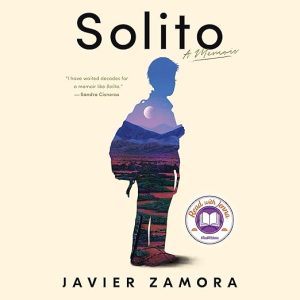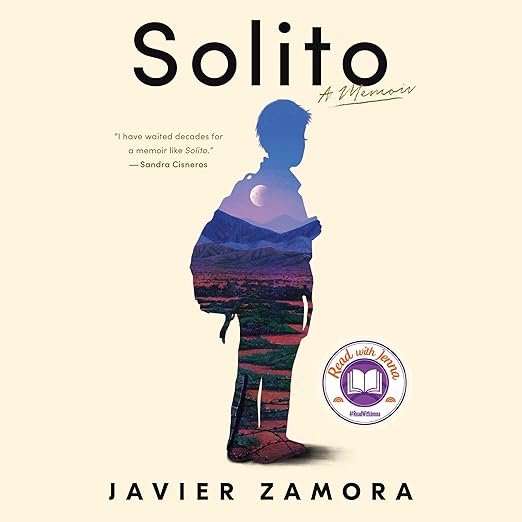
I finished Solito on a Tuesday morning that I had not planned to be emotionally significant, and then sat with the ending for a long time without doing anything else. Javier Zamora reading his own memoir is an experience that resists easy categorization. The book is remarkable as a piece of writing. As an audiobook it operates on an entirely different register, because Zamora's voice carries the weight of the story in ways that no professional narrator could replicate.
The setup is one of the most precisely particular in recent memoir: nine-year-old Javier, left behind in El Salvador when his parents emigrated to the US years earlier, is told he will be making a trip. Two weeks to be reunited with his mother and the father he barely remembers. What follows is two months of desert crossings, boat trips, arrests, deceptions, and the formation of an improvised family among strangers sharing the same impossible journey. The title means alone in Spanish, and it holds.
Told Entirely Through a Nine-Year-Old's Eyes
What makes Solito formally remarkable is the decision to narrate entirely from the perspective and cognitive level of the nine-year-old Javier rather than the adult poet looking back with full comprehension. The language reflects what a child can understand, which means the reader experiences the journey's horrors with the specific incompleteness of childhood perception. You understand things the child cannot, which is a different and more devastating kind of reading experience than straightforward adult retrospective. Emma Straub's blurb about reading with her heart in her throat and not bursting into tears until the last sentence is not marketing language. It describes a specific formal achievement by a writer who knows exactly what he is doing. The book won the Los Angeles Times Christopher Isherwood Prize for Autobiography and the American Library Association Alex Award, and these recognitions reflect something real in the writing rather than its political subject matter alone.
Zamora's Own Voice Carries Seventeen Hours
Zamora's narration embeds the story in his actual voice, with all the emotional history that implies. One reviewer who is not a memoir reader found it through a book club and described being wowed by the experience repeatedly. That response is widespread for good reason. The 17-hour runtime is entirely appropriate to the material. This is not a story that benefits from compression, and the long form gives the reader time to inhabit Javier's world rather than simply process the events of it. Multiple reviewers described not wanting the book to end, which is a better metric than runtime length for whether a book earns its hours.
Real Danger, Rendered as a Family Story
The harrowing material is consistent and real. Pointed guns, arrests, deception by coyotes, desert conditions that children should never experience: these are not dramatically heightened for narrative effect. They are accounts of what actually happened to a child. Listeners who are not in a position to sit with that material without distress should know this going in. One reviewer noted the book should be required reading specifically for those skeptical of immigration, which is an accurate statement of the book's political implications, but this is above all a human story rather than an argument. The political resonance arises naturally from the specificity rather than being constructed to persuade.
A detail that lingers: Zamora writes the fellow migrants Javier travels with as fully realized people rather than background figures in his story. The man nicknamed Chino, the woman Javier comes to think of as Mami Muñeca, are rendered with the kind of care that turns them from supporting characters into something more like a discovered family. This is the book's great formal achievement alongside the child-perspective narration: it insists that the story of one nine-year-old is also the story of everyone who made the same crossing and did not write a memoir about it afterward.
Meant for Readers Willing to Be Changed
Anyone willing to be changed by a book. Educators, students, and readers interested in memoir at the highest level of craft. Listeners who have followed Zamora's poetry and want to hear how his voice translates to long-form prose. Not recommended for listeners in fragile emotional states or those who need lighter material at a given moment. Highly recommended as a book club selection, for the same reason one reviewer's club found it transformative: it generates conversation that matters well beyond the text itself.
The Short Version
- Narration: Javier Zamora reading his own memoir is one of the most affecting author-narrated audiobooks available. His voice carries a history no professional narrator could replicate.
- Themes: Immigration and family separation, improvised kinship, childhood resilience
- Mood: Intimate, harrowing, and ultimately full of grace
- Verdict: Zamora narrating his own story of crossing from El Salvador to the US at age nine is not an easy listen but it is an unforgettable one.
Does Javier Zamora narrating his own memoir affect the listening experience significantly?
Profoundly. This is one of the cases where author narration is not merely a nice feature but essential to the work. His voice carries a history that professional narration cannot replicate, and the experience of hearing him read the child Javier's perspective is categorically different from reading the text.
Is the child's perspective narration difficult to follow, or does it create confusion about what is actually happening?
It creates a layered experience rather than confusion. You understand more than the child narrator, which produces a specific kind of dramatic irony central to how the book works emotionally. It is not a technique that obscures events but one that makes them more affecting.
How does Solito handle the political dimensions of immigration without becoming polemical?
The political implications arise entirely from specificity. Zamora writes what happened to a particular nine-year-old, not an argument about immigration policy. The result is more politically affecting than most deliberately persuasive books precisely because it refuses to argue.
At 17 hours, is the runtime appropriate or does the book feel padded?
The length is earned. The journey itself lasted two months and the compression of that experience into 17 hours is already significant. Multiple reviewers mentioned not wanting the book to end, which is a better metric than runtime length.