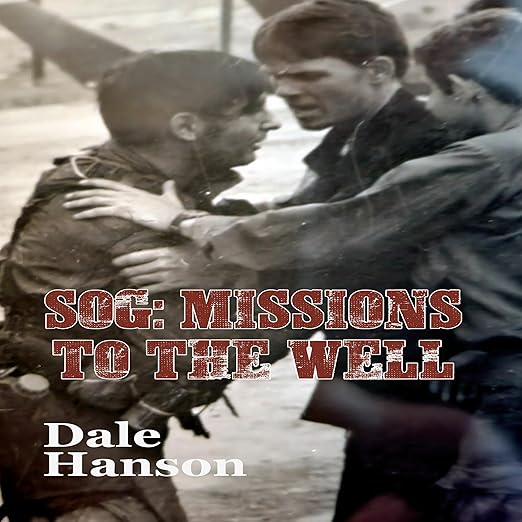
Dale Hanson's audiobook SOG Missions to the Well carries endorsements that mean something in this particular corner of military literature. Major John Plaster - himself a Special Forces combat veteran, SOG warrior, and author - describes Hanson as someone who "draws upon his first-hand knowledge to write with an intensity only possible by a warrior who equally knows how to wield a pen." John Padgett, USSF Medical NCOIC at Kontum from 1970 to 1971, calls it "even more gripping and compelling than his previous book, Born Twice" and "full of irony, compassion, patriotism, dedication, dark humor and the warrior ethos." When fellow SOG veterans offer that level of specific endorsement, the authenticity of the material is not in question.
The Montagnard Fighters Who Took Equivalent Risks
MACV-SOG - the Military Assistance Command, Vietnam Studies and Observations Group - ran classified cross-border missions into Laos, Cambodia, and North Vietnam that were not officially acknowledged for years. The small reconnaissance teams that conducted these operations worked with minimal support, maximum exposure, and the particular understanding that if something went badly wrong in denied territory, official rescue options were severely constrained. Hanson was one of these operators. He knows what he is describing not as a researcher or journalist but as a participant, and that knowledge shapes every page of this fifteen-hour memoir.
Padgett's observation that the book "brings the listener into the reality of a SOG operator and the circumstances of SOG missions while not losing sight of the humanity of those involved" captures something important about what distinguishes this from tactical recitation. Hanson writes about his indigenous soldiers - the Montagnard fighters and other regional forces who took equivalent risks with even less institutional acknowledgment - with the respect and specificity of someone who depended on them and knew them as individuals. One reviewer asked the question that the best combat memoirs always provoke: "Where do we find such men?" Hanson's answer, implicit in the narrative, is that they found each other in a specific time and place that would not recur.
The Same Voice That Issued the Commands
Hanson narrates his own work, and this is the correct decision for material at this level of personal testimony. His voice carries the measured quality of a man who has organized these memories over decades, who understands which details matter and which are noise, who can deliver tension without melodrama because the actual missions contained enough of both already. Self-narration in military memoir functions differently than in other genres - the voice's relationship to the events described is not just biographical but literally the same voice that issued commands, made split-second decisions, and carried the knowledge of what happened to the people he served with through the years that followed.
At fifteen hours and nineteen minutes, the audiobook has the scope to do what shorter military memoirs cannot: establish the full context of SOG operations before diving into specific missions, build the reader's understanding of the operational environment and its constraints, and develop the human relationships that give the action sequences their weight. Reviewers have described the material as "hard to put down," which for a fifteen-hour audiobook is a significant statement about the sustained narrative quality Hanson maintains throughout.
Why the Missions Keep Going Back to the Well
This is Hanson's second book, following Born Twice. Padgett explicitly rates this newer work above the first, suggesting the author's narrative craft developed between volumes. Readers who enjoyed Born Twice will find this a progression rather than a repetition; those new to Hanson can begin here without confusion, as each book covers distinct missions and periods. The cross-border operational context will be familiar to readers of other SOG literature - Plaster's own books are the other essential texts in this space - but Hanson's first-person perspective offers something the tactical histories cannot provide.
The missions Hanson describes involve serious violence and the particular moral complexity of classified operations conducted in theaters that official policy denied entering. The dark humor that Padgett mentions is real and present throughout - it is the coping mechanism of people in extreme situations - but the book does not aestheticize combat. Hanson writes about the costs, the losses, and the specific weight of carrying operational knowledge that could not be shared publicly for years. Listeners seeking sanitized or exclusively heroic accounts of Vietnam-era operations will find this honest in ways that may be uncomfortable but that ultimately serve the record those operations deserve.
A note on the specific title: "Missions to the Well" refers to the operational concept of returning to particularly valuable but dangerous intelligence locations repeatedly - going back to the well despite the known risk each time. That framing captures something essential about the SOG ethos as Hanson presents it: not recklessness but a calculated willingness to accept repeated exposure in service of information that might protect others. The missions described in this audiobook were often invisible to the public record until declassification, which is part of what Hanson is recovering by putting his own experience into language that can be shared.
For Veterans Who Want Hanson's Ground-Level Perspective
Military history readers specifically interested in Vietnam-era special operations will find this essential. Veterans who served in this period - or whose family members did - will find Hanson's ground-level perspective the kind of account that official histories cannot provide. General readers with an interest in the human dimensions of classified warfare, the ethics of covert operations, or simply the question of what certain men were asked to do and how they carried it afterward will find the fifteen hours rewarding and worth the investment. This is not a book for readers who want the political context of the Vietnam War; it is a book for readers who want to understand what it was like at the operational level, told by someone who was there and has spent the years since finding language for it.
Quick Take
- Performance: Dale Hanson narrates his own missions memoir with the measured restraint of a combat veteran who knows which details matter - the self-narration carries an authenticity no outside voice could replicate.
- What it covers: covert special operations in Vietnam, the warrior ethos and its human costs, compassion for indigenous soldiers who took equal risks with less acknowledgment
- Feel: Taut and immersive, with flashes of dark humor and the grounded specificity of first-hand operational knowledge
- Our call: Hanson writes from the ground floor of MACV-SOG operations with authority no outside historian can replicate - fifteen hours of combat memoir that reads, as one fellow SOG veteran put it, like fiction that cannot be made up.
Questions Listeners Ask
Do I need to have read Dale Hanson's first book, Born Twice, before listening to this audiobook?
No - SOG Missions to the Well covers distinct missions and operates as a standalone memoir. However, fellow SOG veteran John Padgett rates this second book above Born Twice in quality, so readers who engage with this one first may find the earlier book a useful complement rather than a prerequisite.
How accurate and reliable is the combat detail given the classified nature of MACV-SOG operations?
The book carries endorsements from two MACV-SOG veterans who were in a position to evaluate the authenticity of Hanson's account. Both Major John Plaster and John Padgett attest to its accuracy and the authority that comes from first-hand operational experience. The classified nature of these missions means no outside historian has Hanson's specific knowledge, which is what makes this first-person account irreplaceable.
Is this audiobook appropriate for someone without prior knowledge of the Vietnam War?
Hanson provides enough operational context to follow the missions without prior expertise in MACV-SOG history. General readers interested in Vietnam-era military memoir will find the book accessible. Those who want deep background on the political context of the war will benefit from supplementary reading, as Hanson focuses on the ground-level experience rather than strategic or political analysis.
How does Dale Hanson's self-narration compare to professional military memoir narrators?
Self-narration in this genre carries authenticity that professional narrators cannot replicate - Hanson is accounting for his own experiences, and that accountability shapes the delivery. His narration is measured and restrained in the way combat veterans tend to be when discussing serious events, which suits the material. Listeners who value authenticity over theatrical performance will find it exactly right.