Key Details
- Voice: Erin Moon delivers Jennifer McCartney's dry Canadian wit with a warmth that keeps the satire from curdling; her pacing on the slang sections is particularly well judged.
- Big ideas: Canadian identity and immigration, US-Canada cultural comparison, bureaucratic absurdity
- Atmosphere: Warm and gently satirical
- Worth it?: At three hours and twenty-four minutes, this audiobook is the most efficiently packaged Canada orientation imaginable, part genuine guide and part deadpan cultural comedy.
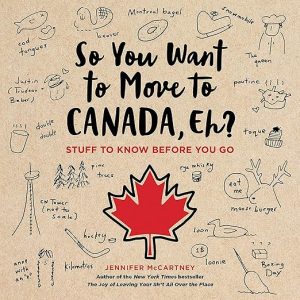
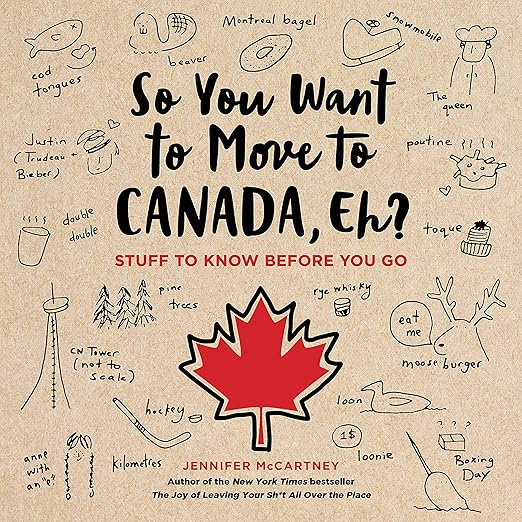
Jennifer McCartney, born-and-bred Canuck and New York Times bestselling author, wrote So You Want to Move to Canada, Eh? as a guide for Americans who have, at various points in recent political history, meant that question more literally than usual. Narrated by Erin Moon over three hours and twenty-four minutes, this audiobook covers Canadian history, residency rules, unique laws and customs, contributions to the arts and pop culture, and colorful slang with a light touch that never condescends to its American audience while also not softening the contrast it is drawing. The book has found a recurring audience every US election cycle, which tells you something about both the quality of its execution and the enduring relevance of the question it answers.
McCartney's structural skill here is refusing to write a straight humor book. The immigration information is genuinely accurate and practically useful: the residency rules she describes are demystified rather than glossed over, and the unique legal and customs information covers ground that a person seriously considering the move would need to know before making any decisions. She builds the comedy on top of that foundation rather than substituting it for substance, which is why reviewers describe the book as both delightful and informative without those qualities feeling like separate sections sitting awkwardly next to each other. One reviewer who described the book as inspiring specifically about what a country can be was not reading it as comedy; they were reading it as political aspiration, and the audiobook holds up under both readings simultaneously without strain.
Moon's narration is an excellent match for McCartney's voice throughout. The Canadian cultural references, Celine Dion, Margaret Atwood, Justin Bieber, appear with a specific kind of patriotic irony that requires a narrator who can hold affection and self-awareness at the same time, and Moon manages this balance consistently. Her pacing on the slang sections is the technical highlight: Canadian vocabulary delivered too fast becomes incomprehensible, delivered too slowly becomes condescending, and Moon finds the register between them that keeps the comedy landing without making the listener feel talked down to.
Why So You Want to Move to Canada, Eh? Works as an Audiobook
At three hours and twenty-four minutes, this audiobook is the right length for its subject. There is a version of this book that could have been ten hours and exhaustive, and that would have been a worse book. McCartney knows exactly how much Canadiana an American listener can absorb before the charm becomes a slog, and she stops well before that point. The creative doodles, helpful charts, and fun graphs mentioned in the print edition's marketing are obviously absent from the audio format, but Moon's narration compensates through performance rather than visual reference, and the material does not suffer from the format translation.
The audio format is specifically suited for the slang sections, which cover enough vocabulary and pronunciation that reading them silently in print would lose half their value. Hearing Moon deliver terms and explain their usage and social context is a genuinely different experience than reading their definitions on a page, and for listeners who plan to actually use any of this material on arrival at the Canadian border, the audio is the more practical preparation. The geography of the book's argument also works better in audio: McCartney moves between practical advice and cultural observation without formal transitions, and the listening experience handles those pivots more naturally than a page does.
Weak Spots in So You Want to Move to Canada, Eh?
The pop culture section is the audiobook's most unpredictable pleasure. McCartney's selection of Canadian contributions to global arts, the specific combination of Celine Dion, Margaret Atwood, and Justin Bieber as her representative figures, is doing something deliberate. She is constructing a Canadian cultural identity out of the tension between those names: the literary seriousness of Atwood, the global commercial reach of Dion, and the ambient embarrassment of Bieber as a person who got very famous very young and not always admirably. Together they produce a portrait of a country that cannot be reduced to either self-congratulation or stereotype, and Moon's delivery of the Bieber section in particular has exactly the right mixture of national pride and personal resignation.
The residency rules section, which a reviewer described as demystified, is also more practically useful than the book's tone might suggest. McCartney covers the frameworks of Canadian immigration policy with enough accuracy that a listener considering the move seriously would have a genuine orientation for what the process requires, including the points-based elements and the provincial nominee programs that most Americans have never heard of. The humor surrounding those sections does not undermine the information; it makes it memorable rather than dry.
The Right Listener for So You Want to Move to Canada, Eh?
This audiobook is for Americans curious about Canada who want their information delivered with humor and their humor grounded in real information. It works for listeners who are seriously considering the move, for those who are not but find the comparison instructive, and for Canadians who want to hear their country described from the outside with genuine affection and appropriate irony. Those who want comprehensive immigration legal advice should supplement with professional counsel; McCartney is accurate about the frameworks but this is not a substitute for an immigration lawyer when actual decisions need to be made.
Good to Know
Is this audiobook actually useful for someone seriously considering moving to Canada, or is it primarily comedy?
Both. The immigration information, including residency rules, unique laws, and customs, is genuinely accurate and practical. McCartney builds the humor on top of real content rather than using it as a substitute, and reviewers who used it as actual preparation described finding it helpful.
How long is this audiobook, and is the runtime sufficient to cover the material?
Three hours and twenty-four minutes. McCartney deliberately kept the scope manageable, and reviewers consistently describe the length as exactly right. The audiobook covers history, residency rules, customs, pop culture, and slang without overstaying the premise.
Is this audiobook specific to a particular political moment, or does it hold up over time?
The immigration information requires updating as laws change, but the cultural and tonal content holds up well. The book has found recurring audiences across multiple US election cycles, which suggests the underlying Canada-US comparison retains its relevance independently of specific political events.