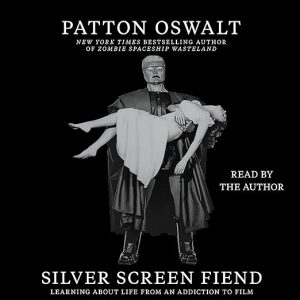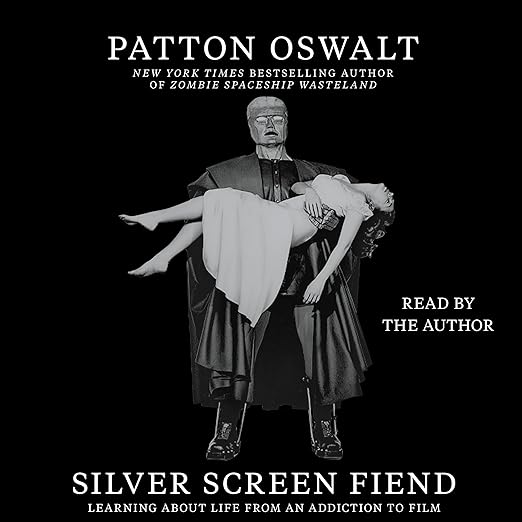
Patton Oswalt's addiction between 1995 and 1999 was not substances. It was film. Silver Screen Fiend - this self-narrated audiobook running 4 hours and 7 minutes - covers the period when Oswalt was attending multiple films per day at the New Beverly Cinema in Los Angeles, building the encyclopedic film knowledge that would later inform his comedy while simultaneously using that project as an escape from the actual work of becoming a performer. Oswalt narrating his own memoir is not a novelty booking - it is the only version of this audiobook that functions correctly. His timing is too specific to the material, and his understanding of exactly where each joke is and when it lands, for anyone else to deliver it at the same precision.
The Verdict, Briefly
The book's core argument is self-implicating in a way that Oswalt commits to honestly. Seeing five films in a day is not, in itself, an education - it becomes a substitute for the creative risk that education is supposed to enable. The New Beverly Cinema gave Oswalt access to the kind of curated film programming that shaped generations of LA comedians and filmmakers, and he absorbed it voraciously. The problem the memoir identifies is that absorbing culture and making culture are not the same activity, and the book documents the specific ways in which Oswalt used his sprocket fiend identity to defer the exposure of putting himself in front of audiences. That is an honest account of what a particular kind of cinephilia can become when the film watching is more comfortable than the performing.
The supporting cast is worth noting: the "cast of now-notable young comedians" Oswalt describes at the New Beverly and in the nascent LA alternative comedy scene reads, from this vantage point, as a portrait of a specific moment before careers solidified. Oswalt does not name-drop in the way celebrity memoirs often do - he remembers these people as they were before they became recognizable, which is more interesting and more honest. The book is as much a portrait of a specific cultural ecology in late-1990s LA comedy as it is a personal memoir, and that specificity gives it a value beyond the individual narrative arc.
One reviewer noted the book has "a lot of filler" - which is a fair observation if you are comparing it to the density of Oswalt's stand-up material. The memoir moves at a looser pace, digressing into film criticism and cultural observation. Whether this reads as filler or as texture depends entirely on your investment in the subject. For listeners who share Oswalt's cinephilia, the digressions are part of the experience - they are watching a person think about film the way he thinks about everything, which is part of what makes him interesting. For listeners who came primarily for the comedian autobiography, those passages will feel less essential.
Oswalt's prose is described by the New York Times as having "a set of synapses like a pinball machine" - a description that captures the rapid, associative quality of his thinking, and this translates to audio in a specific way. Reading his own work, he does not perform so much as inhabit, and the distinction matters across the full runtime. His inflection on the phrase "sprocket fiend" carries the specific pride and shame of a self-diagnosis that he has had time to process. The Boston Globe described his enthusiasm for film as "whirring in the background like a projector" - in audio, that whirring is constant and genuine, and it carries the listener through even the sections where the memoir's argument is more implicit than explicit.
At 4 hours and 7 minutes, the book is notably compact for a memoir. Oswalt does not extend his story beyond the period it is actually about - the 1995-1999 frame is tight and purposeful, covering the specific years of the addiction and its partial resolution, and ending when that arc ends rather than continuing into safer biographical territory. That discipline is a real virtue in a genre that frequently mistakes length for depth.
Weak Spots in Silver Screen Fiend
Listeners who come to this expecting a comprehensive Patton Oswalt biography will find it deliberately narrow. The book covers five years and one obsession - it does not survey his entire career or address most of the public events associated with his name after 1999. Listeners unfamiliar with the New Beverly Cinema's cultural significance in LA, or with the alternative comedy scene that surrounded it, may find some of the name-checking less resonant than it is for those with context. The film references are dense and specific - Oswalt moves between noir, B movies, independent film, and mainstream blockbusters with equal enthusiasm, and listeners who do not share that range will occasionally find themselves on the outside of a reference without a clear way in. The book also operates on two levels simultaneously: comedy about obsession, and genuine reckoning with avoidance and creative cowardice. Not all listeners will find both registers equally compelling or present in equal proportion.
Who Will Get the Most From It
This audiobook is for three audiences who may or may not overlap: Patton Oswalt fans who want to hear him process a formative period in his own voice, cinephiles who will recognize and delight in the film references while finding the self-critical honesty about consumption-versus-creation meaningful, and anyone interested in the specific ecology of the LA alternative comedy scene in the mid-to-late 1990s as a piece of cultural history. Listeners who find Oswalt's stand-up too dense with reference for their taste should know the memoir has a similar quality. Those who find his stand-up not dense enough with reference will likely find this memoir exactly what they were looking for.
Key Details
- Narrator: Patton Oswalt narrating his own memoir is the only choice that makes sense for this material. His timing is a comedian's timing, and this book requires that precision - reading it himself, he can land the jokes exactly as he wrote them, and his self-deprecation operates with the specificity of someone who knows exactly how embarrassing the story he is telling actually was.
- Subjects: Film obsession as developmental stage, the New Beverly Cinema as cultural institution, the relationship between consumption and creation
- Tone: Warm, digressive, and occasionally rueful - like a long conversation with someone who knows too much about movies
- Bottom line: Listeners who want to understand what it looks like when a person uses art consumption as both education and avoidance will find Oswalt's memoir more honest about that dynamic than most performers are willing to be.
Frequently Asked Questions
Does Patton Oswalt narrate the Silver Screen Fiend audiobook himself?
Yes - Oswalt narrates his own memoir, which is the correct choice for material where comedic timing is as load-bearing as the content itself. His self-narration gives the jokes their exact intended weight and makes the self-deprecating passages land with the specificity they require.
Is the Silver Screen Fiend audiobook more of a film memoir or a comedian autobiography?
Both, in roughly equal measure. The film obsession is the structural spine, but the book is also about what that obsession was serving emotionally and creatively - why a young comedian might immerse in film culture as a way of deferring the exposure of actually performing. Listeners who come for either angle will find the other angle present throughout.
Do I need to be familiar with the films Oswalt references to enjoy this audiobook?
Familiarity helps and deepens the experience considerably, but the book works without it. Oswalt's descriptions of the films he watched serve the memoir's argument regardless of whether you know the films - you understand what function they were serving for him even without having seen them. Wide cinephilia will make the listen richer but is not required.
Is Silver Screen Fiend a complete Patton Oswalt biography, or does it cover only part of his life?
It covers only the period between 1995 and 1999, specifically his film obsession and early comedy years in Los Angeles. It is deliberately narrow in scope rather than comprehensive. Listeners looking for a full account of Oswalt's life and career will need to supplement it with other sources.