The antiques trade operates at the intersection of history, grief, and commerce, and Duane Scott Cerny has spent decades working precisely that intersection in Chicago. Selling Dead People's Things is the audiobook version of his essay collection - part memoir, part trade story, part cabinet of curiosities - and Cerny narrates his own material in a way that makes the print version feel like a rough draft by comparison. His voice carries the stories with exactly the right combination of dry wit and genuine human affection that the subject demands. When you are professionally engaged in processing the possessions of the recently deceased, a certain quality of detachment is occupationally necessary. Cerny never lets that detachment shade into coldness. He is too curious about people for that, and you can hear it in every chapter.
Alternately Heartbreaking, Eerie, and Hilarious
The range of scenarios Cerny works through across the eleven-hour runtime is genuinely impressive in its variety. A hoarding beekeeper's estate. The retro remains of an infamous haunted hospital, disassembled piece by piece. An impromptu appraisal conducted during a shiva - a Jewish mourning period - that goes "disturbingly wrong" in ways that the listener will not anticipate and that should not be described in detail here. Each chapter functions as a standalone piece with its own emotional register, and reviewer Walter Eric Rau's description of the collection as "alternately heartbreaking, eerie, and hilarious" is precisely accurate. The organizational principle - moving between tonal registers without warning or preparation - mirrors the actual phenomenology of the antiques trade. A genuinely affecting family heirloom and an inexplicably large collection of novelty salt shakers can be discovered in the same afternoon in the same house, and the dealer must shift registers accordingly. Cerny has made that professional flexibility into a structural principle.
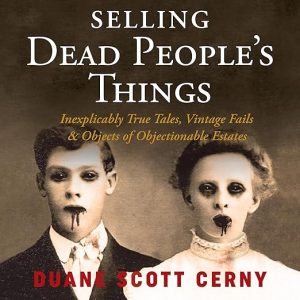
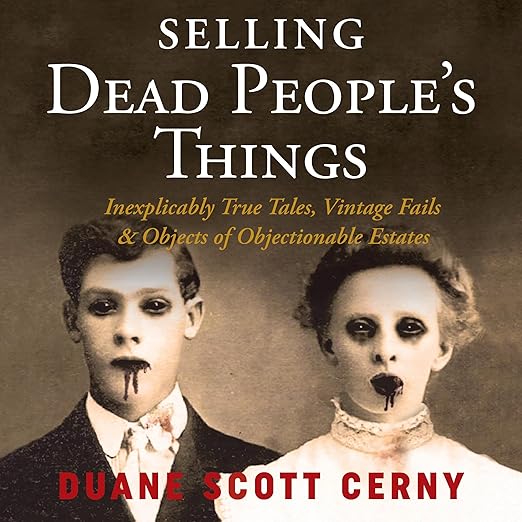
Reviewer Carol's warning to "not let the cover fool you" is worth taking seriously. The title and visual presentation could suggest something bleakly comic and nothing more. What Cerny actually delivers includes warmth, genuine emotional weight, a few stories that are strange enough to be unsettling, and a body of work that amounts to an unusual kind of social anthropology.
Timing a Voice Actor Could Not Approximate
Cerny self-narrates, which is the right decision and the central reason this audiobook works as well as it does. His comedic timing is the product of decades in the trade, talking to clients in situations where humor is the only available pressure valve for everyone in the room. The pauses before a punchline, the specific inflection that signals something terrible is about to be revealed without actually signaling it too early - these are not techniques a voice actor could approximate from the page. They are organic, and they are audible throughout. The eleven-hour runtime is long for a story without a single narrative through-line, but it does not feel long because each essay delivers something specific and then ends cleanly.
The LGBTQ+ dimension of Cerny's perspective surfaces throughout the collection in ways that are organic rather than signposted. His position as an outsider in certain social contexts, his navigation of Chicago's specific social geography, the observations about community and chosen family that emerge through the collectors and estates he encounters - these elements are woven into the stories rather than foregrounded as theme. Reviewer Adolph Zitts described the collection as "a well-written, humorous account of the antiques trade in the Chicago area" in which "each chapter describes a different incident in the author's career, establishing what would become a flourishing business." The Chicago specificity is real: Cerny's professional world has a geographic and cultural texture that the audiobook conveys with the familiarity of someone who has lived inside it for decades.
Best Consumed in Individual Sittings
The essay format is its own kind of demand. There is no single narrative arc pulling the listener forward toward resolution, no character development building across the full runtime, no plot that requires you to know what happened in the previous chapter. Each story is complete in itself. Listeners who are accustomed to memoir as a form of sustained narrative will need to shift their listening posture here: this is best consumed in individual sittings of one or two essays, allowing each piece its own space before moving to the next. Marathon sessions produce diminishing returns because the emotional variety that makes the collection interesting over the full eleven hours depends on genuinely encountering each shift rather than running them together.
The paranormal elements in some stories are worth flagging. Several accounts include phenomena that resist rational explanation - the haunted hospital, certain incidents during estate evaluations - and Cerny presents these with the same deadpan matter-of-factness he brings to the purely mundane stories. He does not argue for the paranormal, but he does not explain it away either. He reports what seemed to happen and leaves interpretation to the listener, which is the correct tonal approach and the one that makes the strange stories genuinely strange rather than either campy or dismissively skeptical.
The Definitive Way to Experience These Stories
Listeners who enjoy eccentric, closely observed personal essay in the tradition of David Sedaris - the same interest in the strangeness beneath ordinary life, the same willingness to make the author the subject of the joke when warranted - will find Cerny a worthy companion. Antiques enthusiasts, estate sale regulars, and anyone who has ever stood in a stranger's house surrounded by the accumulated objects of a life and wondered about the person who lived among them will find the professional insider perspective genuinely illuminating. The audiobook is also a strong case study for listeners who are skeptical about self-narration as a format: Cerny improves his own material in the reading, and the audio version is unambiguously the definitive way to experience these stories. Those who need tight structure, linear narrative, and a clear endpoint may find the essay format more episodic than they prefer. Everyone else should settle in for one of the more original memoir audiobooks in the catalog.
The Short Version
- Narrator: Duane Scott Cerny self-narrates, and the result is fully vindicated - his comedic timing, deadpan delivery, and warmth make the material land harder and stranger than any external narrator could manage.
- Subjects: Death and material culture, the antiques trade's hidden human costs, queer identity and Chicago community
- Tone: Wry, warm, occasionally eerie, and unexpectedly affecting
- Bottom line: Cerny's antiques-dealer essay collection is one of the more genuinely distinctive memoir audiobooks in the genre - funny, strange, and built on real affection for the people whose things he sells.
Questions Listeners Ask
Does Duane Scott Cerny's self-narration make this audiobook better or worse than reading the book?
Better, by a meaningful margin. Cerny's comedic timing and deadpan delivery are central to how the material works, and they translate directly and fully into his narration. The pauses, the inflections, the moments where he lets strangeness sit without comment - these are authorial choices that only function because he is his own narrator.
Is the Selling Dead People's Things audiobook structured as a continuous memoir or as separate episodes?
It is a collection of essays organized for emotional variety rather than chronological narrative. Each chapter works as a standalone piece with its own arc and tone. The listening experience is deliberately episodic, which suits the material well but means there is no single narrative thread pulling the listener toward a conclusion.