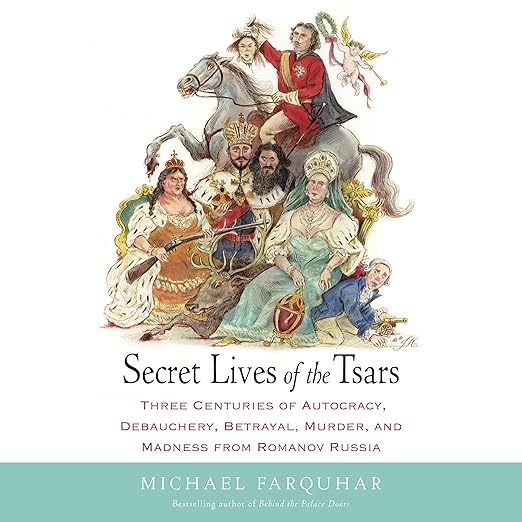
Quick Take
- Narration: Enn Reitel handles the material with dry wit and genuine authority, matching Farquhar’s register without tipping into camp.
- Themes: Power and excess, dynastic self-destruction, the relationship between tyranny and public tolerance
- Mood: Irreverent and entertaining, with darker undercurrents that emerge in the final chapters
- Verdict: A genuinely fun history audiobook for readers who want Romanov drama without academic density, though specialists will find little here that is new.
I started Secret Lives of the Tsars during a particularly grim week of reading heavy material, and I want to be honest: I chose it partly because the blurb promised entertainment. The Gene Weingarten endorsement on the cover, comparing Farquhar to Doris Kearns Goodwin’s smart-ass reprobate kid brother, is the kind of line that either delivers or crashes badly. In this case, it delivers.
I listened through most of it on a Tuesday afternoon walk, which turned into a longer walk than I intended because I did not want to stop. That is the best possible thing I can say about a history audiobook covering three centuries of political violence, sexual intrigue, and institutional collapse.
Our Take on Secret Lives of the Tsars
Farquhar’s approach is deliberately popular rather than scholarly. He is not interested in rehabilitating reputations or building comprehensive political analyses. He is interested in the true stories that tend to get lost between the authorized portraits, and he tells them with a flair for timing that most academic historians never develop. The result sits somewhere between the best longform magazine journalism and the Horrible Histories books one reviewer invoked for adult readers. That comparison is apt. This is history told with a clear sense of which details are too good to leave out.
The Romanov dynasty across three hundred years offers extraordinary material, and Farquhar does not waste it. Catherine the Great’s account here is exactly what you would hope: specific, contextual, and willing to engage with the mythology while distinguishing it from the documented record. The Paul I section, where Farquhar details the son’s grotesque reaction to his mother’s reign, is one of the book’s darkest and strangest passages, and it is handled with the precise level of darkly comic appreciation it deserves. And then there is Rasputin, who is given room proportional to his actual importance to the dynasty’s final decades.
Why Listen to Secret Lives of the Tsars
Enn Reitel is an excellent choice for this material. He has the range to carry Farquhar’s prose, which shifts registers frequently, from dry wit to genuine outrage to something approaching melancholy as the book moves toward Nicholas and Alexandra’s final years. That tonal range is the narration’s biggest asset. The early chapters about Peter the Great’s more theatrical violence are delivered with the appropriate light touch, but the sections covering the Bolshevik execution of the royal family carry the weight they should. Reitel does not play those moments for drama. He trusts the events to speak and reads with restraint.
The book is also excellent preparation for Russian history more broadly. One reviewer describes using it to prepare for a trip to St. Petersburg and Moscow, and finding that the back stories she encountered in those cities made the monuments and buildings far more resonant. That kind of contextual grounding is exactly what accessible popular history is supposed to do, and Farquhar delivers it without the feeling that he is simplifying or condescending.
What to Watch For in Secret Lives of the Tsars
One clear limitation: specialists will find little that is new. A reviewer with a long-standing interest in the Romanovs notes that the book lives up to its popular intent but does not uncover genuinely buried secrets for anyone who has already read serious biographies of the major figures. If you have worked through Helen Rappaport, Robert Massie, or Simon Sebag Montefiore’s material on this period, you will recognize most of the stories here, even if Farquhar tells them with more verve than those authors always manage.
There is also a structural imbalance that at least one reviewer flags: the final sections covering Nicholas and Alexandra receive disproportionately more space than many of the earlier tsars. The chapters on the Romanovs preceding the last tsar are often compressed, sometimes in ways that sacrifice complexity. The dynasty’s earlier centuries deserve the same forensic attention Farquhar brings to the finale, and he does not always provide it. The book covers three hundred years but distributes its attention unevenly across them.
Who Should Listen to Secret Lives of the Tsars
This is well-suited to general history readers, anyone planning travel to Russia or with a passing interest in how three centuries of absolute power can shape a country’s relationship with authority, and listeners who want to supplement more serious reading with something genuinely entertaining. The Washington Post blurb at the end of the synopsis about why Russians tolerate tyrants like Stalin and Putin is the book’s most politically provocative observation, and it is worth sitting with.
Skip it if you are already deeply read in Romanov history and hoping for new interpretive angles. Also avoid if you prefer your history without wit or narrative license. Farquhar is writing for readers who want to be engaged first and educated second.
Frequently Asked Questions
Is this suitable as a first introduction to Russian imperial history?
Yes, and it may be one of the better starting points precisely because it prioritizes engagement over comprehensiveness. The accessible style and strong narrative pacing make the three-hundred-year span manageable for readers approaching it fresh.
How does Enn Reitel’s narration handle the tonal shifts between dark humor and genuine historical gravity?
Very well. He matches Farquhar’s register shifts without tipping into camp or losing the weight of the more serious sections. The chapters covering Nicholas and Alexandra’s final years benefit particularly from his restraint.
Does the book cover the full three-hundred-year span of Romanov rule equally?
Not equally. Several reviewers note that the sections covering Nicholas and Alexandra receive significantly more space than the earlier tsars. The compressed treatment of the dynasty’s earlier centuries is the book’s most notable structural weakness.
Is this appropriate for readers who already know a lot about the Romanovs?
It depends on what you are looking for. Knowledgeable readers will find familiar ground but may enjoy Farquhar’s telling. If you are hoping for genuinely new historical information or revisionist interpretations, this book is not that, it is an entertaining synthesis of well-documented material.