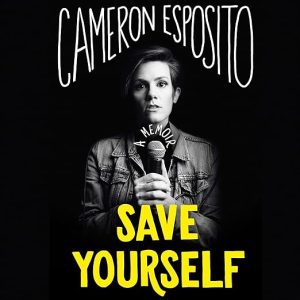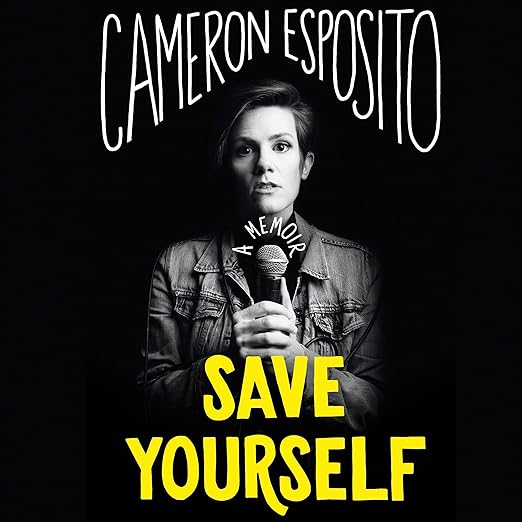
Cameron Esposito's comic voice is so specific that Save Yourself as an audiobook functions differently from almost any other memoir in the genre. Reading a comedian's book when that comedian is not in the room is always a compromise. The rhythm of the sentences, the placement of the reveal, the timing of the self-deprecating pivot: all of these live in the performer's delivery. In a six-hour and thirty-seven minute listen, you get the full performance. The audiobook is, in this case, the version the book was always meant to be.
Esposito opens with a clear declaration of intent: this is not a queer tragedy. She does not die at the end. She does not serve as a supporting character in someone else's story of acceptance. This is "the sexy, honest, bumpy, and triumphant dyke's tale her younger, wasn't-allowed-to-watch-Ellen self needed to read." That framing matters because it shapes everything that follows. The memoir does not ask for tolerance or understanding; it assumes the reader's full presence and proceeds from there.
How Save Yourself Holds Up
The Catholic childhood that runs through this memoir is not background detail; it is load-bearing structure. Esposito's early aspiration to become a priest, the Catholic college where sexual orientation was not included in the nondiscrimination policy, the particular flavor of guilt and shame that a religious upbringing deposits in a queer kid who does not yet have language for what she is: all of this is rendered with specificity rather than caricature. Esposito does not settle scores with her faith community; she traces the way that environment shaped her, for good and ill, with the precision of someone who has spent years working that material on stage.
One reviewer called it "moving in its balance between transformative vulnerability and endearing humor," which captures the quality that makes this memoir work across genre lines. It is funny enough to sustain interest through the difficult sections, and emotionally substantive enough that the comedy never feels like a defense mechanism. That balance is hard to achieve in print; in audio, with Esposito's voice managing the tonal shifts in real time, it becomes remarkably consistent.
The Washington Post and Seattle Times bestseller designations confirm that this memoir found its audience beyond the comedy community that already knew Esposito's name. That crossover appeal is visible in the memoir's structure, which is rooted in personal history rather than in industry anecdote, making it legible to readers with no existing familiarity with her stand-up work.
The range of material covered in six hours is considerable. Coming out at a Catholic institution, joining the circus with what Esposito describes as "so much nudity," building a stand-up career, falling in love, having period sex in Rome: the memoir moves through these moments with the associative logic of a very good podcast episode rather than the chronological tidiness of a conventional biography. That structure rewards audio consumption because Esposito holds the thread even when the subject matter leaps across time and place.
Listeners who came to the book through her podcast will find the audiobook a natural extension of that format. Her conversational ease on the mic translates directly. One reviewer who was already a fan of her stand-up noted finding "lots of new stuff to chew on" in the memoir, which speaks to the depth beneath the humor. The persona is consistent; the content goes considerably deeper than the stage format allows.
The memoir also works as an artifact of a particular moment in queer culture, documenting what it meant to be out in ways that were not fully legible in mainstream comedy circles in the years it covers. That historical dimension gives the audiobook a weight beyond the personal story, and Esposito is aware of it without being self-congratulatory about it.
Weak Spots in Save Yourself
The memoir's structure can feel nonlinear in ways that occasionally make the chronology difficult to track. Esposito moves through memories associatively, and some transitions between periods of her life are abrupt. For audio listeners, this is partly mitigated by the consistency of her voice and the fact that the emotional logic is always clear even when the temporal logic is not. But listeners who prefer memoir with a clear narrative spine may occasionally feel unmoored.
The book also carries the particular energy of a memoir written while the author is still in the middle of her career, which means some threads feel unresolved because they genuinely are. Esposito is candid about this; the memoir is not meant to wrap up neatly. That honesty is a feature for readers who find tidy resolutions implausible, and a mild frustration for those who want clear narrative closure by the final chapter.
The Right Listener for Save Yourself
The audience for this audiobook is genuinely broad despite the specificity of Esposito's story. Listeners who grew up in religious households and navigated complicated relationships with faith and identity will recognize something in the Catholic guilt sections regardless of their own orientation. Fans of comedic memoir in the tradition of Tina Fey's Bossypants or Jenny Lawson's work will find the humor grounded and earned rather than deployed as deflection. LGBTQ+ listeners, particularly younger ones still working out their own story, may find the memoir's refusal to frame queerness as tragedy actively useful.
If you prefer linear narrative or memoir that maintains emotional distance between author and material, this audiobook may test your patience. Esposito is close to everything she describes, and that proximity is the whole point. Come prepared to be in the room with her, not watching from the back. The six-plus hours reward that degree of engagement generously. The bestseller recognition from the Washington Post and Seattle Times confirms that this memoir found an audience well beyond the comedy community that already knew her name, which speaks to how broadly the material resonates across different reader starting points.
Good to Know
Does Cameron Esposito narrate the Save Yourself audiobook herself?
Yes. She reads the entire memoir in her own voice, which is essential to the experience. Her stand-up comic timing and natural conversational rhythm transform the material in ways that a third-party narrator could not replicate. The audiobook is widely considered the definitive version.
Is this audiobook better suited for fans of comedy memoirs or LGBTQ+ narratives specifically?
Both, genuinely. The humor is consistent enough to satisfy comedy memoir fans, and the identity and coming-out material is substantive enough to resonate with LGBTQ+ readers seeking representation in the genre. It works across both categories without feeling like it is straddling an awkward line.